
By VNOVO Technical Support Team
BMW completed a Figure 02 pilot at the Spartanburg plant—ten months, 1,250 hours of continuous operation, more than 90,000 sheet metal parts loaded with precision positioning stable at millimeter level. After verification succeeded, BMW directly issued an order for approximately 5,000 commercial units.
Meanwhile, Zhiyuan Robot targets tens of thousands of mass-produced units within the year, Tesla Optimus aims for a million-unit annual production grease capacity, and manufacturers such as Yushu and Ubtech are also entering ten-thousand-unit delivery channels.
Behind these numbers, an issue that was previously hidden in ‘individual failure analysis reports’ is surfacing—planetary reducer tooth fractures are evolving from engineering case studies into a reliability metric that needs to be quantitatively managed, and further into a tangible cost item in production line operations and maintenance.
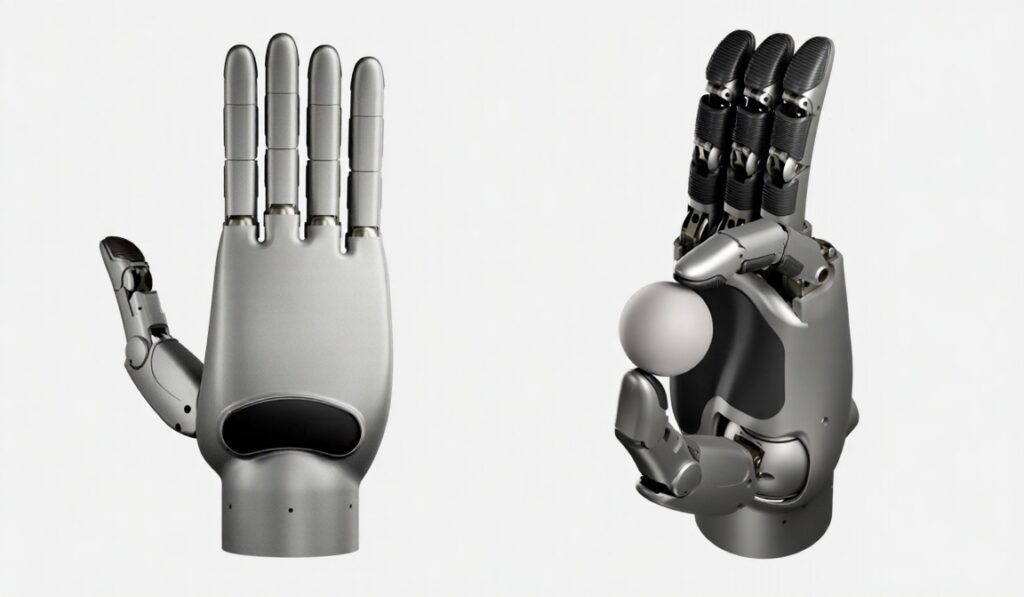
Insufficient sample sizes mask the problem; 10,000 units inevitably expose it
At the prototype stage, tooth fracture is an ‘occasional event.’ When dozens of units run a few thousand hours without problems, engineers tend to assume the ‘design passes.’
However, tooth fracture is a typical fatigue-dominated failure mode, and its probability distribution inherently has a long-tail characteristic. At a fleet size of 1,000 units, even if the annual tooth fracture probability per unit is controlled at a few per thousand, the number of annual failure events may be only a handful, which the production line can barely accept. But when the fleet reaches 5,000 or even 10,000 units, the same probability translates into dozens of tooth fractures per year.
Let us do a simple calculation: 10,000-unit fleet, 0.5% annual tooth fracture rate, 50 failures per year; if the annual tooth fracture rate drops to 0.05%, 5 failures per year. The difference between these two scenarios is 45 events; at a conservative estimate of several thousand dollars per replacement (spare parts + labor + production line downtime), at the 10,000-unit scale, this represents an annual difference of hundreds of thousands of even millions of dollars.
When dexterous hands begin to be purchased as production line equipment rather than laboratory samples, tooth fracture has already shifted from ‘can this be solved?’ to ‘how much does it cost per year.’
From “case analysis” to “probability control”
At the prototype stage, engineers care about ‘what is the cause of the tooth fracture.’ At the 10,000-unit delivery stage, procurement and operations care more about ‘what annual tooth fracture rate can be committed to? What MTBF can be achieved?’
Once a dexterous hand is viewed as a fixed asset on an industrial production line, its reliability must be expressed in the language of probability. BMW’s 5,000-unit order signals that humanoid robots have officially entered the ‘equipment procurement list.’ At this point, failure management logic must be upgraded: rather than relying solely on individual improvements, standardized and reproducible reliability control methods must be established.
Gear material, carburized heat treatment, and tooth root fillet optimization—these ‘hard methods’ have nearly reached the industry capability ceiling for reducing tooth fracture rates, and further optimization marginal costs are rising sharply (for example, reducing tooth root roughness by another 0.1 μm may require replacing grinding equipment, costing millions).
However, there is still one variable with extremely low cost and extremely direct impact—lubrication approach.
Lubrication standardization: the highest cost-effectiveness reliability lever at the 10,000-unit scale
At the 10,000-unit production volume, the per-unit material cost increase for grease is typically only a few to a few dozen yuan, but the failure risk brought by improper selection is multiplied several times over.
Conventional greases face four major challenges under dexterous hand operating conditions: high-frequency start-stop makes it difficult to stably establish hydrodynamic oil films; continuous temperature rise in production lines accelerates base oil evaporation and separation; sulfur-phosphorus EP additives do not have enough time to form effective protective films under rapid direction-reversal conditions before being mechanically destroyed; metal soap-based thickening agents experience fiber fracture under high-frequency shear, causing oil loss and tooth surface dry grinding.
VNOVO’s X500 dexterous hand joint grease addresses the above issues through systematic design: the fluorinated oil + PTFE system combination delivers ≥800 kg EP load-bearing capacity, directly reducing instantaneous fracture probability under shock overload; oil-bleeding loss rate (100 °C/24 h) <10% maintains grease stability under continuous production line temperature rise, avoiding wear accumulation caused by early drying out; wide temperature range (-50 to 220 °C) eliminates seasonal factory temperature variations across different regions and ensures consistent lubrication performance year-round; low starting torque design reduces motor energy consumption, extending battery life for battery-powered equipment.
Lubrication is not a universal cure. Tooth fracture control still requires the joint support of gear design, material selection, heat treatment, and assembly precision. But at the 10,000-unit delivery scale, lubrication standardization represents the steepest segment on the current cost-reliability curve—a small expenditure that reduces probability. This is worth every mass-production dexterous hand team carefully calculating.
A thought exercise for mass-production engineers
If you were signing a technical procurement agreement for 5,000 dexterous hands today, what annual tooth fracture rate target would you set? 0.5%? 0.1%? Or even lower?
Can current production line test data support this target? Has MTBF been verified through large-sample statistics? More importantly, in your DFMEA (Design Failure Mode and Effects Analysis), has grease selection been listed as a critical control parameter? Have parallel lifetime comparison tests been conducted for different lubrication approaches?
Feel free to share your quantitative targets and actual test data in the comments. For deeper discussion on the role of lubrication approaches in 10,000-unit-scale reliability management, private messages are also welcome.