

Automotive Seat Rail Lubricant
Cars have become an indispensable means of transportation for many families. While enjoying the convenience and speed they bring, people have higher demands for the safety and comfort of cars. As a safety component of car seats, the quality of the seat adjuster directly affects the personal safety of the occupants.
- Seat Adjuster Lubrication: A car seat adjuster is a device installed on a car seat to adjust the seat back angle. It consists of a backrest connecting plate, a seat connecting plate, a core component, a handwheel or adjusting handle, and a return spring. Depending on the operating conditions of the car seat adjuster, a high-temperature baking paint process is required after grease application. The grease must withstand a baking temperature of approximately 180℃ without dripping; otherwise, the seeping grease will affect the underlying coating process. Therefore, the grease must have excellent high-temperature colloidal stability.
- Seat Rail Lubrication: Reduces wear on the rails and maintains appropriate sliding force during operation.
As a key component of car seats, the seat rail serves as a fixing, adjusting, and locking mechanism. Seat rails are typically laser-welded from high-strength steel and generally consist of an upper rail, a lower rail, a sliding adjustment mechanism, a locking mechanism (for manual rails), and an unlocking mechanism. Common sliding adjustment mechanisms include rail-type, slider-type, rod-type, rack and pinion type, and lead screw type.
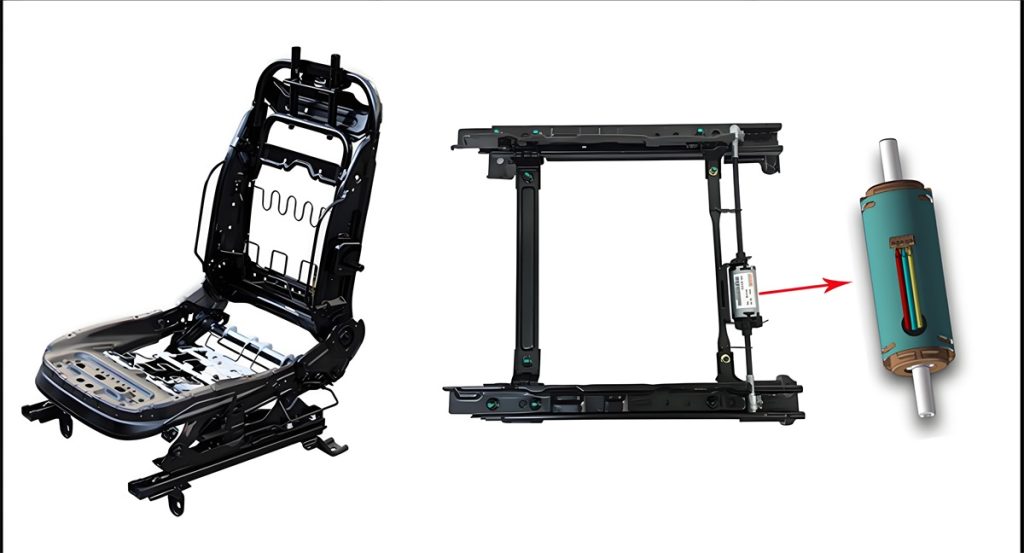
The main performance requirements for automotive seat slide rail grease are as follows:
There are many places in a car where lubricating grease is used, but universal greases are rare; almost all require specialized greases. Based on the application area, greases can be divided into five main categories: wheel bearing grease, constant velocity joint grease, body accessory grease, chassis grease, and automotive electrical grease. While constant velocity joint grease belongs to the chassis assembly, it is classified separately due to its high requirements and significant usage in passenger cars. Furthermore, based on whether it’s for initial application or maintenance, greases can be divided into initial application grease and maintenance grease, with initial application grease typically having a higher specification than maintenance grease.