

For the food and beverage industry, please choose food-grade grease.
The food and beverage industry involves complex operating conditions for equipment, including high temperatures, vibrations, low temperatures, acid and alkali corrosion, water, and steam. Every operating component requires grease for lubrication to ensure the equipment doesn’t suddenly stop during prolonged operation, thus preventing production disruptions. Due to the specific industrial requirements of food and beverage equipment, there are bound to be instances where food comes into accidental contact with the equipment and its components during food production. Examples include filling equipment, packaging equipment, palletizing machinery, and refrigeration and preservation equipment.
Food-grade grease possesses the following characteristics: it will not cause physiological harm or impact on users during mechanical processing, and it will not produce harmful substances due to contact with food or the generation of food odors. This is the most important reason why food-grade grease is essential.
Food-grade grease generally refers to grease that has passed NSF certification and is mainly used in the industrial production of food, beverages, cosmetics, pharmaceuticals, and medical equipment. In food processing, there is no concern about accidental contact between grease and food, and it effectively protects the friction points of mechanical equipment under harsh working conditions.
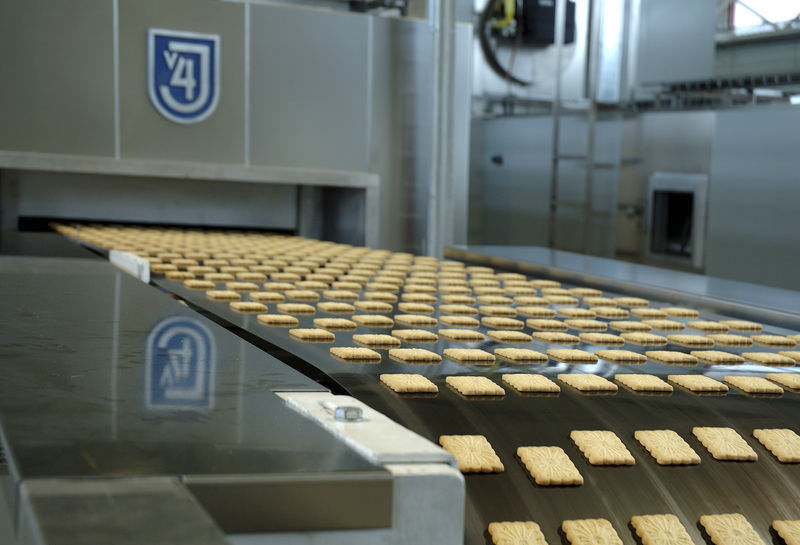
NSF food-grade greases are generally classified into the following three grades:
- H1 – Lubricants for applications where food may come into contact, such as equipment on food production lines.
- H2 – Lubricants for use where the lubricated surface may not come into contact with food, such as equipment on food production lines. Standard industrial lubricants may meet the H2 standard as long as they do not contain heavy metals such as detergents and anti-wear/extreme pressure additives or compounds identified as carcinogens, mutagens, teratogens, and inorganic acids.
- H3 – Water-soluble and generally edible lubricants used to control rust.
For the food industry, please choose NSF-certified food-grade greases.
Food-grade greases generally refer to greases that have passed NSF certification and are mainly used in industrial production in the food, beverage, cosmetics, pharmaceutical, and medical equipment industries. In food processing, there is no concern about accidental contact between grease and food, and it can effectively protect the friction points of mechanical equipment under harsh working conditions.
The beverage and food industries typically use large-scale production equipment, such as filling equipment, packaging equipment, palletizing machinery, and refrigeration and preservation equipment. Furthermore, the operating conditions involved are quite complex, encompassing high temperatures, vibrations, low temperatures, acid and alkali corrosion, the presence of water, and water vapor. Therefore, every operating component of the equipment requires lubrication to ensure that the equipment does not suddenly stop during prolonged operation, thus preventing disruptions to production schedules. Moreover, during food production, there will inevitably be instances where food comes into contact with the equipment and its auxiliary materials. Food-grade greases possess the following characteristics: they will not cause physiological harm or impact on users during mechanical processing, and they will not produce substances harmful to food or its odor upon contact. This is the most important reason why it is essential to use food-grade greases.
Some food and beverage manufacturers and food container manufacturers believe that the industrial greases they currently use are sufficient and there is no need to change them. However, we are overlooking several points. First, the state has strict regulations in this area. Second, as food and beverage manufacturers and food and beverage container manufacturers, consumer food safety needs to be prioritized and guaranteed. Guaranteed safety reduces many concerns for businesses. Third, compared to ordinary industrial-grade greases, food-grade greases have superior parameters and indicators, reducing equipment wear and extending downtime for maintenance and lubrication, thus extending the lifespan of equipment.
In short, everyone needs to pay more attention to the application of food-grade greases to improve their profit margins. Moreover, as the country prospers and becomes stronger, the public will pay more attention to food safety and have less tolerance for non-compliant companies. Prioritizing the safety of food-grade greases is a responsible approach to the future of businesses.
Can industrial food-grade greases be replaced with edible oils? Can edible oils, such as lard and vegetable oils, be used as industrial greases?
Let’s explore these questions together to find the correct answers.
Various equipment and moving parts in food manufacturing rely heavily on lubricants. In the food industry, food-grade greases are essential because ordinary greases can contaminate products.
A few companies, lacking understanding of food-grade greases, directly use vegetable oils and lard to lubricate equipment.
A senior sales engineer at Vnovo Lubricants believes that edible oils like lard and vegetable oils are unsuitable for industrial lubrication. Vegetable oils, for example, are rich in fatty acids and polyunsaturated fatty acids, which oxidize rapidly in air, leading to rancidity. Rancidity allows bacteria to proliferate, posing a risk of food contamination, and water and oxygen can easily penetrate the oil film to reach metal surfaces, causing corrosion.
In addition, while edible oil can indeed provide some lubrication, its effectiveness is limited. Prolonged lack of lubrication can damage equipment. Furthermore, edible oil can solidify and absorb impurities, making equipment cleaning more difficult. In short, using edible oil instead of food-grade grease is counterproductive.
Vnovo FG series food-grade grease is an excellent choice. Meeting NSF H1 standards, it reduces the risk of food contamination in the food manufacturing industry. Food-grade grease also offers resistance to high and low temperatures and hot and cold water.
How to Correctly Select Food-Grade Grease for Food Processing Equipment
Food companies need to purchase food processing equipment for their processing needs. Food machinery can be categorized into general-purpose equipment, special-purpose equipment, laboratory equipment, and packaging equipment. Regardless of the type, regular maintenance with food-grade grease is necessary.
Currently, China’s food processing equipment is trending towards standardization and automation. Food equipment often operates in humid conditions, with water, high temperatures, and steam. Substandard food-grade grease often fails to withstand harsh steam and high temperatures, leading to aging and carbonization, which can cause it to drip onto food and contaminate the product during production.
How should food processing equipment correctly select food-grade grease? The food machinery industry needs to consider waterproofing, high-temperature performance, and preventing potential food contamination during production when selecting grease.
Vnovo Lubricating Grease’s senior sales engineers recommend:
- First, use professionally certified and registered food-grade grease. This reduces the risk of food contamination.
- Second, choose food-grade grease with a long lubrication cycle and good stability to improve production efficiency and reduce equipment downtime for maintenance.
Based on the above requirements for selecting grease for food machinery, Vnovo Lubricating Grease’s senior sales engineers recommend Vnovo’s FG series food-grade high-temperature grease. It meets NSF H1 certification. The grease’s operating temperature range is -40~180℃. The product’s base oil is synthetic oil with a special soap base, containing anti-wear, anti-aging, and anti-corrosion additives. It boasts extremely high load-bearing capacity, excellent dust and water resistance; resists corrosion from both hot and cold water, exhibits superior corrosion resistance, abrasion resistance, and shear stability, and is physiologically harmless. Specifically designed for food processing equipment.