
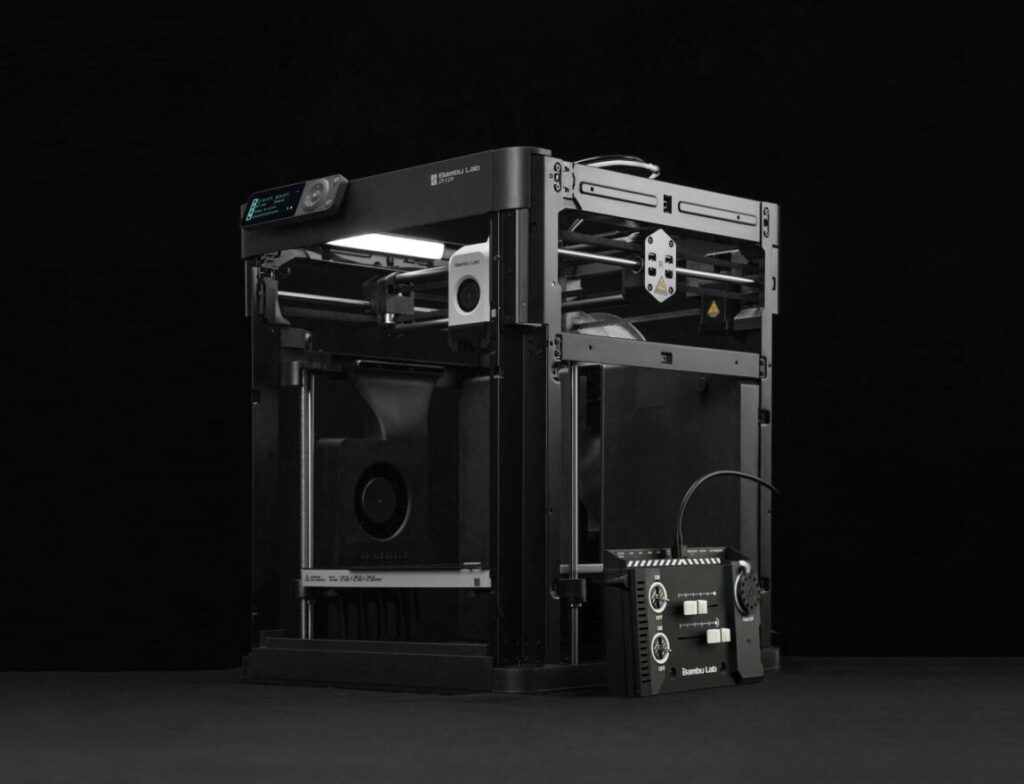
In FDM and FFF 3D printers, linear motion quality directly affects print accuracy, surface finish, and long-term reliability. Whether a machine uses profiled linear guide rails, smooth rods with bushings, or a mixed configuration, the moving interface depends on the right grease to stay smooth, stable, and repeatable.
Why 3D printer guide rails are a special lubrication case
3D printer guide rails do not behave like linear systems in CNC machines or other industrial equipment.
They usually run with:
- short, reciprocating strokes
- frequent starts, stops, and reversals
- moderate speed but changing acceleration
- exposure to filament debris, dust, and shop contamination
- nearby heat from the heated bed and hotend
- mixed materials such as steel, POM, bronze-PTFE composite, aluminum, and plastics
Because most hobbyist and prosumer printers are user-serviceable, the grease must also be easy to clean and reapply. It cannot be so tacky that it traps debris permanently, and it cannot be so soft that it migrates away from the contact zone during use.
Why lubrication problems still show up in print quality
Users often lubricate rails and rods but still see issues such as layer shifting, ghosting, uneven first layers, or audible binding.
The usual causes are straightforward.
Wrong lubricant type
General machine oil and silicone spray are common mistakes. Oils do not stay in place well on exposed or vertical rails, while silicone sprays can leave residues that interfere with later grease application and may affect some plastic bushings.
Over-lubrication
Too much grease turns exposed rails into dust collectors. Fine thermoplastic particles can mix with the grease and form an abrasive paste, which increases wear instead of reducing it.
Material incompatibility
Many consumer printers use POM bushings or composite bushings. Some greases, especially ester-based products or aggressive EP systems, can damage POM over time and lead to clearance changes or positional drift.
Poor relubrication method
If the rail is not cleaned before reapplication, contaminants remain in the contact zone. If the interval is too long, the grease may oxidize, dry out, or lose effectiveness.
Ignoring guide type differences
Ball-type profiled guides and plain bushings do not need the same grease behavior. Ball guides benefit from controlled oil bleed, while plain bushings need a stable, adherent film that does not channel away under load.
What properties matter most
A good 3D printer rail grease must balance several things at once.
Base oil and viscosity
The base oil must provide enough film strength without creating too much drag. PAO and other synthetic hydrocarbon oils generally offer good oxidation stability and broad material compatibility. The original guide specifically warns against ester-based oils unless compatibility with all contacting materials, especially POM, has been verified.
NLGI consistency
- NLGI 2 is the common default for profiled linear guide rails
- NLGI 1 to 1.5 may work better for smooth rods with bushings
- NLGI 0 to 1 can suit very light-duty systems, but the risk of migration is higher
Shear stability and oil separation
The grease should not soften excessively during reciprocating motion. For ball-circulating guides, controlled bleed is useful because it replenishes the ball-raceway interface. For plain bushings, excessive bleed creates mess and shortens grease life.
Tackiness and temperature stability
Moderate tackiness helps grease stay on vertical rails. Excessive tackiness holds dust and filament debris. In most 3D printers, the rail sees ambient conditions up to roughly 50–70 °C near heated components, so the grease must stay stable across that range.
How to choose the right grease
A practical selection process starts with the hardware.
Identify whether the printer uses:
- profiled linear guide rails with recirculating ball carriages
- smooth rods with plain bushings
- lead screws or ball screws
- a mixed configuration, which is common in desktop printers
Then confirm the contacting materials:
- rail surface material
- carriage or bushing material
- any nearby plastics or seals
If POM is present, confirm compatibility before selecting the grease.
Next, match the grease to the motion profile:
- high-speed rapids need low running torque and good shear stability
- heavier carriages need stronger film strength
- long print jobs need oxidation stability and low volatility
- heated enclosures require confirmed thermal capability
- dusty environments need moderate tackiness and a realistic relubrication schedule
Apply only a thin, even film. Over-application is one of the most common user errors. Clean the rail first, then re-lubricate based on usage. The original guide suggests every 50–100 print hours as a reasonable starting point for hobbyist and prosumer use.
Quick reference by printer configuration
- CoreXY or professional printers with linear guides: PAO-based grease, lithium or lithium complex, usually NLGI 2
- Consumer FDM printers with smooth rods and POM bushings: PAO-based grease with verified POM compatibility, typically NLGI 1–2
- Bronze-PTFE composite bushings: prioritize wear protection and corrosion inhibition
- Tall delta or polar printers: choose grease with moderate tackiness to resist gravity drainage
- Enclosed high-temperature printers: use synthetic base oil and verify thermal capability above chamber temperature
- Mini or portable printers: softer, lower-drag grease may be more suitable
How VNOVO can help
VNOVO supports guide rail lubrication selection in three ways:
- Selection guidance based on rail type, bushing material, operating environment, and print profile
- Material matching for metals, polymers, coatings, and seals
- Scenario communication to explain why a particular viscosity range, consistency, or property direction fits a given printer setup