
In industrial equipment, bearings are among the most critical rotating components. From electric motors and pumps to conveyors and gearboxes, they carry loads, support continuous motion, and directly affect whether production runs smoothly or stops unexpectedly. One overlooked factor at the center of bearing reliability is the grease itself.
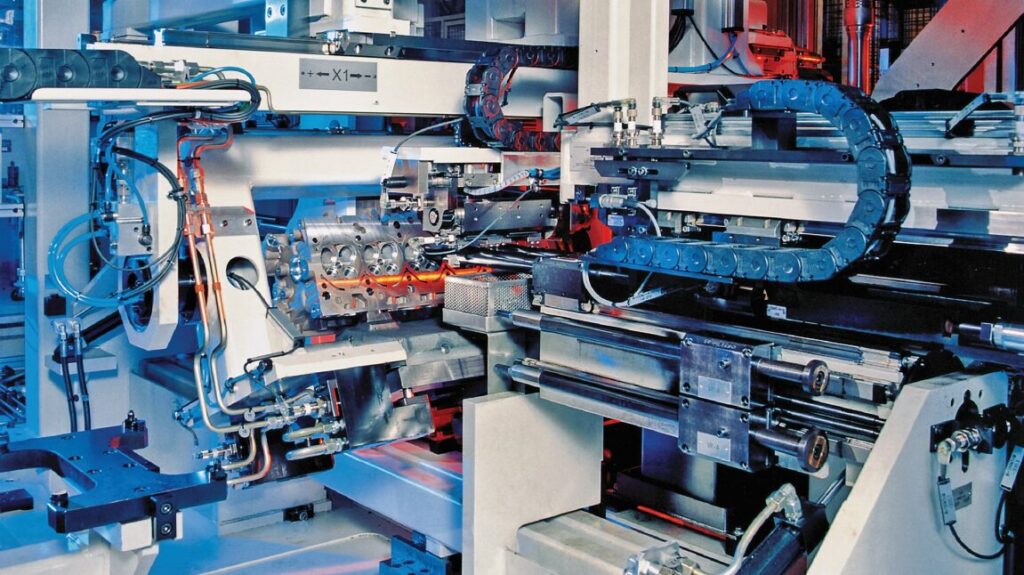
Where bearing grease is used
Bearing grease is typically used where rolling-element bearings operate without closed oil circulation, where an oil bath is impractical, or where the lubricant must stay in place without leaking. This includes electric motors, pumps, fans, conveyors, geared motors, and equipment in textile, food-processing, and paper industries. Across these applications, the grease must reduce friction, resist wear, protect against contamination, and remain effective over the intended relubrication interval.
Why bearings still fail even when they are lubricated
Routine relubrication does not always prevent failures. In many cases, the real problem is not whether grease is applied, but whether the chosen grease matches the application.
Common causes include:
Incorrect grease selection. A general-purpose lithium grease may work under light load and moderate temperature, but it can fail quickly under high temperature, shock load, or water ingress.
Over-greasing or under-greasing. Too much grease increases churning heat and oxidation. Too little grease leaves the raceway starved of lubricant and accelerates damage.
Grease incompatibility. Mixing incompatible thickeners can soften the grease structure, increase bleeding, or reduce load-carrying ability.
Ignoring DN value. Every grease has a speed limit based on bearing bore and rotational speed. If that limit is exceeded, the grease may be thrown out of the contact zone.
Contamination. Dust, water, metal debris, and chemicals can enter the housing and rapidly degrade both the grease and the bearing surface.
What determines grease performance
A bearing grease is a formulated system made of base oil, thickener, additives, and in some cases solid lubricants.
The base oil provides the lubricating film, so its viscosity must match the speed and load.
The thickener holds the oil in place and determines consistency. Common types include lithium, lithium complex, calcium sulfonate, polyurea, and aluminum complex.
Additives improve oxidation resistance, anti-wear protection, corrosion resistance, and EP performance.
Solid lubricants such as PTFE, MoS₂, or graphite can provide extra protection when the oil film becomes thin.
Important performance parameters include NLGI grade, dropping point, operating temperature range, shear stability, water resistance, and four-ball EP or wear performance.
How to choose the right bearing grease
Start by defining the actual operating conditions: temperature range, speed, bearing size, load type, environmental exposure, and relubrication access.
Then match the grease to the application:
- High-speed, light-load bearings such as electric motors usually need lower-viscosity base oils.
- Low-speed, heavy-load bearings such as conveyors or crushers usually need higher-viscosity oils for stronger film strength.
- Lithium complex greases are common for higher temperature and EP applications.
- Calcium sulfonate is often chosen for water resistance and corrosion control.
- Polyurea is widely used in electric motor bearings because of oxidation stability and long life.
- Aluminum complex can be useful where adhesion is important.
If speed is high, verify the grease’s DN capability. If you are changing products, always check thickener compatibility before mixing.
Quick application guide
For standard electric motor bearings, oxidation stability and low torque are priorities, and polyurea or lithium greases in NLGI 2–3 are common.
For high-temperature bearings above 150°C, synthetic oils with calcium sulfonate, lithium complex, or bentonite systems are typically preferred.
For heavy-load or shock-load applications, lithium complex or calcium sulfonate EP greases are often used.
For wet or washdown conditions, strong water resistance becomes critical.
For sealed-for-life bearings, long grease life and oxidation resistance are key.
For vibrating or oscillating loads, greases with solid lubricants such as MoS₂ or PTFE may be appropriate.
How VNOVO supports selection
VNOVO supports bearing grease selection in three ways:
Selection guidance based on temperature, speed, load, environment, and maintenance limits.
Material matching to assess compatibility with seals, plastics, elastomers, and coatings.
Scenario communication to help maintenance, procurement, and OEM teams understand the technical rationale behind a recommendation.
When bearing grease is the right answer
Use bearing grease when the design uses rolling-element bearings without forced oil circulation, when the lubricant must stay in place and help resist contamination, and when the operating speed and temperature remain within the grease’s rated limits.
Consider another lubrication method when speeds exceed grease capability, temperatures stay above the grease’s practical limit, active cooling is required, or ultra-low-friction precision motion demands a different lubrication regime.