

On the day you pick up your new car, the steering feel makes every media professional want to take an extra few turns of the wheel — accurate response, right damping, and no extraneous noise.
However, after about 10,000 km, things begin to change.
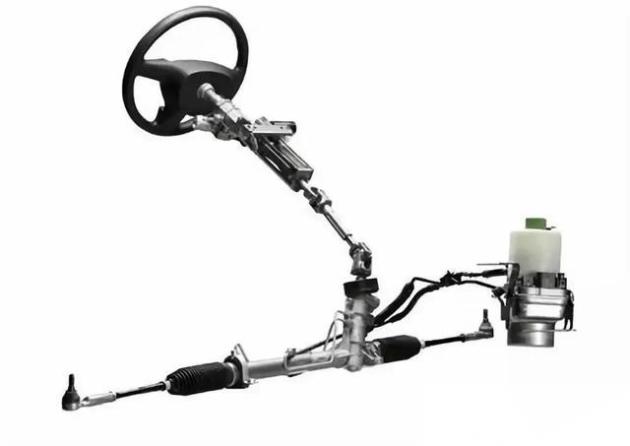
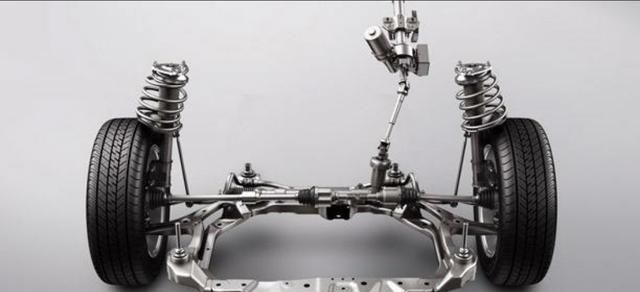
First, on a certain low-speed corner, a not-too-loud but distinctly irritating “clunk” comes from below the steering wheel. Then comes the “click” when going over speed bumps. And then you notice that every time you do a spot turn, that sound appears on cue.
At the 4S shop, the technician will tell you: “There’s a problem with the intermediate shaft — replace it.” The quote is usually between 3,000 and 6,000 yuan. The catch: less than six months after the replacement, the sound is back.
This is not a quality issue with the intermediate shaft. The design ceiling of the lubrication solution falls short of the actual operating conditions.
Fretting Wear: The Overlooked “Chronic Condition”
Let us start with the real working state of the universal joint cross bearing.
In normal driving, steering wheel angles typically range from a few degrees to a few tens of degrees. This means the intermediate shaft primarily endures small-amplitude oscillating angular movements — low amplitude, high frequency, long duration. Engineers call this condition fretting.
The characteristic of fretting is that the contact surfaces alternate between sticking and sliding, making it difficult for the base oil film of a conventional grease to form a stable coverage over the contact zone.
Once the oil film ruptures, metal surfaces make direct contact, generating wear debris. The debris reacts with oxygen in the air to produce iron oxide (Fe₂O₃). These oxide particles are hard and reddish; they fill the bearing clearance and form an “abrasive medium” — the more you磨, the louder it gets; the louder it gets, the more you磨, a vicious cycle.
Why is a new car quiet? Because the factory grease is still intact and providing complete coverage.
Why does it start making noise after a year? Because the rate of grease loss and the cumulative rate of fretting wear have exceeded the design margin of the lubrication solution.
Spline Slip Joint: The Dual Frustration of “Gritty Feel” and “Clunk”
The spline is the key joint on the intermediate shaft that compensates for body flex.
Under normal conditions, the spline tooth flanks are covered by grease, and the sliding resistance is low. Once the grease is thrown off or dries out, the tooth flanks make direct contact, and the sliding resistance suddenly increases — the “gritty” feel you sense when turning the steering is precisely this.
More seriously, when impact loads from body vibrations act on a dry spline, the metal tooth flanks collide directly, producing a sharp “click” impact sound.
The two sounds have different sources: “clunk” mostly comes from the universal joint cross bearing, while “click” mostly comes from the spline slip joint. Both sounds can sometimes appear simultaneously, depending on which location’s lubrication fails first.
Environmental Factors: The “Catalysts” That Accelerate Deterioration
The lower universal joint of the intermediate shaft is near the front wheel, constantly exposed to mud splash and winter road salt mist.
Once the sealing lip ages and fails, SiO₂ particles and NaCl salt directly invade the bearing interior, compounding with metal wear debris — both abrasive wear and chemical corrosion accelerate simultaneously. Iron oxide particles keep filling the bearing clearance, and the noise enters a phase of exponential deterioration.
Low-temperature conditions are equally critical. Ordinary grease thickens at sub-zero temperatures, its cone penetration drops, and spline sliding torque increases. That gritty feel when you turn the wheel cold in the morning parking lot is precisely the moment when the grease has lost its fluidity at low temperature.
Solution: From “Repair” to “Treatment”
Replacing the assembly is “repair.” Getting the right lubrication solution is true “treatment.”
VNOVO steering intermediate shaft dedicated grease is designed for the above conditions, with a formulation philosophy entirely different from ordinary products.
For fretting wear — high-efficiency anti-fretting additives form a dense boundary protective film on the bearing contact surfaces, converting metal-to-metal direct friction into film-to-film friction, fundamentally suppressing wear debris generation and breaking the闭环 of wear → oxidation → accelerated wear.
For grease loss — high-adhesion base oil combined with a special thickening system ensures firm adhesion to metal surfaces after coating, resistant to vibration, shock, and high-speed centrifugal throw-off; one application for long-term effectiveness.
For wide temperature range — full-synthetic base oil with low-temperature performance thickeners provides good fluidity at -40°C and no dripping or oxidation risk at 150°C, delivering consistent steering feel throughout the year.
For salt spray corrosion — organic anti-rust additives form a passivation protective layer on metal surfaces, blocking NaCl and moisture intrusion. Validated for compatibility with nylon boot, NBR rubber, and FKM sealing materials — no swelling, no hardening, no damage to seals.
Bench validation data: universal joint bench (±15° oscillation angle, 5 Hz, 100,000 cycles) — friction coefficient remains stable; noise level reduced by more than 3 dB compared to ordinary grease. Spline bench grease loss rate reduced to less than one-fifth of ordinary grease. 48-hour salt spray protection test: no visible corrosion on metal surfaces.
What are your steering system NVH targets? To learn about specific model matching and coating process parameters, please provide vehicle model, operating conditions, and your current lubrication solution — I will help you find the most suitable VNOVO specification.