
“New car feels great; after a year it is garbage” — this is not an illusion. It is an inevitable progression of lubrication system failure.
Engineers who have worked on EPS NVH projects have probably heard similar customer feedback:
“When turning the steering wheel at low speed, there is a “clunk” from the steering gear area.”
“There is a squeaking sound when turning the wheel in place; it improves after warming up but cannot be completely eliminated.”
“The 4S shop repeatedly applies grease, with short-term improvement; after a few weeks the noise recurs, and customers complain about cheap steering feel.”
This is not an occasional problem — it is structural. The root cause is not that the grease was “not applied enough,” but rather that traditional lubrication solutions were never truly suited to the operating conditions of the worm-and-worm-gear friction pair from the start.
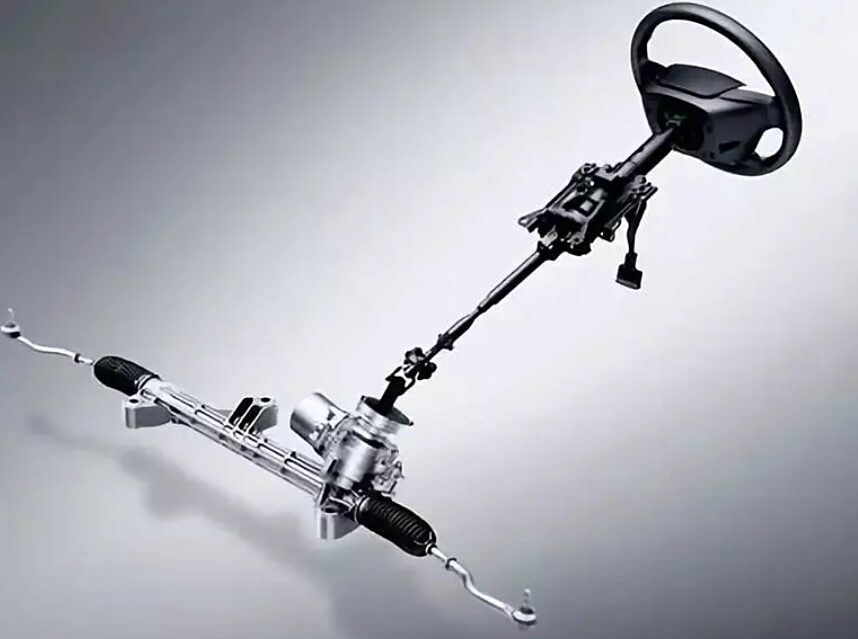
Three Failure Mechanisms of the Worm Gear Friction Pair
First: Stick-Slip Chatter
Under low-speed high-torque conditions, the static friction coefficient of worm gears is far higher than the dynamic friction coefficient. Sliding is not continuous but follows a cycle of “stick, energy accumulation, sudden release, re-stick.” The low-frequency vibration from this release process transmits to the steering wheel as the “clunk” users hear; the high-frequency component is the “squeak.”
When new, gear tooth surfaces are smooth and grease is ample, suppressing the stick-slip effect. After six months to a year, grease begins to deplete, tooth surfaces show slight wear, and the stick-slip effect gradually emerges and intensifies. After warming up, grease viscosity decreases and fluidity recovers, temporarily reducing the noise — but this is only a surface phenomenon; the problem continues to worsen.
Second: Grease Depletion and Migration
Traditional semi-fluid greases are gradually squeezed or flowed out of the meshing zone under sustained centrifugal force, gravity, and temperature stress from thermal cycling. This process is slow and irreversible — each thermal cycle takes away a little more, until local boundary lubrication occurs on tooth surfaces.
This also explains why 4S shop grease application only “lasts two weeks”: the moment it is applied, local lubrication is temporarily restored, but the root cause of depletion is not addressed.
Third: Debris Contamination
With worm gear materials primarily POM (polyoxymethylene) and PA66 (nylon 66), powder generated from initial wear mixes into the grease, forming an abrasive compound. Abrasive compound is far more abrasive than metal powder, accelerating tooth surface wear instead, forming a vicious cycle: wear, debris, more wear, more debris, with noise continuously deteriorating and feel progressively degrading.
Low-Temperature Thickening Effect
Ordinary greases experience a sharp viscosity increase at low temperatures, with base oil separation or thickener clumping, causing EPS worm gear friction torque to rise. In northern winter cold starts, steering wheel “heaviness” and intensified low-speed abnormal noise are largely attributable to this.
Why Replacing Grease Does Not Fundamentally Solve the Problem
Ultimately, traditional grease solutions have several inherent deficiencies:
Insufficient adhesion: affected by centrifugal force and gravity, grease continuously depletes from the meshing zone — treating symptoms without treating the cause
Poor friction coefficient stability: large difference between static and dynamic friction coefficients is the direct cause of stick-slip effect
Limited anti-wear performance: unable to effectively suppress POM/PA66 debris generation; wear continuously accumulates
Narrow temperature range: thickens at low temperatures, flows at high temperatures; performance degrades quickly under thermal cycling
Design Logic for Worm Gear Specialty Lubrication Solutions
Addressing the failure mechanisms above, a specialty lubrication solution requires systematic formulation design:
High-adhesion base oil + composite thickener: enabling grease to firmly adhere to tooth surfaces without migrating due to centrifugal force, gravity, or temperature changes. Without solving the depletion problem, other performance attributes are built on sand.
PTFE or MoS2 solid lubricant compounding: under mixed lubrication conditions, solid lubricants fill microscopic pits on tooth surfaces, effectively reducing the static-dynamic friction coefficient difference. As static and dynamic friction coefficients converge, the stick-slip effect is effectively suppressed.
Superior anti-wear and extreme pressure performance: under high contact stress conditions of worm gears, still able to form a complete lubrication film, reducing tooth surface wear and effectively suppressing debris generation, breaking the wear-debris vicious cycle.
Wide temperature range performance: continuous operation from -40 degC to +150 degC, no thickening at low temperatures, no flow at high temperatures, with consistent feel across all operating conditions.
Material compatibility: verified through swelling/corrosion testing with POM, PA66, metal, and other common worm gear materials — no swelling, cracking, or material degradation risk.
Back to the Engineering Problem Itself
EPS steering feel is a core touchpoint for consumers evaluating “premium feel.” Low-speed abnormal noise and tactile granularity are the most easily perceived quality degradation signals — more direct than overall noise level, because they are tactile-level experiences that cannot be masked by music.
When a new car’s steering feel degrades from “smooth and quiet” to “clunky and rough,” what consumers perceive is: this car has “deteriorated.” And this is often the result of progressive lubrication system failure — not a signal of component damage.
What is your EPS NVH target? Is it to push low-speed abnormal noise from “clearly perceptible” down to “no user complaints,” or to maintain new-car steering feel quality throughout the entire product lifecycle?