
By VNOVO Technical Support Team
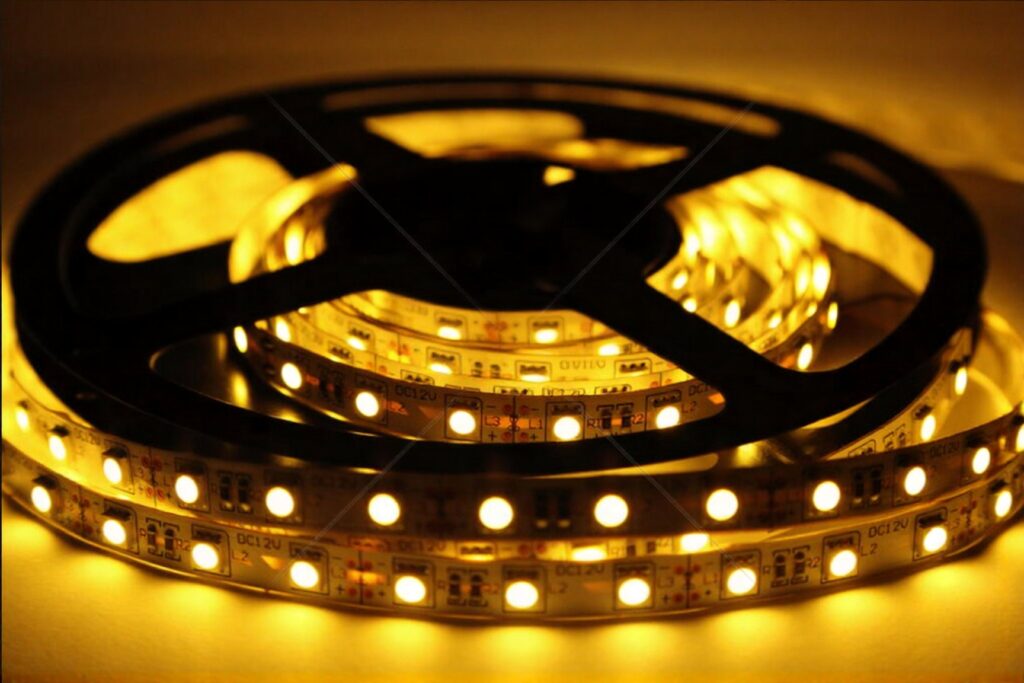
An LED chip converts only 30-40% of electrical energy into visible light — the rest becomes heat at the p-n junction. If this heat is not efficiently conducted away through the thermal interface between the LED module and the heat sink, the junction temperature rises, lumen output drops, chromaticity shifts, and rated lifespan shortens. For LED street lights, high bay luminaires, and industrial downlights, thermal paste — a thermally conductive compound filling microscopic air gaps at the LED module-to-heat sink interface — is the primary thermal interface material, and its selection determines whether the thermal path performs consistently over the rated service life.
What Makes LED Lighting Thermal Management Demanding?
– Junction temperature directly controls LED performance. Every degree above 85 °C accelerates lumen depreciation. Thermal resistance at the module-to-heat sink interface is the primary bottleneck.
– Outdoor thermal cycling. LED street lights cycle daily from sub-zero nights to high-temperature afternoons. The thermal interface must maintain its properties without cracking, drying, or migrating.
– Microscopic air gaps dominating the thermal path. Even machined metal surfaces have peaks and valleys. Air at the interface — thermal conductivity approximately 0.026 W/m·K — creates far more resistance than the metal itself.
– Pump-out, dry-out, and bleed under thermal stress. Thermal cycling squeezes paste outward; sustained heat evaporates the base oil; low-viscosity oils migrate toward optics. All degrade the thermal path progressively.
Why Do LED Thermal Interface Problems Persist Even When Thermal Paste Is Applied?
1. Insufficient thermal conductivity. Thermal conductivity below 1 W/m·K creates significant resistance even in a fraction of a millimeter, pushing junction temperature above design limits.
2. Void formation from pump-out. Thermal cycling forces paste outward from the contact center. Air voids — thermal conductivity approximately 0.026 W/m·K — multiply the interface thermal resistance by an order of magnitude.
3. Dry-out and residue hardening. Sustained temperatures above 100-120 °C evaporate the base oil, leaving a brittle matrix that cannot conform to surface irregularities.
4. Oil bleed reaching optical surfaces. Low-viscosity base oils migrate under thermal gradient, reaching the lens or phosphor coating and causing staining or efficiency loss.
What Properties Make Thermal Paste Suitable for LED Lighting?
– Thermal conductivity of 1-5 W/m·K. Ceramic-filled thermal pastes — zinc oxide, aluminum nitride, or boron nitride — provide conductivity without sacrificing electrical insulation. Silicone-based compounds offer dielectric strength above 20 kV/mm and wide temperature stability.
– Pump-out resistance and low bleed. Controlled-viscosity silicone or fluorinated polymer bases maintain interface contact over 50,000+ thermal cycles without migration or oil separation.
– Wide temperature range, minimum -40 °C to +180 °C. Silicone-based compounds maintain consistent viscosity through outdoor climate cycles.
– Aluminum and aluminum-nitride compatibility. The LED module substrate must not degrade or experience coating delamination under long-term paste contact.
How to Select the Right Thermal Paste for LED Lighting
Step 1 – Identify luminaire thermal conditions:
| Application Zone | Typical Conditions | Key Requirement |
| LED street light module | High power density, outdoor cycling | High conductivity + pump-out resistance |
| Industrial high bay | Sustained high temperature | Wide temp range + oxidation stability |
| LED downlight / troffer | Moderate power, ceiling void | Low bleed + aluminum compatible |
| LED driver compartment | Electronics, humidity exposure | High dielectric + moisture barrier |
| Outdoor flood / coastal | Variable temp, salt humidity | Corrosion-inhibited + stable viscosity |
Step 2 – Match formulation: Street light → ceramic-filled silicone thermal paste, conductivity above 2.5 W/m·K, pump-out tested. High bay → wide-temp silicone-based compound, oxidation-stable. Downlight → low-bleed formulation, aluminum compatible. Driver → high dielectric silicone moisture barrier compound. Coastal/flood → corrosion-inhibited, salt-humidity resistant.
Step 3 – Verify: Confirm conductivity meets thermal resistance budget. Confirm dielectric strength for electrical proximity. Confirm pump-out performance through thermal cycling. Confirm bleed resistance via high-temp exposure. Confirm aluminum substrate compatibility.
Quick Reference: Thermal Paste Selection for LED Lighting
| LED Application | Priority | Recommended Direction |
| Street light module | High conductivity + pump-out resistance | Ceramic-filled silicone thermal paste, >2.5 W/m·K |
| Industrial high bay | Wide temp + oxidation stability | Fluorinated or high-temp silicone compound |
| Downlight / troffer | Low bleed + aluminum compatible | Low-separation silicone thermal compound |
| Driver compartment | Dielectric + moisture barrier | Silicone dielectric moisture barrier paste |
| Outdoor flood / coastal | Salt-humidity resistance | Corrosion-inhibited thermal paste, wide-temp |
How VNOVO Provides Technical Support
VNOVO does not supply off-the-shelf “thermal paste” with universal claims:
Application-Oriented Selection Guidance – VNOVO reviews your LED module power density, heat sink interface, thermal resistance budget, operating temperature range, and service life, recommending conductivity level, chemistry type, filler system, and viscosity grade.
Material Compatibility Verification – VNOVO helps assess candidates against your LED module substrate (aluminum, aluminum-nitride, ceramic) and coatings, confirming no delamination and no bleed toward the optical surface.
Scenario-Based Communication Support – VNOVO explains *why* a direction is suggested, what trade-offs exist (ceramic-filled = higher conductivity but potentially higher viscosity vs. silicone-based = excellent dielectric and wide temp but moderate conductivity), and what validation to prioritize.
Conclusion
When to use thermal paste in LED lighting
When the LED module requires a thermal interface to keep junction temperature below design limits, when the luminaire operates with wide temperature swings, when the thermal path must remain stable for the LED’s rated service life without maintenance, or when electrical insulation at the thermal interface is required alongside thermal conductivity.
When an alternative thermal interface may be more appropriate
When the LED module uses an integrated thermal interface pad validated as a system — changing the material may void the validation. When power density is low and passive cooling is sufficient. When the luminaire is designed for limited-life applications with a planned change-out cycle.
What VNOVO can support
1. Selection guidance — translating power density, thermal resistance budget, temperature range, and service life into thermal conductivity requirement, chemistry type, and filler system
2. Material matching — assessing candidates against LED substrate materials and optical surface proximity for compatibility and bleed safety
3. Scenario communication — providing the rationale to specify, validate, and qualify the right thermal paste for your LED lighting thermal management design
This article is provided for informational purposes based on industry references and LED thermal management principles. Specific thermal paste selection should always be verified through thermal resistance measurement, pump-out testing, bleed testing, and material compatibility confirmation for your specific LED module and luminaire design.