

Why Consistency, Not Just Thickness
Conventional grease selection asks how thick the film is. The source introduces a second question: how consistent the film is across the tooth flank and across the duty cycle. It defines the coefficient of variation (COV) as the standard deviation of film thickness divided by the mean, and proposes a threshold of COV at or below 0.15 for the tooth-surface oil film. Above that threshold, protection becomes patchy and the location of wear becomes unpredictable.
Forward-Reverse Variation on the Same Flank
The source reports that the same tooth flank can show 30-50% variation in film thickness between the forward and reverse strokes of a joint. Because the weakest point of the film determines where pitting begins, a low COV means more uniform protection and a longer, more predictable life; a high COV means that every cycle re-stresses the same thin spots. In a dexterous hand, where hundreds of joints repeat the same small motions, the same thin spot is hit thousands of times per day.
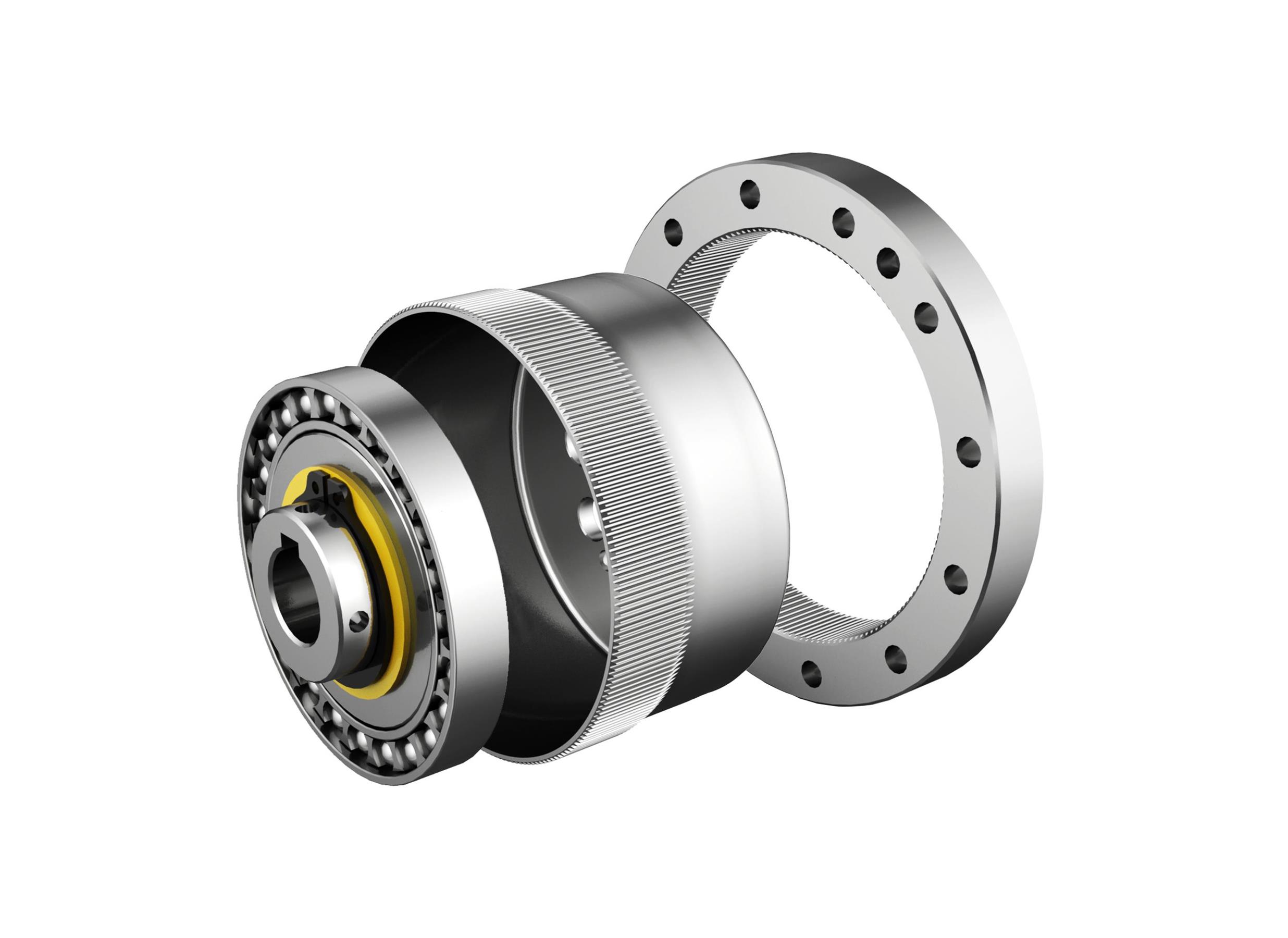
What Drives Consistency
Three formulation factors drive film consistency. First, the base-oil viscosity index: PAO, ester and PFPE base oils hold their viscosity better across temperature than mineral oils, so the film does not thin unevenly as the joint warms. Second, thickener thixotropy and recovery speed: after shear, the grease must rebuild its structure fast enough to replenish the film before the next reversal. Third, the particle size and distribution of nano-scale solid lubricants: fine, evenly dispersed particles fill the valleys between micro-asperities, while coarse or agglomerated particles create local film gaps.
Reading the COV in Practice
A COV test on a micro planetary reducer would measure film thickness across many meshing positions and strokes, then compute the ratio of standard deviation to mean. Values at or below 0.15 indicate a grease whose film is stable enough for the alternating micro-motion regime; values above it point to a grease that protects some parts of the flank better than others. The source also cautions that a proposed industry specification (referenced in the source document as a lubrication specification under discussion for humanoid-robot dexterous hands) is not yet a confirmed standard, so COV 0.15 should be treated as an engineering threshold rather than a compliance requirement.
Validation / Selection Conclusion
For micro planetary reducers in dexterous hands, add COV of oil-film thickness to the selection criteria alongside thickness, EP capacity and oil separation. Measure film consistency across forward and reverse strokes, and select the grease whose COV stays at or below 0.15 across the operating temperature range. Favor high-viscosity-index base oils, fast-recovering thickeners, and finely dispersed nano-scale solid lubricants, then confirm the result in the actual joint rather than on a bench.