

Why Your Seat Recliner Feels Loose After 3–5 Years: The Grease Failure Chain Behind the Most Overlooked Seat Durability Problem
When a brand-new car’s seat back adjusts smoothly, locks firmly, and stays completely still under hard acceleration or braking—this is the goal that seat durability engineering validates repeatedly. But field warranty data consistently points to the same turning point: between 30,000–50,000 km or 2–3 years, the seat back begins to show perceptible play. Under hard acceleration, the body is pushed away from the backrest; under hard braking, the whole person lurches forward.
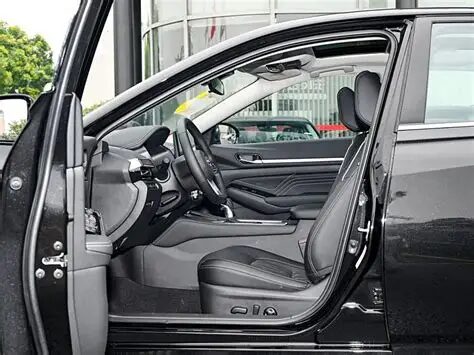
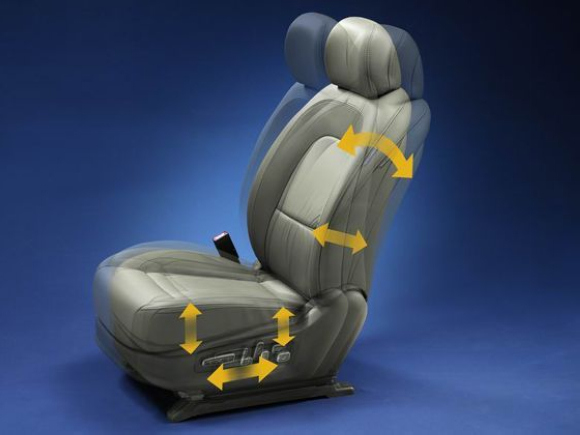
Upon teardown of the recliner, it is common to find severe wear on the friction pairs at the locking interface—gear sector, wedge, and eccentric—where the fit clearance has expanded from the micrometer level to millimeters. The locking mechanism has lost its intended positioning stiffness. The 4S solution is typically to replace the entire seat back frame or recliner assembly, with individual claim costs ranging from hundreds to over a thousand yuan, plus significant labor time for disassembly and reassembly.
Customer complaints are direct: “The seat back wobbles like a rocking chair”—this is not just a comfort issue, it is a safety-related concern.
The root cause: wear on the internal friction pairs of the recliner mechanism. And the trigger for that wear is grease that has already failed.
How Hostile Is the Recliner Operating Environment?
The seat recliner is one of the most mechanically stressed components in the seat frame. The recliner must balance adjustability flexibility with locking rigidity.
In the locked state, the recliner endures continuous axial and radial forces. During hard acceleration, the backrest receives a rearward thrust; during hard braking, the body’s inertia pulls the backrest forward. These loads transmit through the seat belt system to the recliner locking interface, creating repeated impact loads. Each time the seat is adjusted, the gear sector and wedge undergo one more micrometer-level relative slide.
Fretting under high contact stress is the core mechanism of recliner friction pair failure. Contact stress on tooth surfaces can reach hundreds of MPa, and each tiny slide challenges the integrity of the lubricating film.
How Grease Failure Progressively Leads to Seat Back Looseness
Step 1: Boundary Lubrication and Adhesive Wear
Each time the seat is adjusted or loaded with passenger weight, the lubricating film between the gear sector and wedge endures extreme contact stress. Ordinary grease has limited EP (extreme pressure) performance; under high stress it is squeezed out, and tooth surfaces enter boundary lubrication or even brief dry friction. Metal contacts metal directly, producing adhesive wear—tooth surface material sheds as fine particles and enters the lubrication system.
Step 2: Fretting Wear and Three-Body Abrasive Particle Formation
During normal driving, the seat backrest is continuously subjected to dynamic loads: acceleration inertia forces, braking surge forces, and random vibrations from rough roads. The recliner locking interface generates tiny-amplitude reciprocal motions accordingly, cycling millions of times over the vehicle’s service life.
This reciprocal fretting accelerates the wear process. More critically, hard oxide wear debris (primarily Fe₂O₃) generated by the wear process becomes trapped between tooth surfaces, forming three-body abrasive particles that convert sliding friction into abrasive wear. These particles are far harder than the metal surface, accelerating gear tooth profile degradation and causing clearance to expand into an irreversible stage.
Step 3: Grease Drain-Out and High-Temperature Aging
The recliner interior is typically a semi-enclosed structure, and ordinary grease migrates and drains out through gaps during long-term oscillating motion. In-car temperatures can exceed 80°C after sun exposure, and high temperature accelerates base oil volatilization and oxidation, causing the grease to gradually dry out and harden. Once the grease dries, tooth surfaces enter a state of continuous dry friction, and wear rate increases sharply.
Step 4: Material Incompatibility Chain Reaction
Some greases have material compatibility issues with the plastic components inside the recliner—POM (polyoxymethylene) noise-damping shims and PA66 (nylon 66) bushings. Certain additives in the grease can cause the plastic to soften and swell, altering the initial clearance of the friction pair, or introduce additional irregular resistance after bushing softening, accelerating locking mechanism wear.
From new car to noticeable looseness, it often takes only 3–5 years.
How VNOVO Dedicated Grease Addresses the Problem
VNOVO recliner-specific grease uses PAO/ester synthetic base oil combined with complex lithium/polyurea thickener, formulated specifically for the recliner friction pair failure chain:
EP anti-wear protection under high contact stress: AW/EP extreme pressure anti-wear additives react chemically with metal surfaces under high stress, forming a stable boundary lubrication film. Bench test comparison data shows that VNOVO grease reduces tooth surface wear to less than one-third of conventional greases.
Anti-fretting wear additives: Specifically designed for the fretting conditions at the locking interface, suppressing oxide wear debris generation during fretting, delaying the onset of three-body wear at the source.
High adhesion and extrusion resistance: NLGI Grade 1.5 to 2 consistency, firmly adhering to tooth surfaces during repeated oscillation, not migrating or losing volume due to shear. Even under sustained fretting conditions, the lubricating film remains intact.
High-temperature durability: Passes 120°C, 1000-hour thermal aging test with base oil evaporation rate below 5% and consistency change less than one NLGI grade. Meets the 15-year service life lubrication requirement for seats.
Material compatibility: Fully tested with common recliner materials—POM, PA66, spring steel, and powdered metal gears—producing no corrosion, swelling, or softening.
Wide temperature stability: Operating range from –40°C to 150°C, adapting to all global climatic conditions.
Is Your Recliner Durability Test Gap Analysis Actually Correct?
When OEMs conduct seat recliner durability validation, they typically simulate tens of thousands of adjustment cycles and hundreds of thousands of backrest impact loads. But a gap always exists between bench testing and real-world use: real road vibration frequency content is far more complex than bench conditions, and passenger weight distribution and usage habits vary enormously.
Looking back at field failure modes, seat back looseness is often not caused by a single cycle count—rather, it is triggered prematurely by grease performance degradation under the combined long-term effects of high temperature, vibration, and fretting.
To solve the “loosens after just a few years” problem from the design side, grease selection and coating process are the key entry points:
Does the grease’s EP anti-wear performance meet the recliner’s high contact stress requirements?
Are anti-fretting additives covering the fretting conditions at the locking interface?
Is post-high-temperature-aging performance retention sufficient to meet the 15-year design life?
Is there complete data supporting compatibility with POM, PA66, and other plastic components?
For specific solution parameters, contact us via direct message.