
Material compatibility, base-oil viscosity, load, noise and lifetime testing
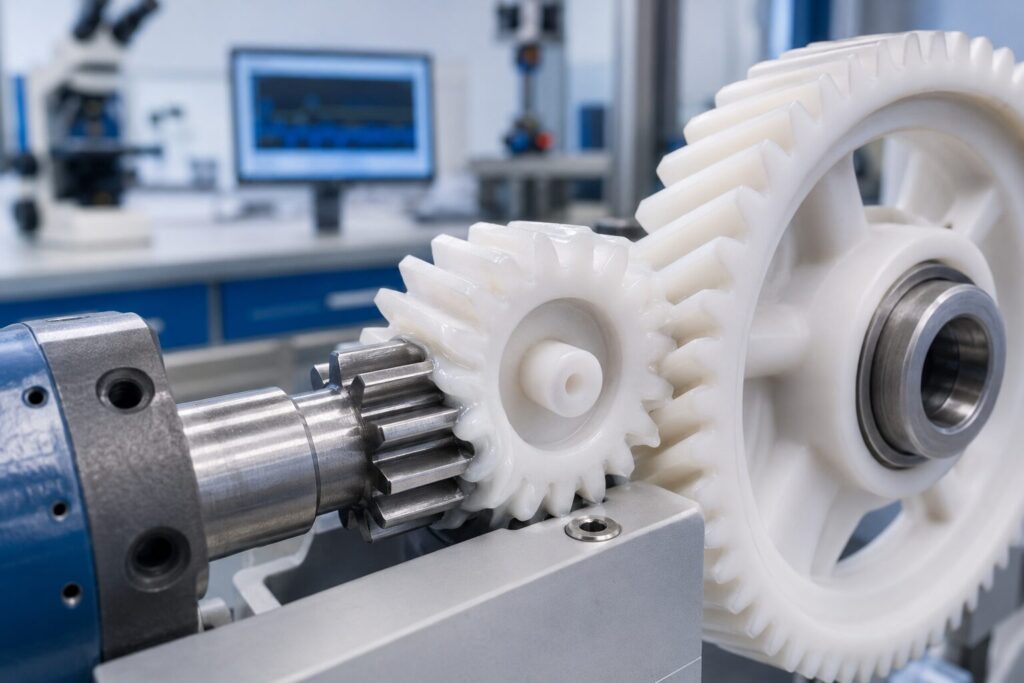
| ENGINEER’S ANSWER Start with the polymer grade—not just “plastic.” Screen base-oil and additive compatibility, then match base-oil viscosity to speed and load. NLGI 1 or 2 is a common starting range for enclosed, grease-for-life plastic gears, but the final choice must pass dimensional, torque, wear and noise tests in the real gearbox. |
The polymer is the first design input
A gear identified only as nylon, acetal or engineering plastic is not defined well enough for lubricant selection. Glass reinforcement, impact modifiers, flame retardants, pigments and residual molding stress can change how a part responds to oil. The mating gear and housing matter as well. A lubricant that is acceptable for POM may cause environmental stress cracking in another resin or extract additives from an elastomer seal.
DuPont notes that an unsuitable lubricant can discolor, swell or crack plastics and rubber. Klüber likewise identifies grease-to-plastic compatibility as a key requirement because incompatibility can accelerate aging and embrittle gears.
Match viscosity to the contact
The base oil carries most of the load; the thickener mainly holds and releases that oil. Low speed, high torque and high sliding normally require a more viscous base oil and stronger antiwear performance. High speed, small tooth modules and low starting torque generally favor lower viscosity. Excessively viscous grease can raise motor current, cold-start torque and temperature; insufficient viscosity can leave the teeth in boundary lubrication.
Do not select by NLGI grade alone. Two NLGI 2 greases can use very different base-oil viscosities and produce very different gearbox torque. Request the base-oil viscosity at 40 °C and, where available, 100 °C.
Choose the grease architecture
PAO-based greases are common for plastic gears because they offer good low-temperature behavior and oxidation stability, but compatibility must still be demonstrated. Silicone-based lubricants can work well for plastic-to-plastic contacts and wide temperature service, although conventional PDMS silicone may provide limited lubricity in heavily loaded metal-to-metal contacts. PFPE greases provide exceptional chemical and thermal stability and broad material compatibility, at a substantially higher cost.
For most enclosed gear sets, NLGI 1 or 2 offers a practical balance of retention and mobility; Klüber lists these grades as preferred choices for many lifetime-lubricated plastic gears. Tack must be high enough to remain on the teeth without generating excessive churning or drag.
Engineer the application and test it
Define tooth material and grade, mating material, pitch-line speed, torque spectrum, duty cycle, start temperature, maximum bulk temperature, housing and seal materials, target life and acceptable noise. Apply a controlled mass of grease at a repeatable location. Too much grease can increase drag and temperature; too little can starve the mesh.
Run compatibility exposure on molded production parts, then a gearbox test that measures running torque, current, temperature, sound level and wear over temperature cycles. Inspect for cracks at weld lines and bosses, tooth polishing, pitting, grease channeling, oil migration and changes in backlash. For a Vnovo recommendation, send the polymer trade name or material data sheet, not only the generic resin family.
Frequently Asked Questions
Is lithium grease safe for plastic gears?
“Lithium” identifies the thickener, not the base oil or additive package. Some lithium greases are compatible; others are not. Review the full formulation and test the exact plastic.
What NLGI grade is best for plastic gears?
NLGI 1 or 2 is a common starting point for enclosed lifetime lubrication, but speed, temperature, tooth size and dispensing method determine the final grade.
Can silicone grease lubricate plastic gears?
Yes in many light- to moderate-load plastic contacts, particularly where wide temperature performance is needed. Validate wear and torque because silicone chemistry is not automatically suitable for every contact.
Why did a plastic gear crack after lubrication?
Possible causes include chemical stress cracking, swelling, additive extraction, molding stress, overload or heat. Compare unlubricated controls and perform material-compatibility testing.
Engineering note
Lubricant selection depends on the complete tribological system. The guidance above is for screening and specification development; it does not replace the equipment OEM manual, the seal or material supplier’s approval, a current product technical data sheet, or validation on production-representative parts. Product certification and regulatory status must be verified for the exact trade name and manufacturing source at the time of use.