
On a winter morning you slide into the car and push the seat forward — it does not move. Push harder, still sticky. The person next to you watches you wrestle with it, seatbelt already on.
This is the most common scenario for seat rail sticking. Most people’s reaction: this car is poorly made. But as a professional, I will tell you: the problem is usually in a small amount of grease.
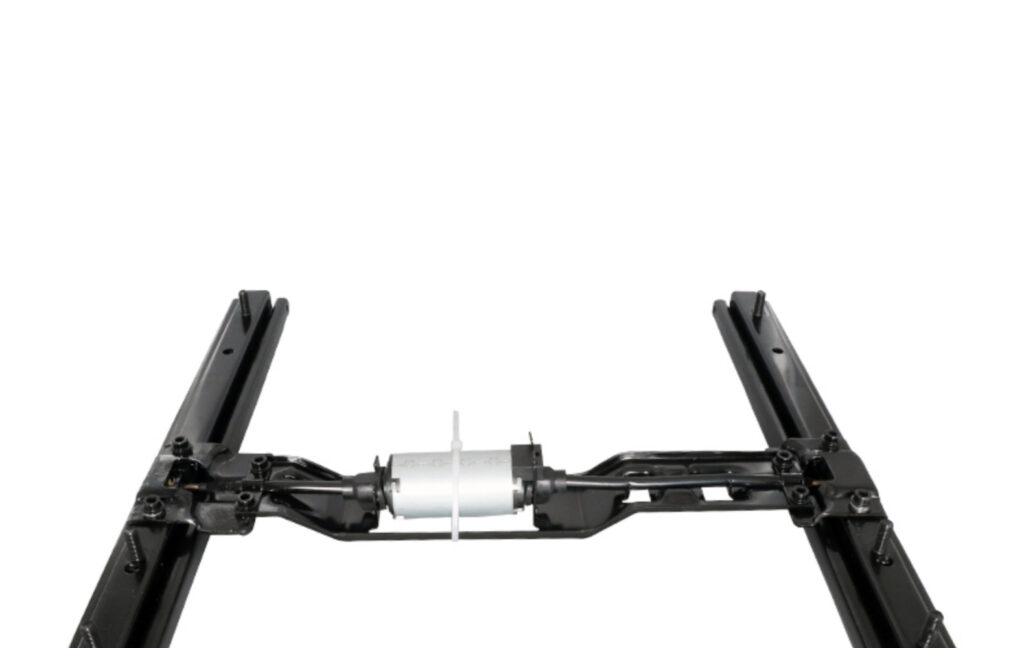
Seat Rails Carry More Than Most People Think
Seat rails are installed on the cabin floor, connecting the seat body to the vehicle structure. The structure looks simple — upper and lower guide rails with a row of steel balls or sliding blocks between them, converting sliding friction to rolling friction. But the loads they withstand are far from simple.
A 70 kg adult seated, plus inertia impact during emergency braking and lateral shear force during cornering — peak load on the rails exceeds 1,200 N. What does this mean? Roughly 3× a typical door hinge, 5× a sunroof rail. Every time you settle into your seat after adjusting, the rails are quietly承受 your weight repeatedly crushing them.
The rails also embed a ratchet locking mechanism to hold the seat at its current position. The latch engagement surfaces also form a friction pair and also require lubrication.
────────────────────────────────────────
Sticking Is Not Sudden — It Accumulates
The transition from smooth to stuck typically progresses through three stages. In most cases, users only notice the problem by stage three.
Stage 1: Lubricant gradually depletes while dust and sand from shoe soles contaminate the rails, forming a layer of greasy sludge. This sludge’s friction coefficient is far higher than clean lubricant, sliding resistance noticeably increases — but not enough to actually jam.
Stage 2: After the seat locks in place, the rail承受 sustained static load. Vibration from driving and road bumps cause the steel ball and rail contact surfaces to undergo micro-amplitude reciprocating slip — fretting wear. This process is invisible, but rail surface smoothness gradually declines. Once wear debris accumulates sufficiently, adjustment develops hesitation, and noise or interference appears.
Stage 3: Sweat and moisture penetrate, and steel balls and rails begin rusting. Surface roughness after corrosion jumps dramatically — friction coefficient from a normal 0.05 to above 0.30. Manually pushing the seat feels obviously rough; in severe cases, actual external force is required to move it.
This process takes as little as six months or as long as two to three years, depending directly on the usage environment and lubricant quality.
────────────────────────────────────────
Five Hard Standards for Grease Selection
Many assume any grease will do. In reality, seat rail requirements are among the highest for body hardware.
① Extreme-Pressure and Anti-Wear. Peak loads exceeding 1,200 N collapse ordinary grease films immediately. Four-ball sintering load PD value ≥294 N is the minimum threshold; ambitious OEMs have raised this target to ≥600 N, combined with steel ball hardening treatment, to prevent rail凹痕 formation.
② Low-Temperature Start. For users in northeast China adjusting seats on winter mornings, low-temperature fluidity is the critical parameter. Industry requirement: -30°C start torque ≤500 mN·m, roughly equivalent to the force of pushing a 5 kg weight by hand — barely perceptible. Stricter OEM specs already cover -40°C, with higher base oil low-temperature performance requirements.
③ Water and Rust Resistance. The footwell is one of the most demanding environments in the vehicle — mud, snow salt, spilled drinks all enter the rails. Grease must pass ASTM D1264 water washout testing, with washout loss ≤10%, and simultaneously pass salt spray rust testing with no rust on steel surfaces. Calcium sulfonate thickened formulations have natural advantages in water and rust resistance — a common formulation approach for seat rail greases.
④ Fretting Wear Resistance. This is the most easily overlooked factor. Most grease tests evaluate wear resistance under continuous motion, but the real seat rail operating condition is static load plus occasional movement. Fretting wear testing (low-load high-frequency reciprocation) is the tool that simulates true conditions. Skipping this test means theoretically sound greases fail in real vehicle application.
⑤ Material Compatibility. Rails contain PA66 and POM plastic sliding blocks, which may swell or deform in mineral oil. One joint venture brand experienced a mass recall due to grease incompatibility with POM sliding blocks. Full material compatibility test reports must be requested during selection.
────────────────────────────────────────
Root Causes of Recurring After-Sales Problems Rarely Lie in the Grease Itself
From actual project experience, seat rail lubrication failure is typically the accumulation of weaknesses in design, materials, and process — not a single link.
Design: Rail sealing structure determines how long lubricant stays. Fully enclosed rails have excellent dust and water protection; semi-open designs cost less but provide worse protection. Under cost pressure, choosing semi-open designs significantly increases the probability of after-sales lubrication issues.
Process: Overfilling interferes with the locking mechanism engagement; underfilling leaves局部 dry. Air bubbles混入 grease create voids — any of these conditions plant hidden problems.
Materials: If steel ball and rail surface hardness are not matched, rail wear outpaces expectations, lubricant load-carrying margin is consumed rapidly, and problems emerge prematurely.
Solving this requires during selection completing high/low temperature durability, fretting wear, and salt spray rust three-bench validation passes; during production controlling fill process parameters and conducting incoming inspection. These two checkpoints in place, after-sales complaints drop substantially.
────────────────────────────────────────
*If you encounter specific problems in seat rail grease selection — such as existing products developing sticking below -30°C or POM blocks showing swelling迹象 after high-temperature storage — describe the specific conditions and I will help analyze the most suitable solution.*