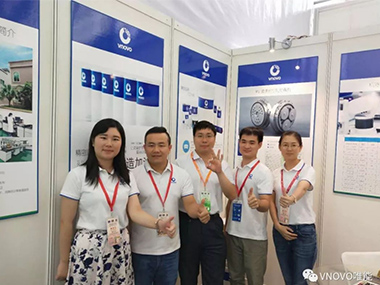

Humanoid robots do not fail at the headline level. They fail at the detail level. One of the most sensitive points is the planetary gearbox stage inside the joint actuator, where compact gears must transmit torque smoothly while keeping noise, backlash growth, and temperature rise under control. In this lubrication point, grease is not just a maintenance material. It is part of motion quality, durability, and service stability. VNOVO positions Robot Industry as one of its application areas and offers gear lubricating grease for transmission-related uses.
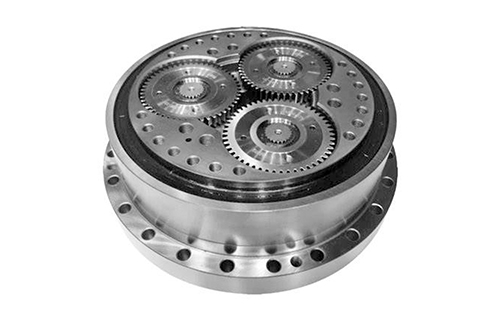
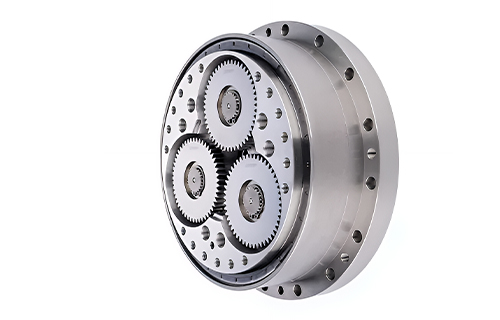
Why the planetary gear stage matters in a humanoid robot
In a humanoid robot, the joint actuator usually has to combine compact size, precise motion, and repeatable output. The planetary gear stage is often where torque is multiplied and transmitted before the final motion reaches the arm, leg, waist, or hand mechanism. This means the grease in that section must work under repeated start-stop cycles, frequent micro-motion, changing loads, and long operating periods in a sealed space. If the grease film becomes unstable, the result is usually not immediate seizure. More often, it shows up first as rising noise, reduced efficiency, temperature increase, or growing wear inside the joint.
Why ordinary grease is not enough
A humanoid robot joint does not behave like a simple industrial gearbox. The gears are compact, the load is dynamic, and the motion profile changes constantly. During walking, gripping, balancing, or repeated demonstration cycles, the planetary gear set may experience frequent reversing, short-stroke movement, shock loading, and local heat buildup. A general-purpose grease may lubricate at first, but it often loses consistency too quickly, bleeds oil, or fails to keep a stable film under repeated load changes. Once that happens, the joint becomes louder, less efficient, and less consistent in motion feel.
What the grease must actually do
For the planetary gearbox in a humanoid robot joint, the lubricant must deliver several things at the same time.
First, it must provide low-noise lubrication. This is not only about comfort. In humanoid systems, quieter motion usually means smoother meshing and better motion control.
Second, it must offer wear and impact resistance. Small gears working under changing torque need a grease that stays in place and protects the tooth surface instead of being pushed out of the contact zone.
Third, it must maintain stable performance at both high and low temperatures. Joint modules may run for long periods, and any rise in temperature can speed up grease degradation if the formulation is weak.
Fourth, it must show good shear stability, water resistance, and oxidation resistance, because long service life depends on the grease staying mechanically and chemically stable inside the gearbox. VNOVO’s robot joint grease communication highlights low-noise lubrication, wear and impact resistance, long service life, water and oxidation resistance, compatibility with many plastics, and stable performance across high and low temperatures.
Why planetary gear grease needs a focused selection logic
This article is about one lubrication point only: the planetary gear stage in the humanoid robot joint gearbox.
That means the grease should be selected for:
- compact metal gear contacts
- low-to-medium speed gear operation
- repeated start-stop and reversing motion
- controlled noise and vibration
- long service intervals in enclosed assemblies
VNOVO’s gear grease materials also indicate suitability for planetary gear box lubrication, with emphasis on lubrication performance, noise reduction, no oil leakage, and high/low temperature resistance. That makes planetary gear grease a logical solution direction for humanoid joint gearboxes where compact structure and stable long-life lubrication matter.
What a good solution looks like
A suitable planetary gear grease for humanoid robots should not be treated as a generic “thicker oil.” It should be understood as a functional material that influences gearbox behavior.
In practice, the right grease should:
- reduce gear wear
- suppress noise and vibration
- maintain a stable oil film under repeated load
- resist oxidation and temperature-related change
- stay in place without obvious leakage
- support long service life in sealed joint modules
The selection direction should prioritize gear mesh protection, controlled consistency, shear stability, and thermal stability, rather than only chasing a high-load number on paper. In robot joints, stable long-term behavior is usually more valuable than short-term lubrication strength alone.
How VNOVO fits this application
For this lubrication point, VNOVO’s published direction is clear: its gear lubricating grease is recommended for robot joints and transmission components where low noise, wear resistance, long lifespan, water and oxidation resistance, and stable high/low temperature performance are required. It is described as suitable for low-to-medium speed gears and bearings, which aligns well with the operating profile of many compact planetary stages used in humanoid robot joints.
Final takeaway
If the application is a humanoid robot joint gearbox, and the lubrication point is the planetary gear stage, then the grease strategy should stay focused. The goal is not simply to “add lubricant.” The goal is to keep the joint quiet, efficient, stable, and durable over time.
That is why planetary gear grease is the right topic for this application. It directly supports one critical contact point, one gearbox structure, and one real performance target inside the humanoid robot industry.