
Two robots, same model, same manufacturer, running in the same factory — one has a reducer life of 8,000 hours, the other fails at 2,000 hours. The difference? The grease used.
This is not a hypothetical. In field investigations, I have found that within the same robot model and batch, reducer life can vary by 3–5× depending on grease selection and lubrication maintenance practices. This 4× life difference is not a quality problem — it is an engineering management problem.
Where the 4× Difference Actually Comes From
First, EP additive type. Sulfur-phosphorus EP additives generate FeS/FePO₄ protective films on tooth surfaces. Under high-frequency start-stop, these films are repeatedly impacted and sheared — if adhesion is insufficient, films flake off and lose protection. High-adhesion EP films can maintain integrity for 5,000+ hours; inferior films degrade within 500 hours.
Second, thickener shear stability. Complex lithium thickeners maintain consistency through 50,000+ shear cycles; simple lithium thickeners begin softening after 10,000–20,000 cycles. Softened grease gets thrown off tooth flanks by centrifugal force, oil film disappears prematurely.
Third, base oil oxidation resistance. Synthetic base oils (PAO, PFPE) have oxidation induction periods 3–5× longer than mineral oils. Under sustained high-temperature conditions, oxidation by-products accelerate oil thickening and corrosive wear.
These three factors compound. The robot with quality grease is not just “doing better” — it is operating in a fundamentally different lubrication environment.
Grease Change Timing: A Commonly Overlooked Variable
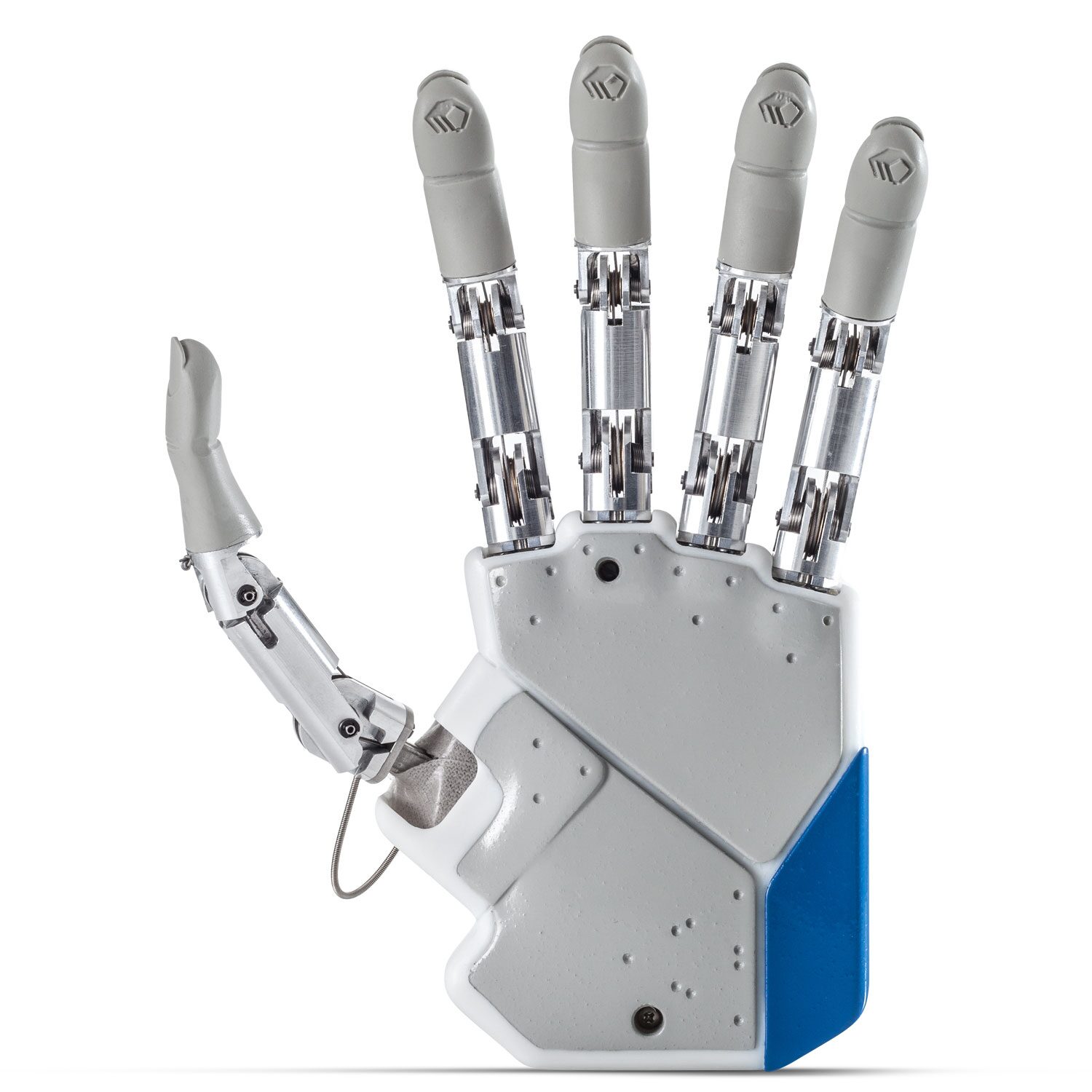
Beyond grease selection, change interval is equally important. Dexterous hand reducers typically cannot be inspected non-destructively — you cannot tell grease condition without disassembly.
Most manufacturers follow a time-based schedule: change grease every 2,000–3,000 hours regardless of condition. But this ignores that grease aging rates vary significantly with actual working conditions.
Under high-temperature, high-load, high-frequency conditions, grease may need changing at 1,500 hours. Under light-duty, low-temperature conditions, 5,000 hours may be acceptable. Using a uniform schedule means either changing too early (unnecessary cost) or too late (accelerated wear).
The solution: Establish grease condition monitoring indicators aligned with your specific working conditions — such as periodically checking for metal debris in oil samples, measuring dielectric properties changes, or using inline particle sensors. These provide data-driven lubrication management rather than calendar-based guessing.
How to Evaluate Your Current Grease
If your dexterous hand reducers are already in the field, here is a quick assessment:
- 1. **Disassemble and inspect** — Look at grease color (darkening indicates oxidation), consistency (hardening indicates thickening剂的触变结构被破坏), and smell (acrid smell indicates acid formation).
- 2. **Check for metal debris** — If ferrous particles are present, wear is occurring.
- 3. **Review maintenance records** — 4× life differences often correlate with inconsistent maintenance practices.
Has your company conducted grease life comparison tests? What maintenance cycle do you currently use? Share in the comments: A. Have data showing life differences between greases. B. Suspect lubrication issues but lack diagnostic methods. C. Currently using calendar-based change intervals. D. Have condition monitoring in place.