
Why Dry Film Lubrication Matters in Titanium Pens
In a titanium ballpoint pen, lubrication is not mainly about heavy load or high-speed movement. It is more often used to improve small internal movements, reduce stick-slip, and keep the mechanism clean during repeated clicking, sliding, rotating, or guiding.
Dry film lubrication can be suitable when the internal parts require smooth movement, low residue, clean assembly, and stable tactile feedback.
For premium titanium pens, oil or grease may sometimes migrate toward the refill area, attract dust, or leave visible marks. When cleanliness and refined hand feel are important, dry film lubrication can provide a cleaner and more controlled option.
What Problems Can Occur Inside the Pen Mechanism?
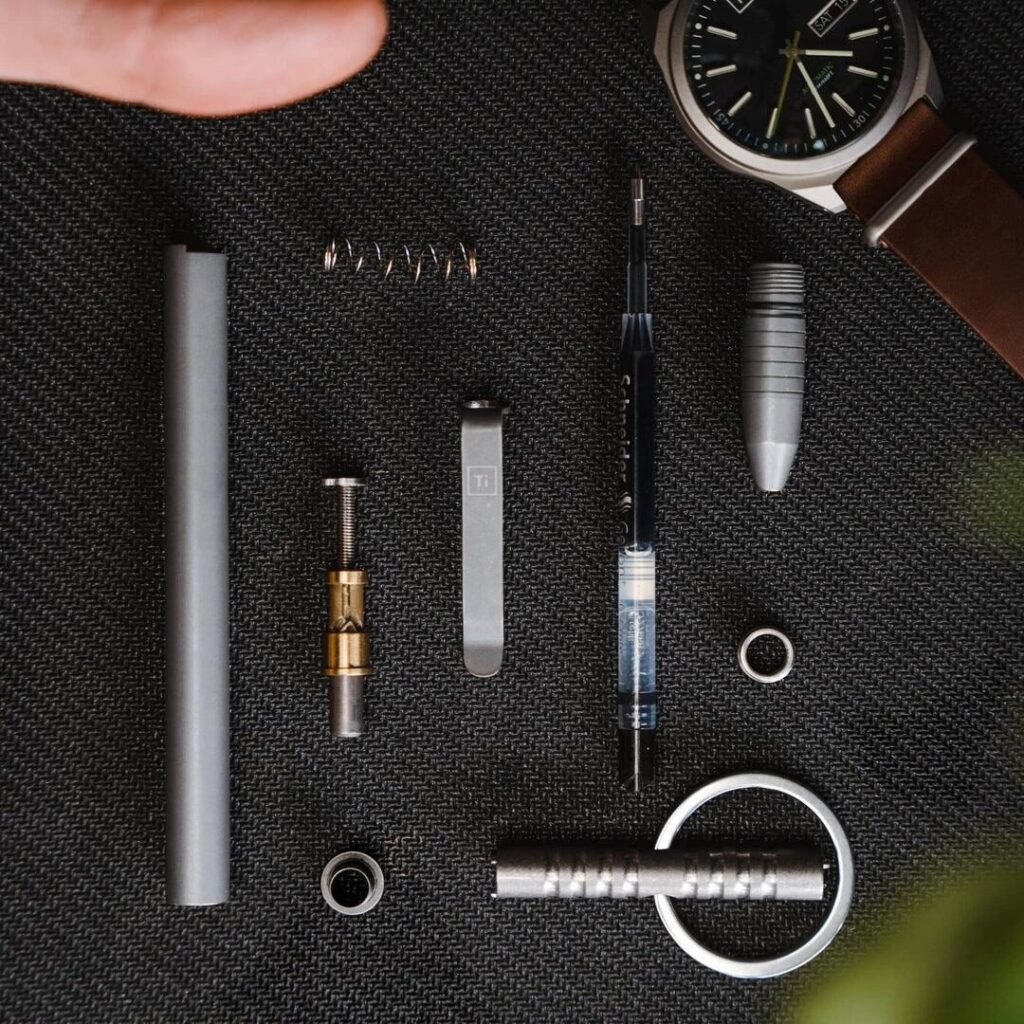
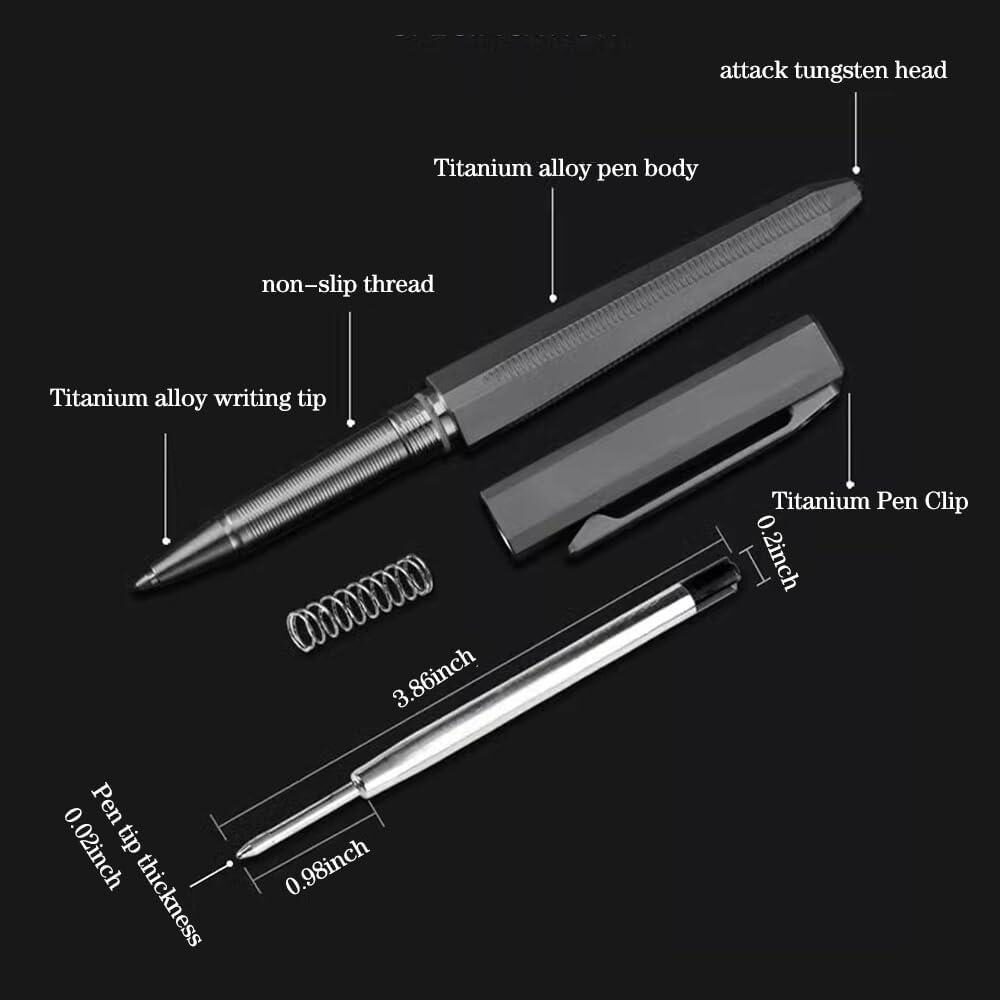
Titanium ballpoint pens are compact, precisely machined, and sensitive to small changes in friction.
Their internal structure may include:
- Springs
- Click mechanism parts
- Sliding sleeves
- Threaded sections
- Refill holders
- Guide parts
- Small metal or plastic contact surfaces
These parts are repeatedly operated by the user. Even minor friction, noise, or uneven movement may affect click response, return feel, writing stability, and perceived product quality.
The key question is:
How can friction be reduced without affecting cleanliness, assembly quality, or tactile feel?
If the lubricant is too fluid, it may move away from the intended contact area.
If it is too thick, it may slow the click response or create an uneven hand feel.
If it leaves visible residue, it may reduce the premium appearance of the pen.
Material compatibility also needs attention. A titanium pen may include titanium alloy, stainless steel springs, brass or aluminum inserts, engineering plastics, refill parts, elastomers, coatings, or surface treatments.
A lubricant that works well on one surface may not be suitable for the whole assembly.
Why Dry Film Can Be Suitable
Dry film lubrication forms a thin lubricating layer on the contact surface after application and drying. Its function comes mainly from the dry film left on the part, rather than from a wet oil or grease layer.
This gives it several advantages in compact pen mechanisms.
Lower migration risk
In small internal spaces, excess oil or grease may move toward the refill, spring cavity, threads, or visible openings.
Dry film lubrication helps keep the lubricating layer closer to the intended contact surface.
Cleaner assembly
When applied properly, the film stays on selected areas and helps reduce smearing, fingerprints, and unwanted grease marks.
This is useful for precision parts that require clean handling and clean packaging.
Better control of light movement
Click contact points, sliding contacts, guide parts, threaded sections, and spring seats may need friction reduction without a sticky or dampened feel.
Dry film can support smooth movement while keeping the mechanism light and responsive.
Reduced stick-slip
In a titanium pen, users can directly feel the click, return, sliding resistance, and overall smoothness.
A suitable dry film may help make these movements more consistent.
However, dry film is not the right answer for every internal part. Its performance depends on surface condition, contact pressure, stroke distance, operating frequency, material combination, and application method.
If the part requires cushioning, sealing, corrosion protection, or thick-film separation, grease may still be more appropriate.
How to Evaluate Dry Film for Internal Pen Parts
Dry film should be treated as a targeted surface treatment, not as a lubricant for the entire pen assembly.
Before selection, the exact lubricated part should be confirmed. This may be a click contact point, spring seat, sliding sleeve, refill guide, threaded section, or another small moving interface.
The material combination should also be reviewed. Titanium-to-titanium, titanium-to-stainless steel, titanium-to-plastic, and coated metal contacts may require different lubrication approaches.
Surface roughness, machining marks, anodized layers, and coatings can also affect film adhesion and performance.
The desired user feel should be defined clearly. For a premium pen, lubrication affects click sound, return feel, smoothness, resistance, and perceived build quality.
Application control is equally important. Dry film lubricants may be applied by spraying, dipping, wiping, brushing, or other controlled methods. For small parts, dosage control helps avoid build-up or insufficient lubrication.
How VNOVO Can Support
VNOVO supports this application through technical communication based on the actual pen mechanism, contact materials, and assembly conditions.
VNOVO can help customers compare dry film lubrication with grease or oil for a specific internal contact point.
The discussion may include:
- Movement mode
- Material compatibility
- Cleanliness requirements
- Residue concerns
- Surface treatment
- Application method
- Packaging format
VNOVO can also support communication around localized coating, small-dose application, drying requirements, and process control.
The final lubricant choice should be verified through assembly trials and functional testing under real product conditions.
Use dry film lubrication for titanium ballpoint pen internal parts when the main requirement is clean, controlled friction reduction in a compact mechanism.
It is especially suitable for small sliding, guiding, clicking, or contact points where oil or grease migration may affect the refill area, visible surfaces, assembly cleanliness, or premium tactile feel.
Do not use dry film as the default solution when the part requires thick cushioning, sealing, heavy-load protection, corrosion resistance, long-term wet lubrication, or a grease-like dampened feel.
VNOVO can support customers by helping define the lubricated part, compare lubricant types, review material compatibility, communicate working conditions, and discuss coating, dosage, process, and packaging requirements.