
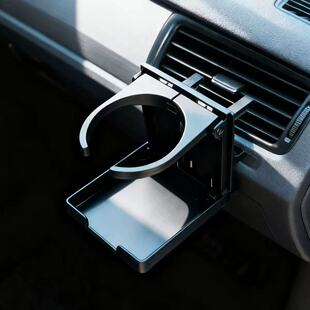
Honestly, everyone working on interiors and NVH — we need to talk about cup holder slide covers.
Nobody takes them seriously during new car evaluation — the push-pull is smooth, the damping is even, and the closing sound is dull and pleasant. But have you calculated how many ‘squeak-squeak’ complaints come in at the aftermarket within a year? The customer’s exact words are often: ‘It felt premium when new. Now when I pull the slide cover it sounds like mice, and there’s a rattling resonance at idle.’ The worst part is, the dealership repairs it repeatedly — changing lubricant, spraying all kinds of miracle oils — it helps for three days, and then it’s back to square one.
The customer won’t forgive you. They will only say: this car is not durable, it lacks quality.
So what exactly did we do wrong?
Let’s start with the mechanism. Eighty percent of cup holder slide cover noise is not a tolerance issue — it’s that the grease you used can’t hold up for a year.
First pitfall: resonant noise. There is always a gap between the slide cover and the guide rail. When new, a layer of high-viscosity grease provides damping and absorbs vibration energy. After one year of use, the base oil volatilizes, the grease hardens and dries out, and the damping layer disappears entirely. The result: the engine idle frequency (1200–1800 rpm) happens to excite the slide cover into rattling — what you hear is not friction, it’s plastic hitting the guide rail hard.
The second pitfall is more insidious: stick-slip. During slow push-pull, the static friction coefficient of a dry plastic surface is much higher than the kinetic friction coefficient. Your fingers apply force, but the cover doesn’t move; once enough force builds up, it ‘jumps’ forward, then stops, sticks again, and jumps again. This intermittent movement produces high-frequency squealing or that spine-chilling ‘squeak’ sound. New car grease can bridge the gap between static and kinetic friction; after a year without grease, stick-slip reports to work on schedule.
Third pitfall: binding with dust generation. An open cup holder in the cabin is essentially a dust collector. Conventional greases or silicone oils naturally attract dust. When dust mixes into the oil, it first becomes a sludge, then turns into ‘abrasive paste’ — no longer lubricating, but acting like sandpaper on the slide track. The more it grinds, the rougher it gets; the rougher it gets, the harder the customer pushes; the harder they push, the more it grinds — a vicious cycle.
So the dealership can’t fix it no matter how many times they try — not because their technique is poor, but because the approach is wrong. Spray all the lubricant you want, as long as it attracts dust, volatilizes quickly, and provides insufficient damping, it will inevitably recur within a month.
So what do we do? Change the approach.
What a cup holder needs is not temporary lubrication — it is a ‘dry film coating’ that can withstand time, dust, and vibration.
After extensive testing, we landed on VNOVO T13C Dry Film Coating Oil. In plain terms: after application, the solvent evaporates, leaving a dry film containing PTFE solid lubricant particles. This film has several characteristics that address the issues directly.
First, it provides inherent damping. This dry film is not purely slippery — it has viscoelasticity. Vibration energy between the slide cover and guide rail is absorbed by this film, equivalent to applying a permanent shock-absorbing tape to the slide cover — with no base oil to volatilize, so it is as quiet on day 365 as on day one.
Second, its static and kinetic friction coefficients are nearly equal (measured difference less than 0.05). This means there is no ‘snap’ sensation at the transition from rest to motion — the entire push-pull is silk-smooth, and stick-slip is eliminated at the root. No matter how slowly you push, there will be no squealing or squeaking.
Third, it does not attract dust. Because it is dry to the touch, fingers don’t feel oily, and dust simply won’t adhere. After a year of use, the slide track remains clean — no more of that dark abrasive paste.
Fourth, it is compatible with plastics. ABS, PC, PP, POM — all common cup holder materials — T13C does not damage any of them: no cracking, no swelling, no discoloration. You don’t need to run a battery of validations; just write it into the DFMEA.
Let’s be practical. If your cup holder still uses conventional grease, NVH complaint rates at the aftermarket will inevitably stay high. This is not a design problem — it’s that the material selection has not kept pace. A solution like T13C essentially turns ‘inevitable noise at one year’ into ‘doesn’t need attention for three years.’
What NVH target have you set for your cup holder? Is it 9/10 when new, dropping to 6/10 after three years — or can it hold 8.5/10 after three years? If you want to fundamentally eliminate that ‘squeak,’ let’s talk about customizing a silent lubrication solution for your slide cover.
Message me directly — send me your slide track material, fit clearance, and target durability mileage, and I will calculate a tailored coating parameter set for you.