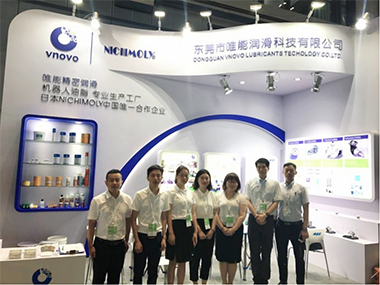

By VNOVO Technical Support Team
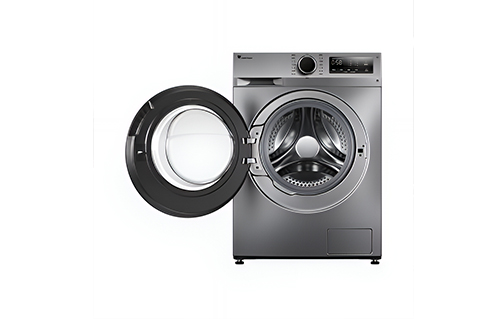
Washing machine damper rods control drum oscillation during spin cycles. Unlike hydraulic shock absorbers that use fluid and valves, washing machine dampers rely on the viscous shear resistance of grease in the sliding interface between piston and cylinder as their primary energy-dissipation mechanism. The damping grease itself provides the resistance that prevents the drum from bouncing violently. Selecting the right grease determines whether the machine runs quietly – or walks across the floor.
What Makes Washing Machine Damper Rods Demanding for Damping Grease?
– Grease is the damping mechanism. The piston slides through grease-filled cylinder, and shear resistance converts kinetic energy to heat. The grease must provide the right resistance throughout the product’s life.
– High and variable loads. Unbalanced loads generate forces exceeding 500 N per damper. Grease must maintain consistent damping under peak loads without being displaced.
– Wide temperature range. Programs span cold water (10-20 °C) to hot wash (up to 90 °C). Damping must remain consistent.
– Constant moisture and humidity. Warm, humid environment with water splash and condensation. Grease must resist washout and not emulsify.
– 10+ year service life. Sealed assemblies with no re-lubrication. Grease must resist separation, mechanical degradation, and thermal aging.
– Noise and vibration as quality perception. Per Nye Lubricants, damping greases “control motion and noise” – directly controlling the primary consumer complaints about washing machines.
– Variable stroke speed. Strokes of 50-80 mm with speeds from near-zero at reversal to several hundred mm/s at mid-stroke. Damping must work across this range.
Why Do Washing Machine Damper Problems Persist Even When Damping Grease Is Applied?
1. Damping too light at high temperature. Low-VI greases lose shear resistance at 60-90 °C, allowing excessive drum oscillation during hot spin.
2. Damping too stiff at cold start. Same low-VI greases become excessively stiff at 10-20 °C, increasing motor load during cold cycles.
3. Grease displaced from cylinder. Under repeated high-force strokes, low-tack greases are pushed out, reducing damping over time.
4. Water emulsification. Greases not formulated for wet environments absorb water, reducing viscosity and damping.
5. Oil separation over years. Base oil migrates from thickener, altering rheological properties and damping force.
6. Mechanical degradation. Repeated shearing at high loads breaks down grease structure, progressively reducing damping.
What Properties Determine Whether a Damping Grease Will Perform in Washing Machine Damper Rods?
– Dynamic viscosity (CTM-68). Must provide adequate damping at operating temperature, typically 30-105 Pa·s at 50 s⁻¹. NyoGel 774H (46 Pa·s) to 774VH (105 Pa·s) covers medium to heavy damping.
– High viscosity index (ASTM D2270). Critical for 10-90 °C consistency. NyoGel 774H (VI 289) and 774VH (VI 323) provide temperature-stable damping. Fluorocarbon Gel 880 (VI 658) offers the widest stability.
– Water resistance and adhesion. Must resist washout and maintain surface adhesion. NyoGel 774 series has good water resistance. Tack rating (CTM-90) of 3-5 indicates reliable retention.
– Shear stability. Must maintain structure under repeated high-load shearing. Fluorocarbon Gel 868 series: “excellent shear stability for high load applications.”
– Oil separation resistance. GLEITMO SIL 891-V1: “zero oil separation” – critical for lifetime damping consistency.
– Temperature range. Must cover cold start to hot wash. Fluorocarbon Gel 880 (-40 to 200 °C) and Uniflor 8322 (-20 to 250 °C) provide ample margin.
– Material compatibility. Must be compatible with steel pistons, polymer liners (POM, PBT), and elastomer seals.
How to Select the Right Damping Grease for Washing Machine Damper Rods
Step 1 – Identify damper conditions:
| Damper Type | Typical Conditions | Key Requirement |
| Standard front-load | 2 dampers, 40-90 °C | Medium-heavy damping, water resistant, wide temp |
| High-capacity front-load | 4 dampers, heavy unbalance | Heavy damping, high shear stability |
| Top-load damper | Lighter loads, moderate temp | Medium damping, cost-effective |
| Compact / apartment | Lower load, noise-sensitive | Medium damping, quiet |
| Commercial washer | Heavy daily cycles | Maximum stability, long life |
| High-spin inverter | Very high G-force | Heavy damping, consistent across temp |
Step 2 – Match formulation: Standard → NyoGel 774H (46 Pa·s) or Fluorocarbon Gel 868 (30 Pa·s). Heavy → NyoGel 774VH (105 Pa·s) or Fluorocarbon Gel 868VH (64 Pa·s). Extreme duty → Fluorocarbon Gel 880 (VI 658) or Uniflor.
Step 3 – Verify: Confirm damping at cold (10 °C) and hot (90 °C). Confirm water resistance. Confirm shear stability. Confirm material compatibility.
Quick Reference: Damping Grease Selection for Washing Machine Dampers
| Damper / Condition | Damping Level | Direction |
| Standard front-load | Medium-heavy (30-46 Pa·s) | NyoGel 774H / Fluorocarbon Gel 868 |
| High-capacity / heavy | Heavy (64-105 Pa·s) | NyoGel 774VH / Fluorocarbon Gel 868VH |
| Top-load (lighter) | Medium (30 Pa·s) | Fluorocarbon Gel 868 / NyoGel 774H |
| Compact / noise-sensitive | Medium (30-46 Pa·s) | NyoGel 774H |
| Commercial / continuous | Heavy + max stability | Fluorocarbon Gel 880 / Uniflor |
| High-spin inverter | Heavy + wide temp | NyoGel 774VH / Fluorocarbon Gel 880 |
How VNOVO Provides Technical Support
VNOVO does not supply off-the-shelf “damping grease” with universal claims:
Application-Oriented Selection Guidance – VNOVO reviews your damper type, load conditions, temperature range, spin speed, and materials, recommending dynamic viscosity range, base oil type, VI level, and shear stability rating.
Material Compatibility Verification – VNOVO helps assess candidates against steel pistons, polymer cylinder liners (POM, PBT), and elastomer seals – confirming no swelling, degradation, or adhesion loss over expected service life.
Scenario-Based Communication Support – VNOVO provides rationales explaining *why* a direction is suggested, what trade-offs exist (higher viscosity = more damping but stiffer cold-start vs. lower = easier start but less hot-spin damping; high VI = consistent across temperature but higher cost vs. moderate VI = adequate for moderate range; PAO/silica = good water resistance and moderate cost vs. fluorinated = superior stability but higher cost), and what validation steps to prioritize – including damping force testing at temperature extremes and water immersion cycling.
Conclusion
When to use specialized damping grease in washing machine damper rods
When the damper relies on grease shear resistance as the primary damping mechanism, when damping must remain consistent from cold to hot cycles, when water and humidity would degrade conventional greases, or when 10+ year life without re-lubrication is required.
When a general-purpose grease may be acceptable
When the damper uses hydraulic valves where grease is only a seal lubricant, when operating temperature is constant, when water exposure is minimal, and when service life expectations are moderate.
What VNOVO can support
1. Selection guidance – translating damper type, load, temperature, and life requirements into damping viscosity range and formulation
2. Material matching – assessing compatibility with piston, liner, and seal materials
3. Scenario communication – providing the rationale to specify, test, and validate the right damping grease for your washing machine damper rods
*This article is provided for informational purposes based on industry references and motion control lubrication principles. Specific product selection should always be verified through damping force testing at temperature extremes, water immersion cycling, and shear stability validation.*