

Has this ever happened to you?
You open the car door and hear a sharp “squeak.”
At first, most people do not take it seriously. It seems like a simple hinge problem. Spray some oil, open and close the door a few times, and the noise should disappear, right?
But in many cases, it does not.
After repeated repair attempts and unnecessary spending, the sound still comes back. The reason is simple: door noise is not always a problem of “not enough oil.” It is often caused by choosing the wrong lubricant for the wrong friction point.
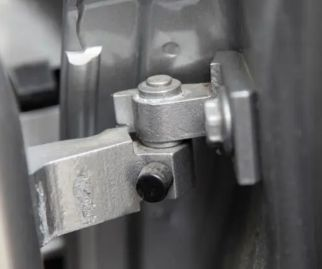
First, Let’s Talk About Door Hinges
Many people think a door hinge is just two metal plates connected together. That is only part of the story.
The key component is the bearing inside the hinge. Every time the door opens and closes, the hinge bearing carries the door weight while also absorbing opening and closing impact force.
Over time, the original lubricant may oxidize, harden, dry out, or be squeezed away from the contact area. Once the lubricating film fails, metal begins to rub directly against metal.
That sharp squeak is not just “noise.” It is a signal that the hinge bearing is losing lubrication protection.
For hinge bearings, the lubricant must have strong adhesion. It needs to stay in place during rotation and impact, instead of being thrown off or squeezed out too quickly. In high-load areas, EP additives are also important to help protect the metal surface under pressure.
Now, Let’s Look at the Door Latch
The door latch is more complex than most people realize.
Inside the latch, there are several working parts: the ratchet, spring, latch hook, lock block, and sliding contact surfaces. Every time the door closes, these parts engage with each other and generate a clear mechanical “click.”
When lubrication is correct, the closing sound feels solid and controlled.
When lubrication fails, the ratchet and spring begin to work under dry friction. The result may be harsh impact noise, rattling on rough roads, or a loose and cheap closing feel.
In automotive NVH work, door noise is often divided into two types:
Static impact noise occurs at the moment the door closes, such as a harsh “thud” or “click.”
Dynamic noise appears when driving over rough roads, such as rattling, clattering, or repeated vibration noise.
Different noise sources require different lubrication solutions. Using one random spray lubricant for every location is usually not a reliable fix.
So How Should You Select the Right Lubricant?
This is the key point.
Hinge bearings usually require an adhesive grease with strong load-carrying ability. The grease must stay on the bearing surface during repeated rotation and impact.
Latch mechanisms may require a different approach. Some lock blocks and sliding parts actually perform better with a lighter grease. If the grease is too thick, the latch may hesitate, return slowly, or feel sticky.
In other words, thicker is not always better.
Material compatibility is also critical. Door systems contain rubber seals, plastic parts, coatings, and metal surfaces. Some solvent-based or unsuitable lubricants can cause rubber swelling, seal deformation, water leakage, air leakage, or plastic surface damage.
That is why door hinge and latch lubrication should not be treated as a quick “spray and forget” repair.
Three Practical Maintenance Steps
Step 1: Clean the old lubricant and dust.
Old grease, dust, and wear debris should be removed first. Applying new grease over dirty residue often makes the problem worse.
Step 2: Apply the correct grease to the correct location.
Use a suitable grease for the hinge bearing, latch mechanism, and sliding contact points. Apply a controlled amount. Too little will not protect the surface, while too much may attract dust or interfere with movement.
Step 3: Open and close the door repeatedly.
After application, operate the door several times to allow the grease to spread evenly across the working surfaces.
Final Thoughts
Door noise may not sound like a major engineering topic. It is not as eye-catching as autonomous driving, smart cockpits, or battery technology.
But users touch the door every single day. A squeaky hinge, harsh latch sound, or loose door feel can quickly damage their perception of vehicle quality.
If your car door makes noise, do not rush to spray random lubricant everywhere.
First identify the source: is it the hinge, the latch, the lock block, or the sliding contact surface?
Then choose the right grease for that specific location.
Because in automotive interior and body systems, small lubrication details often decide whether a vehicle feels refined — or cheap.