
A friend sent a WeChat voice message: when steering in place, his car made a “gook” sound; on the highway, the steering felt slightly loose. The dealership checked everything and said nothing was wrong — keep observing.
I asked him to try turning to full lock. He did, and confirmed: there was indeed ahesitation feeling.
Honestly, I have seen this situation many times. After turning the steering wheel twenty-some times in place, a “gook” sound emerges and the steering assist system gear pair — steel and nylon — is most likely saying “something is not right.”
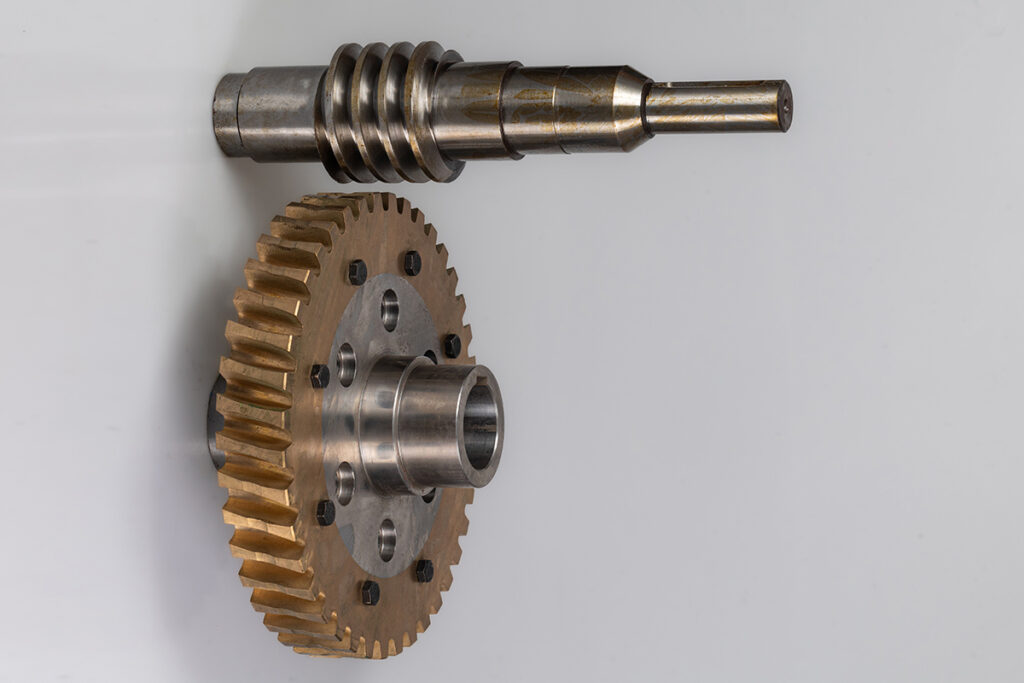
What the Worm Gear Actually Does
In the EPS electric power steering system, the worm gear delivers motor torque to the steering mechanism — it is the heart of the entire system.
The worm is steel, driven to rotate by the motor; the worm wheel is nylon or glass-fiber-reinforced nylon that envelops the worm.
Here lies the fundamental difference from conventional gear pairs: steel against nylon means constant sliding friction throughout.
For the driver, this pair’s performance shows up directly in steering feel: whether a full lock at standstill passes smoothly, whether self-centering is crisp, whether it hesitates during cold starts — all depend on whether this friction pair is working properly.
────────────────────────────────────────
How Does Adhesive Wear Develop?
Adhesive tooth wear occurs when two surfaces that should not be in contact weld together under high pressure and temperature, then are torn apart — leaving tear marks on the tooth surface.
When you turn the wheel to full lock, motor torque is maximum and the worm wheel承受 the load concentrated on a line, with extremely high unit pressure. The worm wheel is made of nylon — much softer than the steel worm. Under high pressure, microscopic asperities on the nylon surface flatten and directly adhere to the steel worm.
Moreover, maintaining a complete oil film is particularly difficult for this friction pair. Low-speed heavy load inherently operates in boundary lubrication, compounded by -40°C to +120°C temperature cycling — lubricant repeatedly thins, thickens, and oxidizes. The oil film grows thinner and more unstable with each cycle.
With all three conditions present, adhesion points tear open, nylon surface material peels away, and adhesive tooth wear is established.
────────────────────────────────────────
Why It Is a Chronic, Progressive Condition
The most dangerous aspect of adhesive tooth wear is the accelerating downward spiral.
Once the tooth surface roughens, friction increases, temperature rises, and the lubrication film deteriorates further — then wear accelerates, temperatures climb higher, and the film thins even more. A vicious cycle.
Making things worse: EPS worm gears must match automobile service life — lifetime lubrication, no maintenance after assembly. From day one on the vehicle, lubricant must independently withstand every operating condition, with no opportunity for later correction.
Industry standards for EPS worm gear lubricant testing are notoriously stringent:
- PB extreme-pressure value ≥1,200 N (FZG gear test ≥Class 12)
- Wear scar diameter (steel-plastic friction pair) ≤0.40 mm
- Dropping point ≥220°C
- -40°C cold start torque ≤1.0 N·m
- Oxidation pressure drop (100 h) ≤10 kPa
- CR rubber compatibility, volume change ≤5%
- 100,000-cycle extended cone penetration difference ≤30 units
These numbers all point to one objective: preventing adhesive wear.
────────────────────────────────────────
Solving It from the Lubrication Angle
The core comes down to three concepts: oil film, boundary film, and long-term stability.
Oil film: PAO full-synthetic base stock is the current mainstream approach. 40°C kinematic viscosity controlled at 40–60 mm²/s solves a specific problem — too thin cannot withstand high temperatures; too thick prevents the steering wheel from turning in cold weather.
Boundary film: Relies on dual-layer protection from extreme-pressure additives plus solid lubricants. MoDTC-type extreme-pressure agents form chemical reaction films under high temperature and pressure. PTFE or UHMW-PE solid lubricants form low-shear slip layers on the steel-nylon friction interface — together they completely isolate metal from nylon.
Long-term stability: Complex lithium or complex sulfonate thickener-based grease structures are more stable — less prone to oil separation at high temperatures, longer oxidation induction period, capable of supporting 15+ year service life requirements.
One critical pitfall: the EP additive system must be validated for nylon compatibility. EP agents with excessive active sulfur content corrode nylon, accelerating worm wheel failure. FZG gear testing uses the steel-plastic mode for rating — not the conventional steel-steel mode.
────────────────────────────────────────
Selection Recommendations
Two things matter most:
Bench validation. At minimum, pass steering assist motor cyclic life testing (≥15,000 cycles) and high/low temperature storage testing (120°C × 1,000 h) — these determine whether the grease can meet lifetime lubrication requirements.
Nylon compatibility data. Not all extreme-pressure greases are suitable for nylon friction pairs. Suppliers must provide independent steel-plastic friction and wear test reports plus nylon swelling data — otherwise you are gambling with product reliability.
────────────────────────────────────────
Closing
Adhesive tooth wear does not happen overnight — it accumulates. Waiting until steering feel deteriorates, self-centering torque diminishes, and noise increases to address it costs far more than clearly specifying requirements during selection and completing proper bench validation.
I know an experienced steering system engineer who said: “Worm gear designs have adequate margin, but nobody oversees lubricant selection — it is often the last link to fail.”
────────────────────────────────────────
*If your product is wrestling with EPS worm gear lubricant selection, feel free to describe your specific conditions in the comments. I can help assess whether a more suitable solution exists.*