
Power tool gearboxes put grease under extreme stress
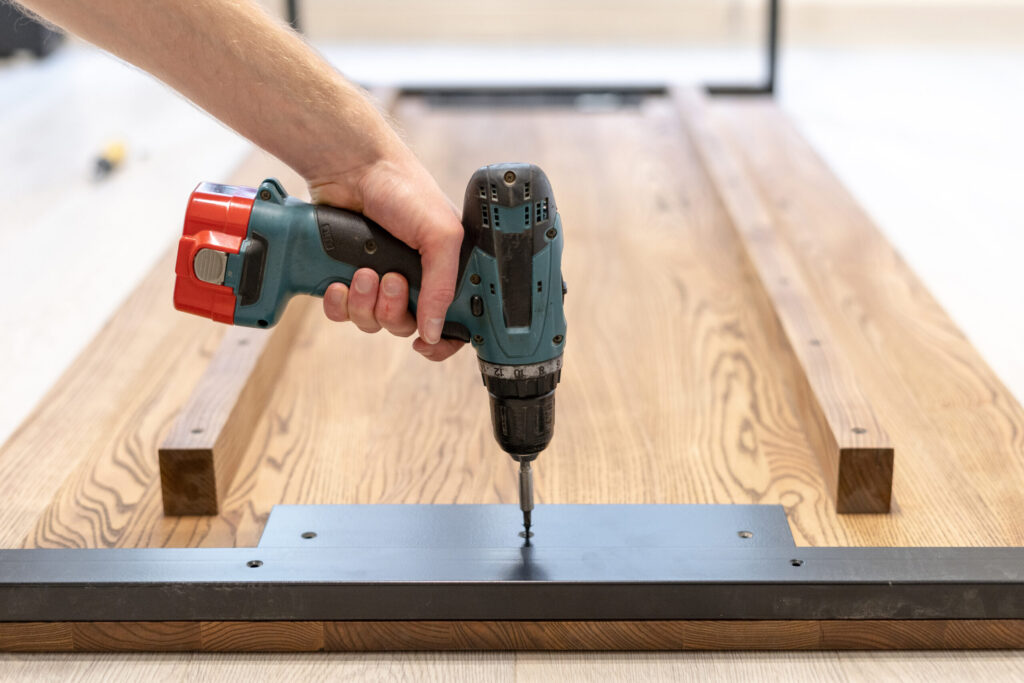
Few small mechanisms punish grease as severely as a power tool gearbox. An angle grinder may run at several thousand RPM, an impact driver delivers repeated bursts of torque, and a reciprocating saw generates constant vibration every time the blade reverses direction. Inside each of these tools, the gear train operates at high speed, under heavy load, and through repeated start-stop cycles.
The grease inside the gearbox must withstand frictional heat, mechanical shock, and gradual degradation over months of intermittent use. Once the grease can no longer perform as intended, gear wear accelerates, operating noise increases, and the tool may fail well before its expected service life.
What happens when the grease is not suited to the application
1. Gear wear under heavy load
Power tool gears transfer torque from a high-speed motor to a lower-speed output. Although tooth contact is brief, it occurs thousands of times per minute. If the grease film between meshing teeth becomes too thin, or if the grease loses its load-carrying capacity because of thermal breakdown or shear, direct metal-to-metal contact can occur. The result is faster tooth wear and shorter gearbox life.
In these conditions, a lithium complex-thickened grease with good shear stability generally performs better than a simple lithium soap grease.
2. Noise increases over time
A gearbox that runs quietly when new often becomes louder as the grease ages, oxidises, or separates. In many cases, rising gearbox noise is a sign that the lubrication film at the tooth contact is no longer sufficient.
Greases formulated with solid lubricant additives such as PTFE or organic molybdenum can help maintain a lower friction coefficient at the tooth interface for longer periods. This supports quieter operation and can also help extend tool life.
3. Plastic gear incompatibility
Not all power tool gearboxes use metal gears. Many cordless drills, screwdrivers, and consumer-grade tools use plastic gears or hybrid plastic-metal gear trains. Conventional greases that contain certain mineral oils or aggressive additives may cause these plastics to swell, crack, or become brittle over time.
If grease compatibility with the specific plastic has not been verified, the lubricant may shorten tool life rather than improve it.
The right gear grease is designed for the conditions power tools actually create
Handheld power tools are one of the most common applications for grease-lubricated gears. A defining feature of these applications is intermittent or start-stop operation, which gives the grease time to flow back into the contact zones between cycles. This is different from continuously operating oil-lubricated gearboxes, where the heat-transfer advantage of liquid oil becomes more important.
For power tool gearboxes, the grease should provide four key properties:
- High load-carrying capacity to protect gear teeth under torque
- Shear stability so the grease does not thin excessively after long-term use
- Temperature resistance because the gearbox can run hot during extended operation
- Material compatibility, especially in tools that use plastic gears
Lithium complex thickeners are widely used in industrial gear greases because they offer higher dropping points and better shear stability than simple lithium soaps. That is why many greases designed for heavy-duty or high-temperature service rely on lithium complex thickener systems.
Gear grease selection depends on gear material and operating conditions
The table below provides a practical starting point for selecting gear grease for common power tool configurations. Final selection should always be confirmed against the actual gear and housing materials used in production.
| Power tool type | Key requirement | Grease characteristic | VNOVO example |
| Angle grinder, hammer drill (high load, high speed) | Load-carrying, shear stability, heat resistance | Li complex, mineral or synthetic base, NLGI 0.5 to 2 | SYN177 |
| Cordless drill or driver with plastic gears | Plastic compatibility, noise reduction, low temp torque | Synthetic base with PTFE, Li complex, NLGI 1 | VN EM-30L |
How VNOVO supports gear grease selection for power tools
VNOVO provides technical support for gear grease selection in power tool applications. This support includes:
Application selection guidance
Matching grease chemistry to gear type, speed range, and load profile.
Material compatibility assessment
Confirming that the grease is suitable for the plastics, metals, and seals used in the gearbox.
Operating condition review
Aligning lubricant specifications with real-world field conditions, including duty cycle, ambient temperature, and expected service intervals.
When to use gear grease — and when another lubricant may be better
Use gear grease when:
- the tool has a sealed or semi-sealed gearbox designed for grease lubrication
- the gear train operates intermittently or in start-stop mode
- the tool is intended to use for-life lubrication without relubrication
- the gearbox contains plastic gears that require a compatible, non-aggressive grease
Do not use gear grease when:
- the gearbox is designed for oil lubrication with a splash or circulating system
- operating speeds and temperatures are so high that only oil can remove heat effectively
- the original equipment manufacturer specifies a different lubricant that has already been validated for the design
In either case, VNOVO can support lubricant selection through application review, material matching, and operating-condition analysis to determine the most suitable product for a specific power tool gearbox.