
A post appeared online. A three-year-old new energy SUV, the owner posted at 2 AM saying the sunroof would not close. Taken to the dealership, disassembled — three gear teeth were broken. Two months remained before the warranty expired. The manufacturer said it was not a motor problem and demanded out-of-warranty replacement. The comments: “happened to me too.”
Honestly, my first reaction was: unlucky owner.
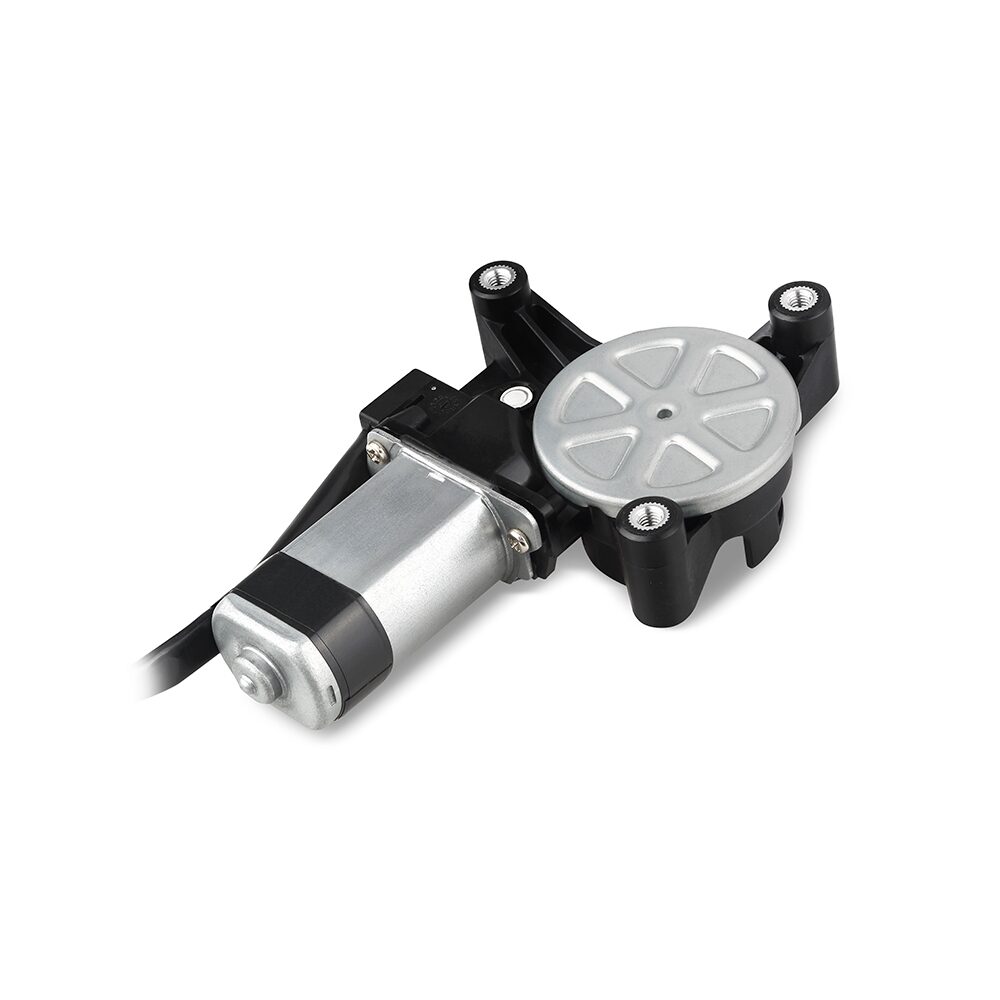
But looking at after-sales data more carefully, I realized: this is not bad luck — it is a probability issue. Failure rates for sunroof roller shutter motors in years three to four rank among the top automotive complaint categories for new energy vehicles. This is not a rare occurrence.
An Account Many Have Not Calculated
Why do gears break?
Low-cycle fatigue failure — the tooth root repeatedly承受 bending stress, stress exceeds the limit, micro-cracks appear, slowly propagate, then break. This sounds like a material problem, but lubricant actually plays a far more central role than most people realize.
With proper lubrication, gear tooth surfaces are separated by an oil film, friction coefficient is low, impact force is absorbed by the oil film, and tooth root stress stays within safe limits.
What happens after lubrication fails?
No oil film — metal contacts directly, friction coefficient jumps from 0.05 to 0.30 instantaneously. Impact force is not absorbed, tooth root stress multiplies. Every mesh cycle accumulates micro-damage, cracks begin growing invisibly.
Brushed motor carbon brush dust adds fuel to the fire — metal powder mixes into the lubricant and becomes an abrasive, accelerating tooth surface wear.
Lubricant failure is not overnight — it is a gradual accounting.
- Year one: no problem.
- Year two: slight noise appears.
- Year three: noise increases.
- Year four: breaks.
Warranty periods are typically three years. The account settles in year four — what a coincidence.
────────────────────────────────────────
A Lesson from an Experienced Engineer
I know a process engineer at an OEM who recounted a mistake he regretted for a long time.
During their project’s grease supplier selection, the technical team chose a product with excellent cost-performance — dropping point ≥200°C, beautiful data. Bench validation completed, OK. Vehicle launch, OK.
First-batch vehicles sold without issues. Second year winter, complaints began appearing in northern regions — sunroof startup hesitation. Few at first, but present.
They initially thought it was a motor problem, disassembled several units for analysis, and finally discovered: low-temperature torque exceeded specifications — the parameter that was not documented in the specification sheet, and neither party had tested it.
“At the time, I felt that looking only at dropping point was wrong, but when leadership asked what parameter to add, I could not answer.” When he told me this, his tone was matter-of-fact, but I could hear how deeply that mistake had cost him.
Low temperature is the primary killer of sunroof motor life — not high temperature. Five parameters must all be specified: low-temperature torque (-30°C) ≤500 mN·m, dropping point ≥200°C, PB extreme-pressure value ≥392 N, noise ≤45 dB(A), and rubber swelling rate with actual measured data. Not any two or three will suffice.
This was a lesson paid for with after-sales reputation.
────────────────────────────────────────
One Trend That Should Not Be Overlooked
Brushless DC motors are becoming the mainstream upgrade for sunroof motors. Compared to brushed motors, BLDC has no carbon brush dust, longer life, lower noise — on the positive side.
But gear mesh precision is higher, and grease extreme-pressure performance requirements are also higher.
Many projects switching from brushed to brushless motors did not update the lubrication solution — they continued using the old approach. However, BLDC motors run at higher speeds, and lubricant load-carrying requirements are actually higher. The old approach cannot keep up with new demands.
For sunroof assemblies supporting BLDC motors, priority should go to polyurea-based greases — superior thermal stability, long service life, better suited to the demanding conditions of high-speed precision gears.
This is not optional — it is a mandatory upgrade alongside the motor change.
────────────────────────────────────────
Closing Thought
When electricity began普及 in American factories in the 1880s, many owners bought generators, expecting efficiency to improve automatically with power connected.
What happened? Motors were installed, but factory management methods remained unchanged, layout unchanged — efficiency did not improve at all. Electricity itself was not the barrier; understanding what electricity meant was.
Lubricant in a sunroof motor is like electricity in that factory. It appears to be a配套 part, but it actually determines how far the entire system can go.
An experienced engineer once told me something I have remembered: “Gear and bearing designs have adequate margin built in, but nobody oversees lubricant selection — it is often the last link to fail.”
Sunroof roller shutter motor gear tooth breakage is essentially the delayed exposure of a lubrication solution design flaw. Selecting the right lubrication solution extends sunroof motor reliable service life from 5 years to over 10 years.
The math on this one is actually not difficult to do.
────────────────────────────────────────
*If you want to understand more about sunroof motor lubrication solutions, or have other automotive lubrication questions, feel free to continue the discussion.*