
By VNOVO Technical Support Team
During brake service, technicians apply a thin lubricant film to pad ears, abutment clips, shims, and caliper slides before reassembly. This ensures the pad slides freely under extreme heat, so braking force transfers evenly and the pad releases cleanly. High-temperature assembly anti-seize grease is designed for this role – but the wrong formulation, or incorrect application, can compromise braking safety.
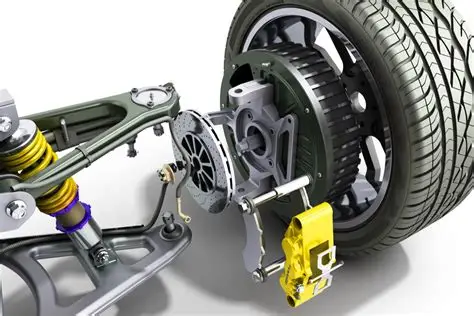
What Makes Brake Pad Assembly Interfaces Demanding for Anti-Seize Grease?
The pad-to-caliper interface destroys most general-purpose lubricants:
– Extreme sustained temperatures. Pad backing plates reach 300-600 °C during heavy braking. The grease must not melt, carbonize, or evaporate. Conventional lithium or calcium greases fail well below this range.
– Cyclic thermal loading. Each brake event heats rapidly; each release cools. This repeats hundreds of times per journey. The grease must survive thermal cycling without drying or losing its film.
– High contact pressure on small areas. Pad ears and clips carry full clamping force on small surfaces. The film must persist without being squeezed out.
– Corrosive environment. Road salt, moisture, and brake dust create aggressive conditions. The grease must protect metal from rust and galvanic attack.
– Zero tolerance for friction surface contamination. Any grease on the pad face reduces braking effectiveness. The product must stay on non-friction surfaces only.
– Vibration and noise. Unlubricated pad-to-caliper interfaces cause squeal. The grease must dampen micro-movement without drying between service intervals.
Why Do Brake Pad Problems Persist Even When Anti-Seize Grease Is Applied?
Six failure modes continue to cause issues:
1. Grease carbonizing at high temperature. Conventional petroleum-based greases carbonize above 200-250 °C, leaving hard residue that prevents pad sliding and causes uneven wear.
2. Grease migrating onto the friction surface. Over-application or low-consistency grease squeezed onto the pad face during caliper compression contaminates friction material.
3. Copper-based grease causing galvanic corrosion on aluminum. Copper anti-seize contacting aluminum caliper bodies in moisture and salt accelerates galvanic corrosion.
4. Grease drying or washing away between services. Some formulations dry under thermal cycling or are displaced by water, leaving pad ears unprotected.
5. Incompatibility with rubber or TPU components. Some greases swell or degrade guide pin boots, elastomeric shims, or noise-damping layers.
6. Insufficient film under high contact pressure. Light-duty greases may be squeezed from between pad ears and clips, leaving metal-to-metal contact and seizure risk.
What Properties Determine Whether a High-Temperature Anti-Seize Grease Will Perform on Brake Pads?
Key properties:
– Upper temperature rating. Copper-based pastes survive to 1000 °C+; nickel-based to 1300 °C+; ceramic-based to 1500 °C+. PFPE-based greases sustain 250-300 °C continuously. The product must not carbonize at brake temperatures.
– Metal content and galvanic safety. Copper-based suits steel-to-steel/cast iron only. Where aluminum is present, nickel-based, ceramic-based, or non-metallic prevents galvanic corrosion.
– Film persistence under pressure and temperature. Must maintain continuous film through thermal cycling without squeeze-out or drying.
– Non-migration to friction surfaces. Controlled flow – thick enough to stay on ears and slides, with no tendency to spread onto the pad face.
– Water and corrosion resistance. Must protect metal from road salt and moisture through extended service intervals.
– Elastomer compatibility. Must not degrade rubber boots, elastomeric shim layers, or TPU components.
How to Select the Right Anti-Seize Grease for Your Brake Pad Application
Step 1 – Identify the interface and materials:
| Interface | Materials | Key Requirement |
| Pad ears / abutment clips | Steel ear / steel or cast iron bracket | High-temp film, no migration |
| Pad backing / shim | Steel backing / steel or rubber-layered shim | Noise damping, shim compatibility |
| Shim / caliper piston face | Steel shim / aluminum or cast iron caliper | Galvanic safety if aluminum |
| Caliper slide pins | Steel pin / aluminum bore / rubber boot | Galvanic safety, rubber compatibility |
| Hub / rotor face | Cast iron hub / cast iron rotor | Corrosion barrier, re-serviceability |
Step 2 – Match metal content: Steel-to-steel/cast iron → copper acceptable. Any aluminum present → nickel/ceramic/non-metallic. Rubber boots → verify elastomer compatibility.
Step 3 – Apply correctly: Thin film on non-friction surfaces only. Never on pad face or rotor. Follow vehicle torque specifications.
Quick Reference: Selection Guide
| Interface / Condition | Key Properties | Direction |
| Pad ears / abutment clips | High-temp, no migration, film persistence | High-temp assembly grease or nickel/ceramic anti-seize |
| Pad backing / shim | Noise damping, high-temp, shim compatible | Synthetic high-temp grease with damping properties |
| Shim / aluminum caliper | Aluminum-safe, high-temp, no migration | Nickel or ceramic anti-seize; non-copper |
| Slide pins (aluminum caliper) | Aluminum-safe, rubber-compatible, water-resistant | Nickel or ceramic; verify boot compatibility |
| Hub / rotor (iron-to-iron) | Corrosion barrier, re-serviceable | Copper acceptable; or ceramic for broader safety |
| Severe thermal duty | Maximum temperature survival | Nickel or ceramic paste; 1000 °C+ rating |
How VNOVO Provides Technical Support
VNOVO does not supply off-the-shelf “brake pad anti-seize grease” with universal claims:
Application-Oriented Selection Guidance – VNOVO reviews your brake system materials, pad and shim construction, temperature profile, and service environment, mapping them against product categories to recommend metal content, temperature rating, application points, and quantity guidance.
Material Compatibility Verification – VNOVO helps assess candidates against all materials: caliper alloy, pad backing steel, shim layers, guide pin boots, and abutment clip coatings – with emphasis on galvanic safety with aluminum and elastomer compatibility.
Scenario-Based Communication Support – VNOVO provides rationales explaining *why* a direction is suggested, what trade-offs exist (copper = proven high-temp on steel but galvanic risk on aluminum vs. nickel/ceramic = broader safety but higher cost; more grease = better barrier but higher migration risk onto friction surfaces), and what validation steps to prioritize.
Conclusion
When to use high-temperature assembly anti-seize grease on brake pads
When the pad assembly includes steel-to-steel or steel-to-cast iron interfaces requiring high-temperature film persistence, the caliper is aluminum requiring galvanic-safe formulations, the environment involves thermal cycling or road salt, or there is a history of pad seizure, uneven wear, or noise from inadequate lubrication.
When a general-purpose approach may not suffice
When conventional greases carbonize at brake temperatures, copper-based products risk galvanic corrosion on aluminum, or the service interval demands film persistence that petroleum-based products cannot deliver.
What VNOVO can support
1. Selection guidance – translating brake materials, temperature profile, and environment into anti-seize category, metal content, temperature rating, and application guidance
2. Material matching – assessing compatibility between candidates and all metals, shims, elastomeric boots, and coatings in the brake assembly
3. Scenario communication – providing the technical rationale and decision framework to specify, validate, and apply the right high-temperature anti-seize grease for your brake pad application
*This article is provided for informational purposes based on publicly available industry references and established lubrication engineering principles. Specific product selection should always be verified against the vehicle manufacturer’s service guidelines, OEM recommendations, anti-seize grease supplier technical data sheets, and material compatibility data.*