
By VNOVO Technical Support Team
Walk through any 3D printing forum and you will find white lithium grease recommended for guide rods, lead screws, and linear rails. It is widely available, inexpensive, and familiar. But applying it to every moving part – or without understanding its limitations – often creates problems rather than solving them.
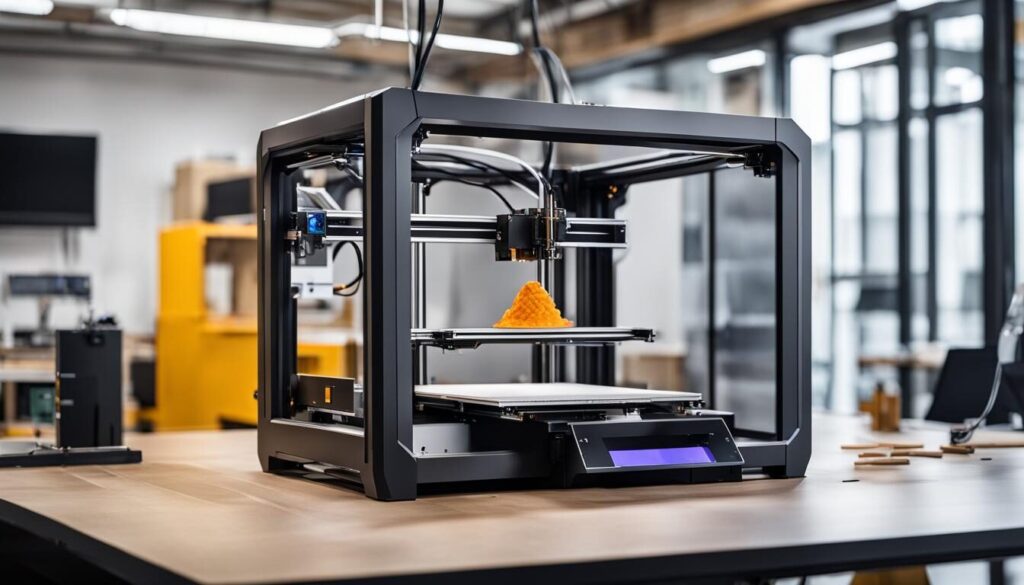
What Makes 3D Printer Lubrication Demanding for White Lithium Grease?
3D printer motion systems test any lubricant:
– Reciprocating short-stroke motion. Printer axes oscillate over varying strokes – tens of mm in Z, hundreds in X/Y. This pushes grease out of the contact zone.
– Mixed material interfaces. A printer combines steel rods with POM or bronze-PTFE bushings, steel lead screws with brass or polymer nuts, and possibly profiled linear guides.
– Exposure to filament debris and dust. Thermoplastic particles and dust settle on exposed rods. Tacky grease traps these, forming an abrasive paste.
– Proximity to heat sources. Heated beds (60-110 °C) and hotends (180-280 °C) warm nearby components. While rails rarely exceed 50-60 °C, localized heating softens grease and accelerates oxidation.
– User-serviceable maintenance. Rods and screws are openly accessible. The grease must be easy to apply and clean off.
– Frequent direction changes. Print heads reach 100-200 mm/s but reverse constantly. The grease must maintain film through start-stop-reverse cycles.
Why Do 3D Printer Problems Persist Even When White Lithium Grease Is Applied?
Six failure modes continue to cause issues:
1. Grease stiffening in cold environments. White lithium grease thickens at low temperatures. Printers in unheated workshops may show sluggish movement and missed steps in winter.
2. Incompatibility with polymer bushings. Some formulations degrade POM (acetal) bushings over time, causing dimensional change and positional drift.
3. Excess application trapping debris. Over-applying on exposed rods creates a sticky surface that captures thermoplastic particles, forming abrasive paste.
4. Insufficient film on vertical lead screws. White lithium grease can slump on vertical Z-axis screws, leaving upper threads under-lubricated and causing uneven Z motion.
5. Inadequate performance on profiled linear guides. Ball-circuit guides need grease with good oil bleed. Standard white lithium may not provide adequate bleed.
6. Drying and oxidation over time. In warm, dusty environments, white lithium grease can oxidize between service intervals, becoming hard to clean.
What Properties Determine Whether White Lithium Grease Will Perform in a 3D Printer?
Key properties:
– Base oil viscosity. White lithium grease typically uses mineral oil with moderate viscosity – adequate for smooth rods and lead screws but potentially too thick for high-speed ball guides.
– Lithium soap thickener. Lithium 12-hydroxystearate provides good water resistance, mechanical stability, and service temperature of approximately -20 °C to 130 °C. This covers most printer conditions but excludes extreme cold.
– NLGI consistency. Typically NLGI 2 – balanced stay-put behavior and spreadability. Works on horizontal rods but may slump on vertical surfaces.
– Polymer compatibility. Not all white lithium greases are safe for POM, polycarbonate, or other engineering plastics. Must be verified for each formulation.
– Oil separation (bleed). Moderate bleed helps rolling contacts (ball guides) but excessive bleed contaminates surrounding areas.
– Low-temperature performance. Mineral oil-based lithium greases stiffen at low temperature. Cold-environment printers may need synthetic alternatives.
How to Select the Right White Lithium Grease for Your 3D Printer
Step 1 – Identify the interface and material:
| Interface | Materials | Key Requirement |
| Smooth rod + POM bushing | Steel rod / POM bushing | POM compatibility, moderate viscosity |
| Smooth rod + bronze bushing | Steel rod / bronze-PTFE | Film adhesion, low wear |
| Lead screw + brass nut | Steel screw / brass nut | Vertical adhesion, no slump |
| Lead screw + polymer nut | Steel screw / POM or PC nut | Polymer compatibility |
| Profiled ball linear guide | Steel rail / ball carriage | Oil bleed, anti-fretting |
Step 2 – Assess suitability: White lithium is generally appropriate for smooth rods with bronze bushings and lead screws with brass nuts. For POM bushings or polymer nuts, verify compatibility. For profiled ball guides, consider whether oil bleed is adequate or a specialty guide grease is preferable.
Step 3 – Apply correctly: Thin, even film. Remove old grease and debris before re-application. Avoid over-application that traps particles.
Quick Reference: White Lithium Grease Suitability
| Interface | Suitable? | Notes |
| Smooth rod + bronze bushing | Yes | Good match; moderate film; easy to service |
| Lead screw + brass nut | Yes, with caveats | Check for vertical slump; re-apply regularly |
| Smooth rod + POM bushing | Conditional | Verify POM compatibility first |
| Lead screw + polymer nut | Conditional | Verify polymer compatibility; watch for wear |
| Profiled ball linear guide | Not ideal | May lack adequate oil bleed; specialty grease recommended |
| Z-axis vertical lead screw | Conditional | Monitor downward migration; consider higher-tack formulation |
How VNOVO Provides Technical Support
VNOVO does not supply off-the-shelf “3D printer white lithium grease” with universal claims:
Application-Oriented Selection Guidance – VNOVO reviews your printer’s motion system (rod type, bushing material, screw and nut material, guide type), operating environment, and maintenance schedule, mapping them against formulation categories to recommend whether white lithium is appropriate, what specifications to look for, or whether an alternative (synthetic-based, higher-tack, specialty guide grease) would better serve specific interfaces.
Material Compatibility Verification – VNOVO helps assess candidates against all materials: rod steel, bushing polymer or bronze, screw and nut materials, and plastic carriage components – with emphasis on POM compatibility and polymer nut safety.
Scenario-Based Communication Support – VNOVO provides rationales explaining *why* a direction is suggested, what trade-offs exist (white lithium = available and affordable but limited temperature range and uncertain polymer compatibility vs. synthetic PAO = wider temperature and verified compatibility but higher cost; NLGI 2 = balanced consistency vs. NLGI 1 = better vertical adhesion but more migration), and what validation steps to prioritize.
Conclusion
When to use white lithium grease in 3D printers
When the printer uses smooth rods with bronze bushings or lead screws with brass nuts in moderate-temperature environments, the operator can re-lubricate regularly, and there are no polymer bushings or nuts requiring verified compatibility.
When white lithium grease may not be the best choice
When the printer uses POM bushings or polymer nuts with unverified compatibility, operates in cold environments where mineral-oil grease stiffens, uses profiled ball linear guides requiring controlled oil bleed, or has vertical Z-axis lead screws prone to grease migration.
What VNOVO can support
1. Selection guidance – translating your printer’s motion system, environment, and maintenance schedule into whether white lithium is appropriate and what specifications matter
2. Material matching – assessing compatibility between candidates and all rod, bushing, screw, nut, and carriage materials
3. Scenario communication – providing the technical rationale and decision framework to specify, validate, and apply the right lubricant for each interface in your 3D printer
*This article is provided for informational purposes based on publicly available industry references and established lubrication engineering principles. Specific product selection should always be verified against the printer manufacturer’s guidelines, OEM recommendations, lubricant supplier technical data sheets, and material compatibility data.*