
By VNOVO Technical Support Team
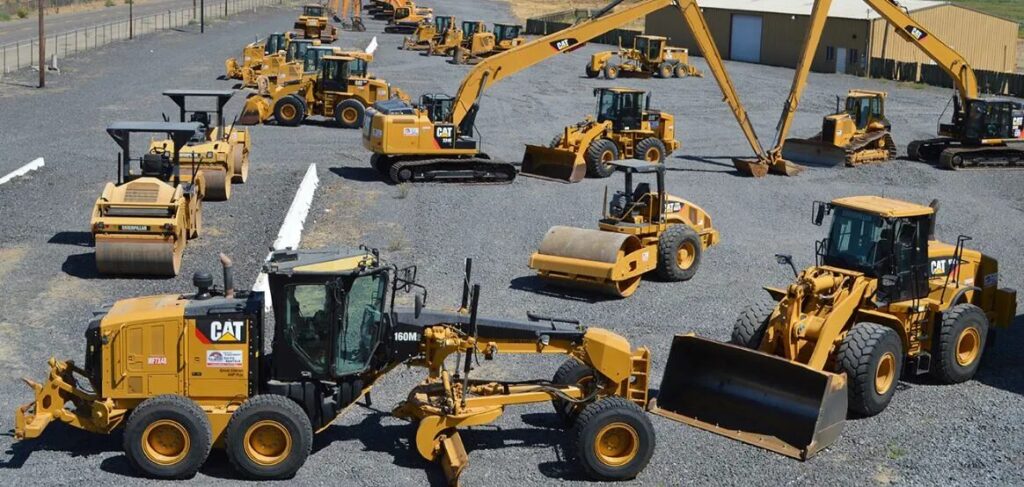
Excavators, mobile cranes, and wheel loaders operate in environments that test lubricants to their limits — dust infiltrates seals, water attacks the lubricant film, ambient temperatures swing from frozen mornings to sustained heat loads, and shock loads are constant. The grease at pins, bushings, and articulation joints must perform under all of these conditions.
What Makes Lubrication of Outdoor Heavy Equipment Distinctively Demanding?
Five compounding conditions define this lubrication environment. Variable temperature: equipment may start at minus 20 degrees C in winter and reach component surface temperatures exceeding 120 degrees C during heavy summer operation — in the same 24-hour cycle. Water and contamination exposure: mud, slurry, pressure washing, and river crossings demand water-resistant formulations. Shock loads: hydraulic arm engagement, sudden stops, and directional changes under load require the lubricant to maintain film at the moment of impact. Infrequent re-lubrication: many joints are serviced on intervals of weeks or months, requiring the grease to continue protecting between maintenance visits. Mixed material interfaces: steel pins, bronze or self-lubricating polymer bushings, and elastomeric seals each require compatibility with the same lubricant.
What Failure Modes Appear in Heavy Equipment Grease Lubrication?
Five failure modes recur. Thermal softening: conventional greases lose film strength at sustained high temperature, accelerating wear at pins and bushings. Water washout and corrosion: greases without adequate water resistance are displaced by water ingress. EP additive depletion: repeated shock events deplete surface-active EP additives protecting against metal-to-metal contact. Dust contamination: inadequate consistency allows grit to work into the bearing interface, forming an abrasive paste. Base oil separation: some greases develop a surface crust while remaining soft underneath, leaving deep joint layers unprotected.
What Grease Properties Determine Performance in Heavy Equipment Applications?
EP additive package: extreme pressure additives — typically sulfur, phosphorus, or chlorine compounds — activate under high contact stress to form protective films that prevent metal-to-metal welding under shock loads. For bronze bushings, inactive sulfur EP chemistry must be selected to avoid corrosive attack on yellow metals. High-temperature base oil and viscosity index (VI): the base oil must maintain viscosity at elevated temperatures. A VI above 100 indicates viscosity changes less with temperature — essential across wide seasonal temperature swings. Synthetic base oils such as PAO or esters retain viscosity better than mineral oils at high temperature. Thickener type and dropping point: the thickener must have a dropping point above the maximum operating temperature. Complex soap and polyurea thickeners maintain structure where conventional lithium soap softens. Water resistance: thickener type significantly affects resistance to water displacement — critical for equipment routinely exposed to pressure washing or river crossings. Adhesion and mechanical stability: the grease must resist being flung from components under vibration. Tackifiers and specific thickener systems improve stay-put performance.
How Should Engineers Select High-Temperature EP Grease for Heavy Equipment Applications?
Step 1 — Define the actual component surface temperature during heavy operation — not ambient temperature. Sustained heavy loading can push bearing surfaces above 100 degrees C. Confirm whether peak temperatures are intermittent or sustained.
Step 2 — Assess the loading and shock profile. Primarily steady heavy load versus significant repeated shock events. Shock-dominated applications require a more robust EP additive package.
Step 3 — Evaluate water exposure: routine pressure washing and river crossings versus occasional rain exposure. This determines the required level of water resistance.
Step 4 — Verify material composition of the joint: steel pin, bushing material (bronze, sintered metal, or self-lubricating polymer), and elastomeric seals. Yellow metal components restrict EP additive chemistry options.
Step 5 — Confirm the maintenance interval and match the grease’s expected service life against the scheduled re-lubrication interval for the equipment.
Quick Reference: High-Temperature EP Grease Selection for Heavy Equipment
| Equipment Type / Application | Typical Conditions | Priority Properties | Recommended Grease Direction |
| Excavator boom and arm pins | High shock, water and dust | EP protection, water resistance, high dropping point | Complex soap or polyurea, inactive sulfur EP, NLGI 2 |
| Mobile crane slew ring and torsion bushings | High static load, slow rotation | High film strength, slow-speed EP, water resistance | High-viscosity base oil with EP, NLGI 2-3 |
| Wheel loader articulation joints | High load, mud and water | Water washout resistance, EP protection | Water-resistant thickener with EP package, NLGI 2 |
| Tracked equipment track rollers and idlers | Dust and debris, high temp | Dust resistance, EP protection, high temp stability | EP grease with tackifier package |
| General purpose heavy equipment pins | Variable load, intermittent operation | Balanced EP, water resistance, wide temperature range | Lithium complex thickener with EP additives, NLGI 2 |
How Does VNOVO Provide Technical Support for High-Temperature EP Grease Selection in Heavy Equipment?
VNOVO does not supply a single grease marketed as a universal solution for heavy equipment lubrication. The appropriate grease depends on equipment type, joint loading profile, operating temperature, water exposure, and material composition of the bearing surface.
Application Assessment: VNOVO reviews equipment type, joint loading profile, maximum operating temperature, water and contamination exposure, and maintenance interval to map requirements against grease formulation categories — base oil chemistry and viscosity grade, thickener type and dropping point, EP additive chemistry and concentration, and NLGI consistency grade.
Material Compatibility Verification: VNOVO assists in verifying candidate greases against steel pins, bronze or sintered metal bushings, self-lubricating polymer components, and elastomeric seals — with particular attention to yellow metal compatibility with the EP additive package.
Formulation Trade-off Analysis: VNOVO explains trade-offs between EP additive strength and yellow metal compatibility, between water resistance and re-lubrication requirements, and between high-temperature stability and cold-temperature pumpability.
Conclusion: When High-Temperature EP Grease Is the Right Choice for Heavy Equipment, When It Is Not, and What VNOVO Can Support
When high-temperature EP grease is the right choice: when equipment operates with sustained heavy loading generating component temperatures above 80 degrees C; when repeated shock loads require EP additive protection; when water exposure from pressure washing, river crossings, or rain demands water-resistant formulation; when the joint contains bronze, sintered metal, or polymer bushings requiring verified material compatibility; and when the maintenance interval is measured in weeks or months.
When an alternative may be more appropriate: when pure rolling-element bearings operate within conventional bearing grease temperature ranges, where standard bearing grease with EP protection is more suitable; when operating temperatures exceed the practical range of available grease formulations; or when the equipment manufacturer specifies a particular lubricant that prohibits equivalent substitutions.
What VNOVO can support: directional formulation guidance matching base oil chemistry, viscosity grade, thickener type, dropping point, EP additive chemistry, and NLGI consistency to the specific application and operating conditions; material compatibility assessment verifying candidate greases against steel pins, bronze or sintered metal bushings, polymer components, and elastomeric seals; and trade-off analysis explaining EP additive selection for shock loading versus yellow metal compatibility, water resistance trade-offs, and high-temperature performance versus cold-temperature capability.
*This article is provided for informational purposes based on publicly available industry references and established lubrication engineering principles. Specific product selection for heavy equipment applications should always be verified against the equipment manufacturer’s guidelines, OEM lubrication specifications, lubricant supplier technical data sheets, material compatibility data, and applicable regulatory and environmental standards.*