
By VNOVO Technical Support Team
A laptop hinge must open the display, hold it at any angle against vibration and minor impact, and close smoothly — thousands of times over the device life. The damping grease at the hinge interface directly determines whether that experience feels stable and refined or loose and inconsistent.
What Makes Laptop Hinge Lubrication Distinctive From Other Hinge Applications?
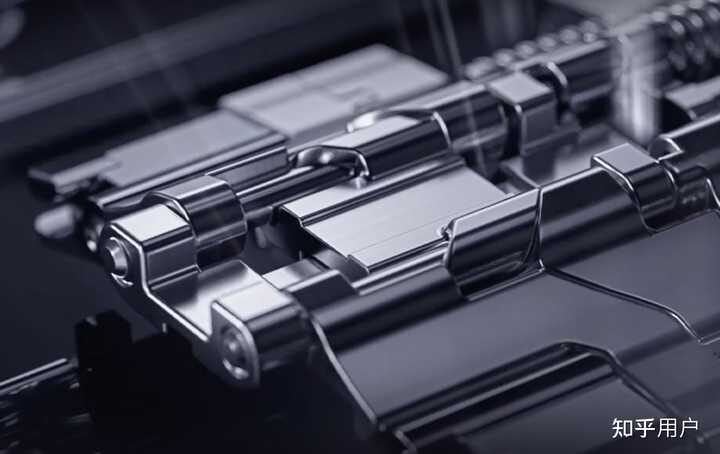
Laptop hinges differ from industrial or furniture hinges in several important ways. The screen is heavy relative to the hinge structure, and users expect it to stay at any angle without drifting. The hinge must maintain consistent holding torque across its full angular range while resisting the vibration and shock of travel. Laptop hinges require gram-scale lubricant quantities — creating a contamination risk profile distinct from phone hinges measured in milligrams. The material mix is characteristic: aluminum alloy housings, steel pivot shafts, and POM or polycarbonate gear segments in a compact, enclosed mechanism.
What Failure Modes Appear in Laptop Hinge Lubrication?
Five failure modes recur. Torque drift over temperature: the hinge loosens in warmth or stiffens in the cold — indicating excessive viscosity change with temperature. Oil separation and migration: high oil bleed allows separated base oil to reach the keyboard, causing visible contamination. Torque inconsistency across the opening arc: the hinge catches or offers no resistance at certain angles, indicating viscosity mismatch with the cam profile. Material incompatibility: certain damping formulations attack polycarbonate or POM components, leading to stress cracking or dimensional change. Insufficient durability: the grease softens or hardens before the hinge reaches its design cycle count, producing free-play or a gritty feel.
What Grease Properties Determine Damping Performance in Laptop Hinge Applications?
Base oil viscosity and viscosity index (VI): the grease must maintain adequate film thickness across the temperature range laptops encounter. A VI above 130, achieved with PAO or polybutene base oils, ensures consistent viscosity across the range. Thickener type and NLGI consistency: lithium complex thickeners are widely used for their adhesion to metal surfaces and resistance to hardening. Polyurea-thickened greases offer better long-term seal stability. NLGI 1-2 is typical for laptop hinges. Tack and adhesion: high tack reduces the risk of oil migrating toward the keyboard under vibration. Oil separation tendency: lower bleed values — below 5 percent at 100 degrees C — indicate a stable formulation less likely to contaminate nearby surfaces. Material compatibility: verification against aluminum alloy housings, steel pivot shafts, POM or polycarbonate gear segments, and elastomeric seals is required before a grease is approved for laptop hinge use.
How Should Engineers Select Damping Grease for Laptop Hinge Applications?
Step 1 — Define the hinge mechanism and torque requirement. Confirm hinge type and target holding torque range in N·cm. Identify the maximum opening angle, detent positions, and acceptable torque variation across the full arc.
Step 2 — Assess the material composition of the hinge zone. List every material the grease will contact: aluminum alloy housing, steel pivot pin, POM or polycarbonate gear segment, elastomeric seal, and any coatings.
Step 3 — Define the operating temperature envelope, including transient exposure to a closed laptop left in a hot vehicle, which can exceed 80 degrees C.
Step 4 — Evaluate cycle life requirements. Confirm that candidate greases have demonstrated stable torque characteristics through equivalent or accelerated cycle testing for the expected 20,000 to 50,000 open-close cycles.
Step 5 — Validate through prototype testing. Measure opening and holding torque at cold, room, and hot temperatures. Inspect for oil migration toward the keyboard after thermal cycling. Assess feel quality with design and user panels.
Quick Reference: Damping Grease Selection for Laptop Hinge Applications
| Hinge Type / Device Category | Typical Materials | Priority Properties | Recommended Grease Direction |
| Standard clamshell laptop hinge | Aluminum alloy + steel pin + POM gear | Torque consistency, good adhesion, moderate temp range | PAO or polybutene, NLGI 1-2, lithium complex thickener |
| 2-in-1 convertible hinge (frequent angle adjustment) | Aluminum + steel + polycarbonate hybrid | Wide temperature range, high tack, no migration | Synthetic hydrocarbon, high-tack formulation, NLGI 1 |
| Gaming laptop hinge (heavier screen) | Aluminum alloy + steel + reinforced polymer | High holding torque, excellent shear stability | Higher-viscosity PAO, NLGI 2, polyurea thickener |
| Ultrabook hinge (thin, light torque) | Aluminum + steel + POM | Precise low-torque control, smooth feel | Light-grade PAO or polybutene, NLGI 0-1 |
| Hinge near keyboard (contamination-sensitive) | Any above with keyboard proximity | Zero or minimal oil separation, high tack | Low-bleed PAO formulation with verified tackifier package |
How Does VNOVO Provide Technical Support for Laptop Hinge Damping Grease Selection?
VNOVO does not supply a single damping grease marketed as universally suitable for laptop hinges. The appropriate grease depends on hinge mechanism type, screen weight and torque requirement, material composition, temperature envelope, and cycle life expectation.
Application Assessment: VNOVO reviews hinge mechanism type, target torque profile, material list, temperature range, cycle life requirement, and assembly constraints to map application needs against damping grease formulation categories — covering base oil chemistry, viscosity grade, thickener system, NLGI consistency, and additive package.
Material Compatibility Verification: VNOVO assists in verifying candidate greases against aluminum alloy housings, steel pivot shafts, POM and polycarbonate gear segments, and elastomeric seals. Polymer compatibility — particularly stress cracking risk with polycarbonate or dimensional change with POM — is assessed as part of the verification process.
Formulation Trade-off Analysis: VNOVO explains the trade-offs between viscosity and starting torque, between thickener type and long-term adhesion, and between oil content and contamination risk for the specific laptop hinge design.
Conclusion: When Damping Grease Is the Right Choice for Laptop Hinges, When It Is Not, and What VNOVO Can Support
When damping grease is the right choice for laptop hinges: when the hinge requires controlled holding torque across a range of angles; when the assembly uses mixed materials that require verified lubricant compatibility; when the device will be exposed to variable temperatures over its service life; when the hinge must operate through 20,000 or more open-close cycles without re-lubrication; and when contamination of the keyboard surface must be prevented.
When an alternative lubrication approach may be more appropriate: when the hinge uses a pure rolling-element bearing design where conventional bearing grease is more suitable; when the OEM explicitly specifies a dry-film lubricant or self-lubricating component finish; or when the assembly process requires a lubricant with specific curing or bonding properties that damping greases cannot provide.
What VNOVO can support: directional formulation guidance matching base oil chemistry, viscosity grade, thickener type, NLGI consistency, and tackifier package to the specific laptop hinge mechanism and operating conditions; material compatibility assessment verifying candidate greases against aluminum alloy, steel, POM, polycarbonate, and elastomeric seal materials; and trade-off analysis explaining the relationship between viscosity, holding torque, temperature sensitivity, and contamination risk.
*This article is provided for informational purposes based on publicly available industry references and established lubrication engineering principles. Specific product selection for laptop hinge applications should always be verified against the device manufacturer’s guidelines, OEM specifications, lubricant supplier technical data sheets, material compatibility data, and applicable regulatory standards.*