
By VNOVO Technical Support Team
Laser drilling subjects precision spindle bearings to extreme thermal stress. Si3N4 hybrid ceramic bearings reduce thermal expansion and weight at high speeds, but concentrate thermal stress in the lubricant film rather than conducting it through the bearing. High-temperature grease for sustained operation above 150 degC — based on PFPE chemistry or high-temperature synthetic ester — addresses ceramic bearing thermal sensitivity, laser radiant heat, and micron-level positioning accuracy together.
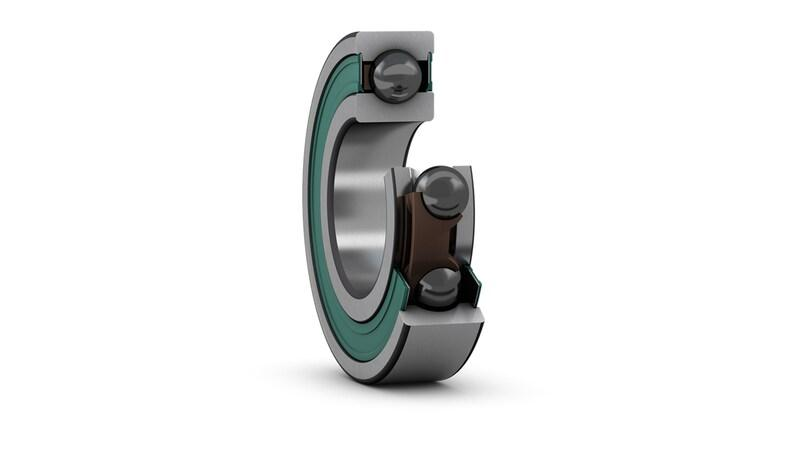
What Makes Ceramic Bearing Lubrication in Laser Drilling Equipment Demanding?
– Thermal stress concentration. Si3N4 ceramic has lower thermal conductivity than steel, so heat accumulates in the lubricant film at the raceway contact. Bearing housings above the drilling zone sustain 80-120 degC at the outer race with thermal spikes during extended drilling cycles.
– Precision and sealed bearing constraints. Thermal expansion at the lubrication zone causes positional drift. Sealed pre-packed cavities prevent re-lubrication access during the service interval.
– Ceramic and cage material compatibility. Some greases contain additives that degrade Si3N4 ceramic surfaces or polyamide or PEEK cage materials used in hybrid ceramic bearings.
– Grease migration into the optical path under centrifugal force and thermal convection.
Why Do Ceramic Bearing Failures Occur in Laser Drilling Equipment Even When Grease Is Applied?
1. Conventional greases above their temperature limit. Many spindles run at 80-120 degC continuously. The grease softens, migrates from the contact zone, and accelerates wear. PFPE-thickened greases have different film strength than ester-based alternatives without bearing OEM validation.
2. Thermal cycling degrades the thickener through repeated softening and hardening between drilling and idle states.
3. Grease migration and cage degradation. Centrifugal force and thermal convection carry grease along the shaft to the optical zone. Polyamide or PEEK cages can be attacked by ester-based additives in some high-temperature greases.
4. Re-lubrication interval too long for the temperature. At 80-120 degC, oxidation and base oil evaporation accelerate significantly.
5. Pre-packed grease not verified for hybrid ceramic compatibility by the bearing manufacturer.
What Properties Make High-Temperature Grease Suitable for Ceramic Bearings in Laser Drilling?
– Sustained operating temperature of 150 degC or higher with low oil bleed and migration resistance. PFPE-based: 250-300 degC with negligible evaporation. Synthetic ester-based: reliable to 160-180 degC with appropriate thickener. The thickener must resist centrifugal and thermal forces driving base oil toward the optical path.
– Ceramic and cage material compatibility. Si3N4 ceramic surfaces, stainless steel raceways, and polyamide or PEEK polymer cages must not be degraded by the additive package.
– Shear stability, low friction, and cleanliness. The thickener must resist thermal cycling. Low friction reduces heat at the rolling contact; low particulate shedding protects the optical zone.
How to Select the Right High-Temperature Grease for Laser Drilling Ceramic Bearings
Step 1 – Identify spindle conditions:
| Condition | Typical Range | Key Requirement |
| Bearing housing temperature | 80-120 degC continuous | Minimum temperature rating |
| Transient spikes | Up to 150 degC | Thermal margin needed |
| Spindle speed | 10,000-60,000 r/min | Speed factor and churn risk |
| Bearing type | Hybrid ceramic (Si3N4) | Material compatibility |
Step 2 – Match formulation: Housing temp 80-120 degC: synthetic ester-based grease, polyurea or sulfonate thickener, rated above 160 degC, ceramic compatible. Housing temp 120-180 degC: PFPE-based grease, PTFE thickener, rated above 250 degC, ceramic and cage verified. High-speed precision spindle: low-viscosity PFPE, speed-rated, low-bleed, verified clean.
Step 3 – Verify: Temperature rating exceeds maximum housing temperature with 20 degC margin. Ceramic and cage compatibility confirmed. Speed factor rating matches spindle maximum RPM. Migration and bleed resistance confirmed. Re-lubrication interval appropriate for temperature profile.
Quick Reference: High-Temperature Grease Selection for Laser Drilling Ceramic Bearings
| Condition | Priority | Recommended Direction |
| Housing temp 80-120 degC | Thermal stability + ceramic compatibility | Synthetic ester-based, polyurea or sulfonate thickener, rated >160 degC |
| Housing temp 120-180 degC | Maximum temp + migration resistance | PFPE-based, PTFE-thickened, rated >250 degC, ceramic and cage verified |
| High-speed precision spindle | Low torque + speed rating + cleanliness | Low-viscosity PFPE, speed-rated, low-bleed, verified clean |
| Intermittent thermal cycling | Shear stability under cycling | PFPE or synthetic ester, thickener-stable per OEM validation |
How VNOVO Provides Technical Support?
VNOVO does not supply a single high-temperature grease with universal claims.
Application-Oriented Selection Guidance: VNOVO reviews your bearing housing temperature, speed, bearing type and cage material, recommending base oil chemistry, thickener system, temperature rating, and required compatibility validations.
Ceramic and Cage Compatibility Verification: VNOVO confirms candidate greases are validated for silicon nitride ceramic surfaces and polyamide or PEEK cage materials, checking additive compatibility.
Scenario-Based Communication Support: VNOVO explains trade-offs (PFPE base = maximum temperature and inertness but higher cost; synthetic ester base = broad ceramic compatibility and cost-effective to 160-180 degC; polyurea thickener = wide range but cage verification needed) and what testing to prioritize before deployment.
Conclusion
When to specify high-temperature grease for ceramic bearings in laser drilling equipment
When bearing housing temperatures exceed 80 degC and standard greases are at their high-temperature limit. When the bearing manufacturer specifies PFPE or high-temperature synthetic ester for the ceramic bearing series. When thermal cycling between drilling and idle states requires a thickener with demonstrated thermal cycling stability. When the bearing cavity is sealed and the grease must last the full service interval.
When an alternative grease may be more appropriate
When bearing housing temperatures remain below 80 degC and standard greases rated to 140 degC are within their performance window. When the bearing manufacturer specifies an OEM grease not to be substituted without validation. When the spindle uses all-steel bearings rather than ceramic or hybrid ceramic.
What VNOVO can support
1. Selection guidance: translating bearing housing temperature, speed, bearing type, and cage material into base oil chemistry, thickener system, and temperature rating
2. Compatibility verification: confirming ceramic surface compatibility, polymer cage compatibility, and additive package suitability
3. Scenario communication: providing the technical rationale for formulation recommendations and clarifying trade-offs between PFPE and synthetic ester base oil systems
This article is provided for informational purposes based on industry references and bearing lubrication knowledge. Specific high-temperature grease selection for laser drilling ceramic bearings should always be verified through bearing OEM documentation, grease compatibility testing for your specific bearing series and cage material, and thermal validation at the actual bearing housing temperature.