
The dog days of summer arrive. You get in the car, turn on the AC at full blast — and the air direction simply will not adjust to your face.
Most people’s first thought: refrigerant is low? AC is broken? A trip to the dealership?
But the real problem might be hiding inside the instrument panel — in a few unassuming plastic vanes.
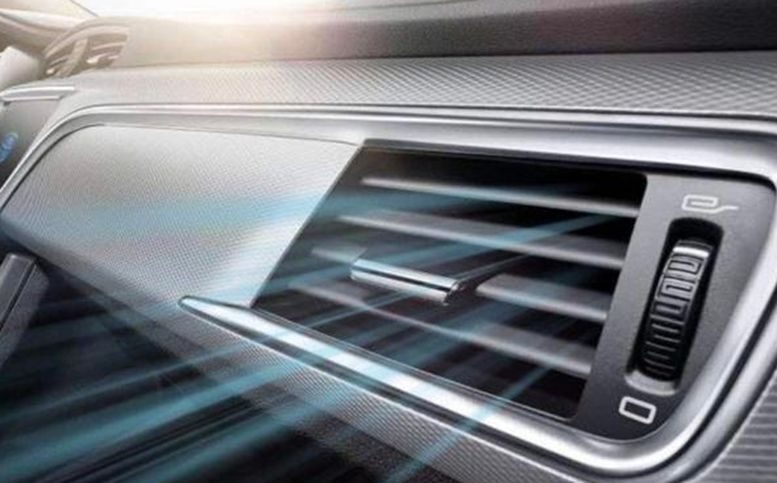
Air Outlet Vanes Sound Simple, But They Are Precision Work
Most people assume they are just plastic pieces tilting back and forth. But inside, a complete drive mechanism is concealed. Three common structures exist:
- **Worm and worm gear with connecting rods:** The motor drives the worm to rotate, the worm wheel drives the connecting rod to swing the vanes. Mature technology and low cost — most common in economy vehicles.
- **Dual-shaft motor direct drive:** Two micro motors separately control horizontal and pitch angles, enabling multi-position precise locking — common in合资 B-segment cars and above.
- **Stepper motor with gear reduction:** Enables arbitrary angle precise positioning — standard on luxury brands.
Regardless of structure, every vane movement for every direction change. Annually, a minimum of 5,000 actuation cycles is typical.
The challenge: this location endures extreme temperature fluctuation — up to 80–90°C after summer sun exposure, down to -20 to -30°C in winter. Plastic gears and metal worms work under repeated thermal expansion and contraction while running year after year, making lubrication the critical factor.
────────────────────────────────────────
Sticking Does Not Appear Suddenly — It Is a Slow Process
Lubricant failure progresses in stages:
Early stage: The lubricating film thins but still holds. You notice nothing unusual.
Mid stage: Friction surfaces begin experiencing metal-to-metal contact. Feel turns rough; occasional noise appears. Most people assume dust entered the duct and spray some cleaner — the lubrication problem remains unsolved.
Late stage: Wear particles mix in, friction coefficient surges dramatically, vane movement becomes noticeably sluggish, possibly stopping at an angle and going no further. By this point, either disassembly and re-greasing or full assembly replacement is required.
The entire process spans roughly three to five years. Many who visit the dealership are told the assembly is broken and pay hundreds for a replacement — when the original problem was simply the wrong grease selected.
────────────────────────────────────────
Why Your Previous Solutions Did Not Work
Motor oil, grease, WD-40 — these three,
Motor oil congeals at low temperatures — vanes cannot move at -10°C; at high temperatures it flows away, unable to last through a summer. Grease is too viscous — it seems smooth when applied, but quickly hardens into sludge that clogs gear grooves, actually accelerating wear. WD-40 is solvent-based and evaporates quickly — effective for perhaps a week or two. It is an emergency product, not suitable for long-term lubrication.
Air outlet vane conditions demand four special grease properties: rapid drying film formation without contaminating interior trim; low friction coefficient without overloading the motor; wide temperature stability for year-round use; and full compatibility with PC, ABS, PA66 interior plastics without causing deformation or cracking. Ordinary products struggle to meet all four simultaneously.
Dry film lubricant is the correct solution for this application.
────────────────────────────────────────
Why Dry Film Lubricant Fits This Application
Several reasons make dry film lubricant suited to this scenario.
Rapid drying film formation. When sprayed, the solvent carrier evaporates quickly, and the base oil forms an extremely thin film on the friction surface — just fractions of a micron to two microns thick. The film uniformly adheres without flowing, leaves no oily residue on interior trim — critical for appearance-sensitive areas like air outlets.
Low friction coefficient. Film surface is smooth, with friction coefficient as low as 0.10. Motor load is noticeably reduced and vane feel returns to smooth and light.
Wide temperature adaptability. Stable across the -40°C to 150°C range — no flow loss during summer heat, no congealing during winter cold. Four seasons without change.
Excellent material compatibility. Fully compatible with PC, ABS, and nylon, with volume change controlled within 1% — far below the 3% safety limit. No damage to shells or vanes.
Low odor. Interior is an enclosed space with strict odor requirements. Dry film lubricant odor rating reaches below 1.5, meeting automotive interior lubricant standards.
A single application maintains effective protection for two to three years. Compared to repeatedly spraying WD-40 and repeatedly折腾, the math is straightforward.
────────────────────────────────────────
Final Point
Air outlet vane sticking is a typical “small part gets overlooked” problem. Not as prominent as engines or transmissions, not used every day like wipers or windows — but it chooses the most inconvenient moments to create annoyance.
The solution is simple: select the right lubricant and apply it correctly the first time.
────────────────────────────────────────
*If you want to learn about dry film lubricant products suitable for air outlet vanes, or have other automotive lubrication questions, feel free to continue the conversation.*