

In a new car, the air conditioning knob turns with a clear segment feel, even damping, and each position lands with a crisp “click.” This is good tactile feel — the user pays for it and subconsciously uses it to evaluate the brand.
But if you disassemble a batch of aftermarket knobs, you will notice a pattern: after 1–2 years of use or tens of thousands of rotations, the segment feel begins to blur, damping becomes uneven, and some positions even develop a “rustling” dry sound or “creaking” noise. The user’s perception is direct: “The knob feels loose” or “It sounds like sand got inside.” The refined feel of the interior gradually leaks away.
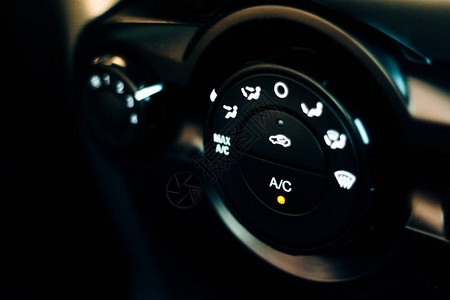
The problem is not the knob’s design itself — it is the dual failure of wear and lubrication.
The segment feel of a knob is commonly generated by two mechanisms. The first uses an inner cam (POM or PC material) with a spring-loaded contact blade; the blade slides along the cam surface, generating a sudden change in normal force between peaks and valleys, creating the tactile feel. The second uses a spring-loaded ball engaged with circumferentially distributed ratchet teeth; the ball climbing over the ratchet teeth generates a resistance peak, creating the segment feel.
The core of both structures is the periodic jump of normal force on the contact surface.
The role of grease in this system is to ensure this torque transition remains stable at all times. Under ideal conditions, the grease provides a stable boundary lubrication film between the cam peaks and valleys, allowing the blade or ball to transition smoothly without affecting the magnitude of the normal force jump itself. If grease viscosity is too low, the feel becomes floaty; if too high, rotation requires more effort and the feel becomes “sticky.”
Wear Pathways to Segment Feel Degradation
When lubrication is insufficient, adhesive wear first occurs on the cam surface or at the ratchet tooth roots. Wear debris accumulates on the contact surfaces, triggering three-body abrasive wear. Under normal conditions, the segment height is approximately 0.3–0.5 mm; in severely worn samples, it can drop below 0.1 mm, and the tactile feel almost disappears. At the same time, debris mixes into the grease, accelerating base oil oxidation and thickener degradation — the grease turns black and dries out, losing its boundary lubrication capability.
From a wear morphology perspective, the spring contact points and cam working surfaces are the primary failure zones. Post-disassembly inspection commonly reveals triangular or sinusoidal ratchet profiles worn flat, with fatigue spalling at the ratchet roots — the main source of the abnormal noise.
Key Grease Selection Metrics
Static-dynamic friction coefficient difference is the core metric. The smaller the value, the more stable the rotation resistance and the more consistent the feel. Formulations containing PTFE solid lubricant can control the friction coefficient in the 0.05–0.08 range, with the static-dynamic friction coefficient difference compressible to within 0.03.
Low volatility is the guarantee for long-term performance. Base oil evaporation loss ≤2% (100°C/24h) prevents the grease from drying out and the feel from deteriorating again after a period of use.
Material compatibility is not negligible. POM, PC, ABS, and PA66 are common knob base materials; grease must pass 80°C/500h no-cracking no-swelling testing with these materials, otherwise the grease can become an inducement for stress cracking.
Coating quantity is an easily overlooked process parameter. More is not always better — the effective contact area on cam and ratchet working surfaces is limited, and excessive coating only causes waste and contamination. The recommended coating quantity per unit is 0.01–0.03 g, with a typical value of 0.02 g, applied to the spring contact points or the engagement zone between the ball and ratchet teeth for optimal effect.
What are your knob segment feel torque decay targets? What is the allowable torque variation range in your rotation life test?
私信 provide the knob structure type (cam-blade or ball-ratchet) and base material information, and we can output a lubrication solution selection table with corresponding coating parameters.