

On the day a new car rolls off the assembly line, the cockpit is quiet. Screen touch is smooth, knob return is crisp, and the overall sensory quality score is excellent.
After two years and a few rough roads, a “creak” begins to appear. On the highway, occasional squeaking persists. The 4S shop sprays some lubricant, it is better for two weeks, then the noise returns. Spray again, returns again. The engineer arrives, road tests, cannot reproduce it, and the report reads “not reproducible.”
This scenario is all too familiar to OEM NVH teams and 4S shop after-sales teams.
What Exactly Is the Problem? The Grease.
1. Why Does the Cockpit Panel Make Noise? Grease Condition Is the Real “Acoustic Fingerprint”
BSR (Buzz-Squeak-Rattle) in the cabin does not occur randomly — it follows physical laws.
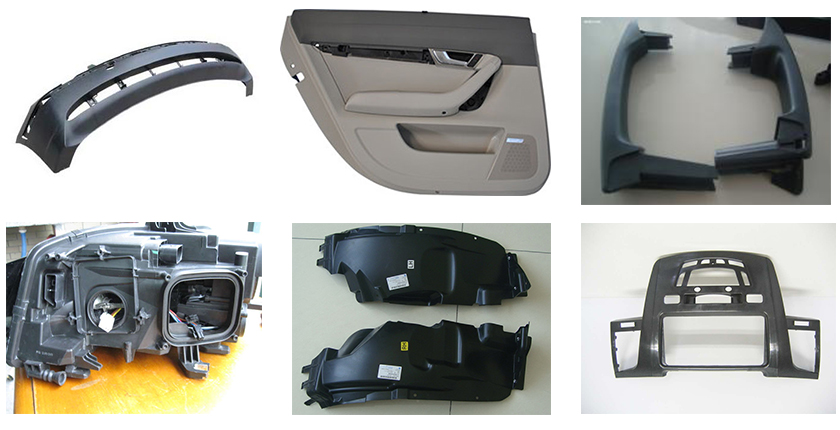
Cockpit panels are composed of PC (polycarbonate), ABS, POM, and other engineering plastics, with numerous rigid contact surfaces between components — between decorative panels and frames, between clips and slots, between register vanes and brackets. Under normal conditions, these contact surfaces are separated by a layer of grease, with low friction coefficient and vibration energy dissipated through damping, insufficient to excite an acoustic frequency response.
But grease condition is not constant.
Base oil volatilizes, thickener structure ages, and the lubricating film gradually thins under prolonged temperature cycling and vibration loads. When the grease friction-reduction damping capability drops below a critical point, the previously suppressed friction forces begin to dominate relative motion between contact surfaces — micro-motion friction is triggered, and plastic component vibration response enters the acoustic frequency range, producing the “creak.”
In other words: grease degradation is not simply “lubrication performance declining.” It directly affects the energy transfer path between contact surfaces, determining whether vibration dissipates or amplifies into noise.
2. Three Types of Abnormal Noise Correspond to Three Grease Failure Stages
First type: continuous friction sound — persistent “creak-creak”
When going over rough roads or opening/closing doors, the cockpit area emits continuous friction noise. This sound arises when grease base oil partially volatilizes or adhesion fails, causing the interface to transition from “statically smooth” to “stick-slip” — with static friction coefficient higher than dynamic friction coefficient, contact surfaces undergo repeated stick-slip micro-oscillation, generating regular friction noise.
Second type: step collision sound — a single “click”
When going over speed bumps, rapid acceleration, or passing a specific rough spot, a certain location suddenly emits a crisp “click.” The physical mechanism of this abnormal noise is: grease boundary lubrication capability has degraded, and rigid contact surfaces previously separated by the lubricating film experience step-style displacement under vibrational impact load, with plastic-to-plastic direct collision, triggering a single impact sound.
Third type: periodic noise in resonance zone — persistent squealing at specific vehicle speed
Within a particular vehicle speed range or engine RPM range, the cockpit begins emitting a sharp squeal that disappears once that range is passed. This is the result of grease damping characteristic weakening causing friction coefficient fluctuation at contact surfaces, coupled with the plastic component inherent modal characteristics — vibration energy is selectively amplified in a certain frequency band, forming resonant sound.
These three abnormal noises belong to three progressively worse lubrication failure stages, with each later stage being more difficult to address.
3. Wrong Grease Selection Can Make BSR Worse Than Taking No Action
When traditional greases are used on plastic components, there is an underestimated risk: stress cracking.
PC (polycarbonate) is extremely sensitive to certain grease base oil components. Mineral oil, low-molecular-weight silicone oil, and other ingredients that penetrate PC surface micro-cracks accelerate crack propagation, potentially causing plastic components to undergo brittle fracture under vibration loads. This failure is irreversible, and once it occurs, it is not just an abnormal noise problem — it is a safety issue.
PC is not the only concern. ABS surface hazing, POM migration contamination — these are all side effects of inadequate grease and plastic compatibility. Applying grease may short-term actually stop the noise, but plastic component physical properties are being quietly eroded, and abnormal noise returns within weeks — possibly more severe than before.
Therefore, the first principle for plastic component lubrication is always: ensure compatibility first, then discuss lubrication performance.
4. NVH Data Closed Loop: Grease Is the Final Defense Against “Users Scoring with Their Ears”
China has issued the “Automotive Cabin Component Abnormal Noise Performance Test Evaluation Method” (T/SXS 064-2024) association standard, and BSR subjective evaluation and instrument identification are becoming hard targets for cabin quality.
This means: grease selection cannot rely on the “spray it and see if it still makes noise” field method — it must be incorporated into the NVH development closed loop.
Standard process: abnormal noise rating (subjective evaluation + objective testing), material/structure analysis (locating friction pairs and modal characteristics), grease selection and tuning (determining compatibility and damping targets), vehicle assembly verification (road test reproduction and evaluation), data feedback for standard iteration.
Within this closed loop, grease plays the role of the final line of defense for locking in BSR target grades from the lubrication dimension. It is not a remedial measure — it is a defensive line.
Select the right grease: cockpit panel BSR abnormal noise grade can remain stable within the target range long-term, with guaranteed user perceptual quality. Select the wrong grease: short-term effectiveness is possible, but plastic fatigue wear is accumulating, abnormal noise recurrence is only a matter of time, and more seriously, there is the recall risk.
5. Which BSR Target Grade Have You Set?
Cockpit panel abnormal noise engineering is fundamentally an engineering problem, not a mystery.
Which BSR grade has your project targeted? Which grease was used for matching verification? What “vehicle does not noise but road test does” bizarre conditions have you encountered?
Share your actual experience in the comments, or send me your specific operating conditions and material systems via private message — our technical team will analyze solutions from the lubrication dimension together.