

By VNOVO Technical Support Team
Every time a faucet handle turns, a valve stem rotates against seals inside the cartridge, and O-rings slide within the housing bore. The thin film of sealing silicone grease at these interfaces does more than lubricate – it fills micro-gaps, prevents water seepage at the stem seal, protects O-rings during assembly and actuation, and extends valve service life. Selecting the right sealing silicone grease is straightforward in principle, yet faucet failures from improper lubricant selection remain common.
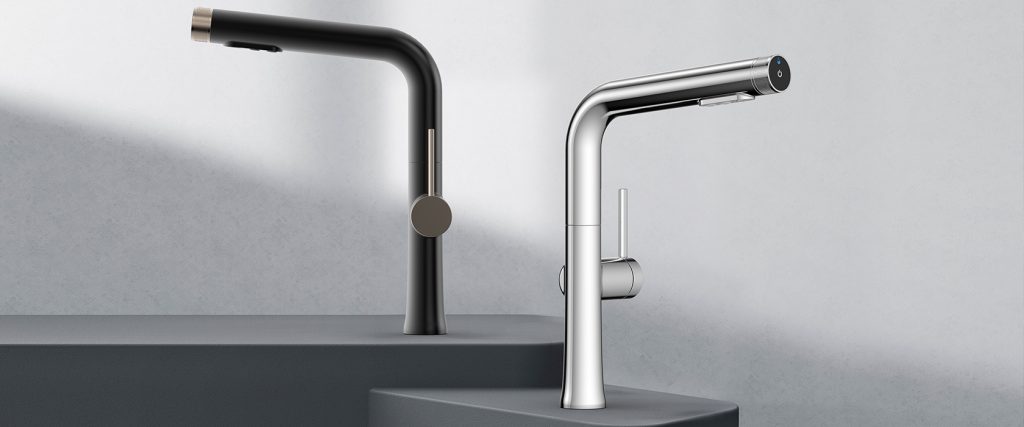
What Makes Faucet Valve and Stem Applications Demanding for Sealing Silicone Grease?
Faucet valve assemblies combine specific challenges:
– Continuous water exposure. The grease operates in permanent contact with hot and cold water, including chlorinated and mineral-hard supplies. It must not dissolve, emulsify, or wash out.
– Mixed material interfaces. A cartridge may combine brass or SS stems, EPDM or NBR O-rings, POM or ceramic plates, and ABS or PPO housing. The grease must be compatible with all.
– Rotary and reciprocating sliding. Stems rotate within O-ring seals; ceramic discs slide against each other; cartridge bodies reciprocate during mixing. Each motion requires consistent lubrication.
– Temperature cycling. Faucets cycle between cold (10-15 °C) and hot water (60-80 °C). The grease must remain consistent – not too stiff cold, not too soft hot.
– Seal function as well as lubrication. Sealing silicone grease must fill micro-gaps at the stem-to-housing interface to prevent seepage – a dual role distinguishing it from conventional lubricants.
– Long service life without re-lubrication. Cartridges are sealed for life. The grease must perform for years without hardening or separating.
– Potable water compliance. Many markets require drinking water safety standards (NSF 61, WRAS, KTW). Not all silicone greases carry these certifications.
Why Do Faucet Valve Problems Persist Even When Silicone Grease Is Applied?
Six failure modes continue to cause issues:
1. O-ring swelling from incompatible grease. Some formulations cause excessive swelling in NBR or EPDM, altering seal geometry and causing leakage or friction.
2. Grease washout in hard-water conditions. Formulations without adequate water resistance are displaced from the stem seal, leaving O-rings unprotected.
3. Grease hardening over years. Oxidation or base oil evaporation causes hardening, making handle operation stiff and causing seal failure.
4. Incompatibility with ceramic disc interfaces. Some greases leave residues that interfere with ceramic disc mating, causing dripping or incomplete shutoff.
5. Assembly damage from dry installation. O-rings installed without lubrication can be nicked or twisted, creating leak paths that post-assembly grease cannot fix.
6. Missing potable water certifications. Non-certified grease in drinking water faucets causes regulatory non-compliance and market access issues.
What Properties Determine Whether a Sealing Silicone Grease Will Perform in Faucet Valves?
Key properties:
– Water resistance and washout resistance. Must resist displacement by hot and cold water. Tackifier-enhanced formulations provide superior washout resistance (ASTM D1264).
– Elastomer compatibility. Must be verified for specific O-ring material (EPDM, NBR, FKM). Slight swelling can enhance sealing (as in MOLYKOTE 55 O-Ring Grease); excessive swelling causes problems.
– Temperature range stability. -40 °C to 200 °C+ for silicone covers all faucet conditions with substantial margin.
– Seal-enhancing characteristics. Some formulations deliberately cause slight O-ring swelling for tighter stem seals – a designed feature for faucet applications.
– Material compatibility breadth. Must be compatible with brass, SS, POM, ceramic, and housing plastics (ABS, PPO) without corrosion or stress cracking.
– Long-term stability. Must not harden or separate over years in a sealed cartridge. Silicone’s oxidation resistance provides this.
– Potable water certifications. NSF 61, WRAS, KTW, or equivalent. Must be verified for the specific product, not assumed from chemistry.
How to Select the Right Sealing Silicone Grease for Your Faucet Valve
Step 1 – Identify the valve type and materials:
| Valve Type | Typical Materials | Key Challenge |
| Ceramic disc cartridge | Brass stem / ceramic discs / EPDM O-rings / POM | O-ring lubrication, disc cleanliness, stem seal |
| Compression valve | Brass stem / EPDM or NBR packing / brass body | Packing lubrication, stem seal, wear prevention |
| Ball-type mixing valve | Brass or SS ball / EPDM seals / POM | Seal lubrication, smooth rotation, water resistance |
| Thermostatic cartridge | Brass / EPDM seals / PPO housing | Seal function, temperature stability, precision |
| Single-lever mixer | Brass / ceramic / EPDM / POM | All of the above combined |
Step 2 – Match properties: For O-ring and stem seals, select silicone with verified EPDM/NBR compatibility and water resistance. For ceramic discs, use minimal clean, non-residue formulation. Verify certification for potable water.
Step 3 – Apply during assembly: Grease O-rings before installation to prevent damage. Thin film on stem seal area. Avoid excess on ceramic disc faces.
Quick Reference: Selection Guide
| Valve / Requirement | Key Properties | Direction |
| Ceramic disc cartridge | O-ring lubrication, disc cleanliness, potable cert | Water-resistant silicone; EPDM compatible; NSF/WRAS certified |
| Compression valve | Packing lubrication, stem seal, wear prevention | Tackifier-enhanced silicone; high water resistance |
| Ball-type mixing valve | Seal lubrication, smooth rotation, water resistance | Silicone with seal-enhancing properties; high tack |
| Thermostatic cartridge | Temperature stability, seal function, precision | High-stability silicone; PPO compatible; potable cert |
| Potable water compliance | NSF 61 / WRAS / KTW | Use only certified products; verify scope covers application |
Quick Reference: Selection Guide
VNOVO does not supply off-the-shelf “faucet sealing silicone grease” with universal claims:
Application-Oriented Selection Guidance – VNOVO reviews your valve type, O-ring material, housing polymer, water conditions, and regulatory requirements, mapping them against formulation categories to recommend silicone compound type, water resistance level, elastomer compatibility, and certification needs.
Material Compatibility Verification – VNOVO helps assess candidates against all materials: stem metal (brass, SS), O-ring elastomer (EPDM, NBR, FKM), housing polymer (POM, ABS, PPO), and ceramic – with emphasis on controlled O-ring swelling and polymer compatibility.
Scenario-Based Communication Support – VNOVO provides rationales explaining *why* a direction is suggested, what trade-offs exist (slight O-ring swelling = tighter seal but higher friction vs. non-swelling = lower friction but potentially less positive seal; higher tack = better washout resistance but more assembly resistance), and what validation steps to prioritize.
Conclusion
When to use specialized sealing silicone grease in faucet valves
When the valve operates in continuous water contact requiring both lubrication and seal function, uses EPDM or NBR O-rings requiring verified compatibility, must meet potable water certification, or has a history of stem leakage or O-ring abrasion from inadequate lubrication.
When a general-purpose approach may suffice
When the valve operates in low-flow, occasional-use applications with no potable water certification requirement, uses all-metal construction with no elastomeric seals, or is a low-cost assembly where periodic replacement is acceptable.
What VNOVO can support
1. Selection guidance – translating valve type, O-ring material, water conditions, and regulations into silicone compound type, water resistance, and certification needs
2. Material matching – assessing compatibility between candidates and all metals, elastomers, housing polymers, and ceramic components
3. Scenario communication – providing the technical rationale and decision framework to specify, validate, and apply the right sealing silicone grease for your faucet valve
*This article is provided for informational purposes based on publicly available industry references and established lubrication engineering principles. Specific product selection should always be verified against the faucet manufacturer’s guidelines, OEM recommendations, lubricant supplier technical data sheets, and material compatibility data.*