
By VNOVO Technical Support Team
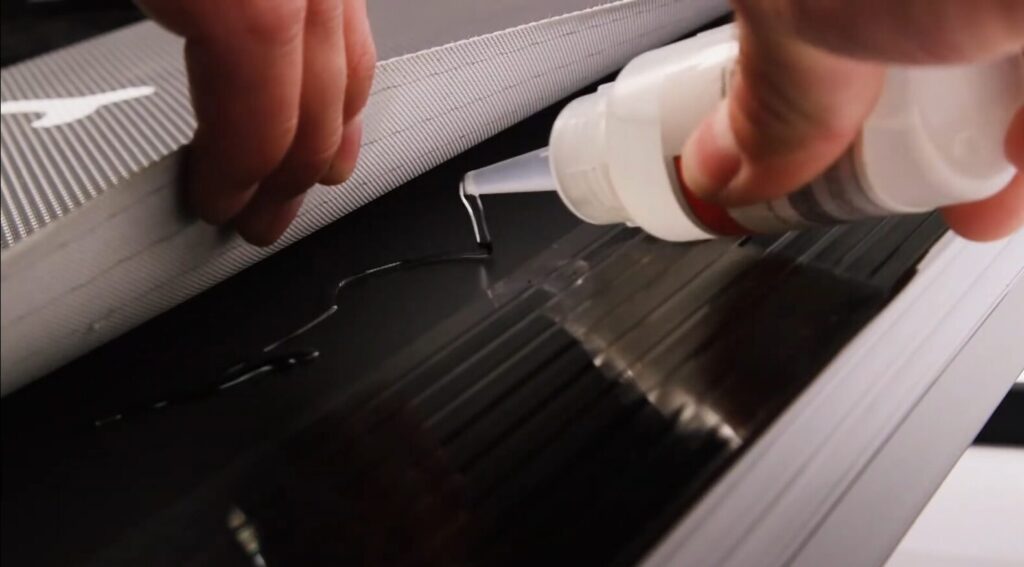
Treadmills, elliptical trainers, stair climbers, and other motorized fitness equipment share a common maintenance need: the walking belt must glide smoothly over the deck with minimal friction. Silicone oil applied between belt and deck is the most widely recommended lubricant. Yet equipment owners frequently report belt slippage, deck wear, motor overload, and tracking problems even after applying silicone oil. The gap between “any silicone oil” and “the right silicone oil for the right interface” is where most problems originate.
What Makes Treadmill and Fitness Equipment Demanding for Silicone Oil?
Fitness equipment presents specific challenges:
– Continuous high-friction sliding. A treadmill belt slides across the deck at 0.5-6 m/s, supporting 50-150 kg. The lubricant must reduce friction across the entire interface without being squeezed out.
– Heat from friction. Inadequate lubrication causes temperature buildup, damaging belt coating and deck surface. Decks can exceed 50 °C under heavy use.
– Wide usage spectrum. Home treadmills may run 30 min daily; commercial units operate 10+ hours with multiple users at varying speeds and inclines.
– Material compatibility. Belt undersides are PU or PVC coated; decks are phenolic, HD fiberboard, or polymer-coated. The oil must not degrade these.
– User-applied maintenance. Most lubrication is done by owners or staff, not technicians. The product must be easy to apply correctly.
– Inclined operation. Incline causes lubricant to migrate toward the rear roller. The oil must maintain coverage.
– Multiple interface types. Beyond belt-deck, equipment includes guide rails, pulleys, pivots, and adjustment mechanisms – each with different lubrication needs.
Why Do Treadmill Problems Persist Even When Silicone Oil Is Applied?
Six failure modes continue to cause issues:
1. Using the wrong viscosity. Thin oils (50-100 cSt) spread easily but may be squeezed out under load. Thick oils (1000+ cSt) stay in place but may not distribute evenly across the deck.
2. Applying silicone grease instead of oil. Grease does not flow to cover the full belt-deck interface, creating lubricated patches surrounded by dry areas.
3. Over-application causing belt slippage. Excess oil reduces friction below the minimum for belt traction on the drive roller – a safety hazard.
4. Incompatibility with belt coating. Petroleum-based or ester-based lubricants soften or swell polyurethane or PVC belt undersides, causing stretching, delamination, or tracking problems. Only silicone-based products are universally recommended.
5. Infrequent re-application allowing deck damage. Silicone oil gradually migrates, evaporates, or is absorbed into the deck. Without periodic re-lubrication, the deck develops friction hot spots causing permanent damage.
6. Using petroleum or WD-40 type products. These degrade belt coatings and deck surfaces. They are frequently recommended in error on internet forums.
What Properties Determine Whether a Silicone Oil Will Perform in Fitness Equipment?
Key properties:
– Viscosity. The most critical parameter. Treadmill manufacturers typically specify 100-350 cSt (at 25 °C) for belt-deck lubrication. This range provides adequate film under load while allowing spread across the deck.
– Purity and non-reactivity. Must be pure polydimethylsiloxane (PDMS) without additives that could react with belt or deck materials. No petroleum, no solvents.
– Material compatibility. Must be verified with polyurethane and PVC belt coatings, phenolic and polymer deck surfaces, and rubber roller components.
– Temperature stability. PDMS silicone oil is thermally stable (-40 °C to 200 °C+), far exceeding treadmill operating temperatures.
– Water repellency. Hydrophobic PDMS protects the deck from sweat and humidity in gym environments.
– Low surface tension. Allows uniform film spread across the deck during belt rotation, rather than beading or pooling.
How to Select the Right Silicone Oil for Your Fitness Equipment
Step 1 – Identify the interface:
| Interface | Lubrication Need | Product Type |
| Treadmill belt-deck | Low-friction sliding film | Silicone oil (100-350 cSt) |
| Elliptical guide rails | Smooth sliding, quiet operation | Silicone grease or light silicone oil |
| Stair climber chains/pulleys | Chain and pivot lubrication | Silicone grease (not oil – oil flings off) |
| Adjustment pivot joints | Smooth articulation, corrosion protection | Silicone grease or compatible synthetic grease |
| Display/console hinges | Smooth motion, no staining | Light silicone oil or damping grease |
Step 2 – Match viscosity: Check the manufacturer’s specification. If unavailable, 100-350 cSt is the common range. Lower for light home use; higher for heavy commercial use.
Step 3 – Verify purity: Use only 100% pure PDMS silicone oil with no petroleum additives. Confirm belt and deck compatibility.
Quick Reference: Selection Guide
| Equipment / Interface | Key Properties | Direction |
| Home treadmill belt-deck | Moderate viscosity, easy application | 100-200 cSt PDMS; follow OEM spec |
| Commercial treadmill belt-deck | Higher viscosity, long service interval | 200-350 cSt PDMS; frequent re-application |
| Elliptical guide rails | Low friction, quiet | Light silicone oil or silicone grease per OEM |
| Stair climber chains | Adhesion, stays on chain | Silicone grease (not oil) |
| Pivot joints / hinges | Smooth motion, corrosion protection | Silicone grease or synthetic grease |
| Incline treadmill | Migration resistance | 250-350 cSt; more frequent application |
How VNOVO Provides Technical Support
VNOVO does not supply off-the-shelf “treadmill silicone oil” with universal claims:
Application-Oriented Selection Guidance – VNOVO reviews your equipment type (home vs. commercial), usage intensity, belt and deck materials, manufacturer specifications, and maintenance schedule, mapping them against silicone oil categories to recommend viscosity range, purity grade, application quantity, and re-lubrication interval.
Material Compatibility Verification – VNOVO helps assess candidates against all materials: belt underside coating (polyurethane, PVC), deck surface (phenolic, polymer, HD fiberboard), roller rubber, and any elastomeric components – with emphasis on belt coating compatibility and deck surface safety.
Scenario-Based Communication Support – VNOVO provides rationales explaining *why* a direction is suggested, what trade-offs exist (lower viscosity = easier spread but thinner film under load vs. higher viscosity = better load support but slower distribution; silicone oil = ideal for belt-deck sliding vs. silicone grease = better for chains and pivots where oil would fling off), and what validation steps to prioritize.
Conclusion
When to use silicone oil in fitness equipment
When lubricating the treadmill belt-deck sliding interface, the manufacturer specifies silicone oil, belt and deck materials are compatible with PDMS (most are), and the usage pattern requires periodic re-lubrication of a large sliding surface.
When silicone oil may not be the right choice
When the interface involves rotating chains or pulleys where oil would fling off (use silicone grease), when the manufacturer specifies a different lubricant, or when the application requires damping or positional hold rather than low-friction sliding.
What VNOVO can support
1. Selection guidance – translating equipment type, usage intensity, and manufacturer specs into silicone oil viscosity range, purity grade, application quantity, and re-lubrication interval
2. Material matching – assessing compatibility between silicone oil candidates and belt coatings, deck surfaces, and elastomeric components
3. Scenario communication – providing the technical rationale and decision framework to specify, validate, and apply the right lubricant for each interface in your fitness equipment
*This article is provided for informational purposes based on publicly available industry references and established lubrication engineering principles. Specific product selection should always be verified against the equipment manufacturer’s guidelines, OEM recommendations, lubricant supplier technical data sheets, and material compatibility data.*