
600 Units at the Hangzhou Expo — But No One Is Talking About the 7×24 Hour Reality
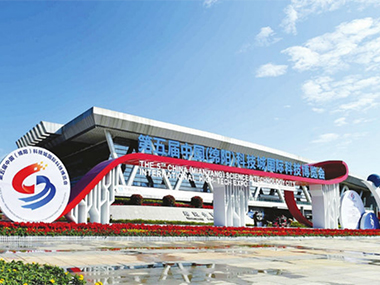
On May 14, at the Hangzhou Convention and Exhibition Center, nearly 600 industry-leading companies showcased their products. Unitree H2 performed flying kicks and flips live; the Tesla 22-DOF bionic dexterity hand precisely grasped an egg; a million-unit annual production capacity plan was simultaneously announced. Zhiyuan’s Zhiyuan A3 traced smooth fingertip trajectories at the booth, surrounded by crowds three layers deep.
This was the ‘highlight moment’ for dexterity hands. But there is a question nobody raised at the exhibition —
Once these demonstration models enter real 7×24-hour production lines, their stable running time falls far short of design expectations. An engineer privately debugging a dexterity hand at an automotive parts production line told me: ‘During prototype demonstration nothing went wrong. Once it went on 7×24-hour operation, the reducer started having problems.’
The term ‘tooth fracture’ is rarely mentioned in public. But in private exchanges between parts suppliers and OEMs, its frequency of mention is increasing.
This article presents, across three dimensions — failure mechanism, operating condition mismatch, and lubrication weakness — some conclusions that have been repeatedly validated in bench test and production line data, yet are not often publicly discussed in the industry.

Section 1: Root Mechanism of Tooth Fracture — Small-Module Gears Are Naturally Weak Links Under High-Frequency Reciprocation
Let us start with a set of failure statistics. Among planetary reducer gear failure cases, fatigue fracture accounts for approximately 42%, overload fracture approximately 31%, and material and process defects approximately 27%. Approximately 70% of tooth fractures are directly related to fatigue or overload.
Fatigue Fracture — Stress Concentration + Bidirectional Alternation, Fatigue Limit Significantly Reduced
Dexterity hand planetary reducer gears typically have a module less than or equal to 1 mm; some products are even less than or equal to 0.3 mm. The smaller the module, the higher the stress concentration factor at the tooth root fillet area, typically reaching 1.5 to 2.0, and potentially higher with suboptimal design.
When a dexterity hand executes frequent forward-reverse direction changes, both sides of the tooth root bear alternating tensile and compressive stress — meaning the stress ratio R is approximately -1. Compared with unidirectional rotation conditions (R is approximately 0), the material bending fatigue limit decreases by approximately 20% to 40%.
More critically: in the vast majority of industrial unidirectional transmission scenarios, gear life is dominated by tensile stress, and fatigue models are relatively mature. But in high-frequency alternating scenarios where a dexterity hand reverses several times per second, unidirectional fatigue models directly fail — the tooth root bears tensile stress in both directions, and the crack initiation window is drastically compressed.
At the same time, micro gears are exceptionally sensitive to internal non-metallic inclusions. Fluctuations in heat treatment carburizing layer depth and residual stress from tooth surface grinding burns are often undetectable at the finished product shipping stage, but come to light after thousands to tens of thousands of operational cycles on the production line. This is the most hidden early fatigue source.
Overload Fracture — Micro-Pitting Comes First, Then Tooth Fracture
The production line is not gentle. When a dexterity hand unexpectedly grasps an overweight part or encounters collision jamming, instantaneous tooth flank load can reach several times the rated value.
The more dangerous issue is the gradual chain of ‘micro-pitting, spalling, tooth fracture’: after tooth flanks repeatedly develop micro-pitting that expands into pitting pits, not only does mesh precision deteriorate, but new stress concentration sources form, accelerating fatigue crack nucleation and propagation at the tooth root. After a period of stable crack propagation at the tooth root, the remaining cross-section can no longer bear the load and fractures instantaneously under some moderate load — the fracture surface typically exhibits shell-pattern fatigue arc lines.
One accidental overload impact can directly end a gear that already has micro-cracks.
Section 2: Structural Mismatch Between Design Conditions and Production Line Conditions — An ‘Invalid’ Reference Framework
Why do many dexterity hands perform excellently in demonstrations but immediately expose lifespan problems once deployed at scale?
A sobering fact: dexterity hand miniature planetary reducers are technically sourced from civilian-grade products — upgraded electric toothbrush motors, medical injection pump drive mechanisms, hearing aid micro actuators. The design life of such products is calculated in hundreds of cumulative hours, targeting intermittent, low-frequency operating environments.
What is the actual production line operating condition magnitude?
Frequency: civilian-grade several actions per minute versus production line dexterity hand several start-stop direction reversals per second
Continuous operation: intermittent work (hundreds of hours) versus 7×24-hour continuous operation, annual cumulative exceeds 8,000 hours
Load characteristics: stable light load versus frequent impacts, instantaneous load can reach 3-5 times rated value
Environmental adaptability: relatively clean constant temperature versus dust, temperature fluctuations, and vibration interference co-existing
As a reference, the typical design life of industrial-grade planetary reducer motors is 20,000 to 30,000 hours.
If civilian-specification components are directly placed in industrial operating conditions, the failure boundary may be breached in the first week or first month. The industry is not entirely unaware of this problem — leading companies have begun building full-stack platforms from motors and drives to transmission and control in their mass production advancement, performing targeted adaptation from the source. But in already-shipped large-volume solutions, differences in lubrication solution selection remain an engineering weakness that is widely underestimated.
Section 3: Three Typical Ceiling Limitations of Lubrication Under Dexterity Hand Operating Conditions
Even when small-module gears have essentially met design dimensional requirements, lubrication failure remains one of the dominant variables accelerating tooth fracture.
Oil film is difficult to establish. Small-module gears have small curvature radii and limited instantaneous contact area at mesh. During frequent start-stop direction reversals, lubricant grease cannot form a stable elastohydrodynamic oil film, and tooth flanks remain in boundary lubrication or even dry friction zones for extended periods.
Extreme pressure additive adaptability is poor. Traditional extreme pressure additives containing sulfur and phosphorus generate protective films (FeS, FePO4) by reacting with metal surfaces under high-temperature high-pressure conditions at the tooth flank. However, under the cold-hot alternating, micro-motion and high-speed frequently switching conditions of dexterity hands, contact temperatures often do not reach the activation threshold, and additives are destroyed by mechanical shear before they can form effective protective films.
Thickener is prone to shear failure. Conventional metal soap thickeners experience rapid structural degradation under high-frequency micro-motion and repeated shear, manifesting as oil product loss and base oil separation. After lubricant escapes from the contact zone, the risk of tooth flank dry grinding increases dramatically.
Section 4: A Verifiable Engineering Reference: X500 Under Fluorinated Oil + PTFE System
Targeting the above three weaknesses, a grease system based on fluorinated oil with PTFE thickener has gradually gained validation in dexterity hand dedicated solutions.
VNOVO dexterity hand joint dedicated grease X500 is a representative product:
Fluorinated oil base: extremely low evaporation loss, strong chemical inertness, with clear advantages in high-frequency micro-motion and long-period sealed encapsulation scenarios — solving the problem of conventional grease being prone to loss and drying
PTFE thickener: measured extreme pressure anti-wear performance can reach 800 kg four-ball weld load, effectively buffering high contact stress during start-stop and impacts, delaying tooth flank micro-pitting onset
Low-viscosity base oil design: starting torque is noticeably reduced, having a positive regulatory effect on torque response under frequent start-stop scenarios, also avoiding influence on force control precision due to grease viscosity
Oil separation loss rate (100 degC / 24 h) less than 10%: targeting the weakness of conventional grease oil product loss after shear, continuously maintaining tooth flank lubrication under sealed non-maintenance conditions
Wide temperature range (-50 degC to 220 degC): adapting to the full temperature range from low-temperature standby to production line continuous operation
It must be stated that lubricants are not a universal cure. Gear life is the coupled result of materials, design, heat treatment, assembly precision, and lubrication solutions. But in the context of production line mass production, lubrication selection is one of the most engineering-feasible adjustment variables — it is the easiest to optimize and the most easily overlooked.
Section 5: An Easily Overlooked Engineering Consensus
For teams advancing dexterity hand mass production, one additional test is worth doing: apply different types of dedicated greases on small-module planetary reducers and observe, over 30+ days of high-frequency reciprocating operation, the variation trends in tooth flank micro-pitting onset timing and tooth fracture frequency.
This data may be more persuasive than a demonstration of grabbing an egg or squeezing a tennis ball at an exhibition.
The above represents personal engineering judgment. Industry peers are welcome to share tooth fracture cases and lubrication solution adjustment data from actual machine testing in the comments — for example: before tooth fracture occurred, did the tooth flank already show obvious micro-pitting or abrasive wear? After trying different greases, how did lifespan change? Specific operating condition questions of interest are also welcome for private discussion.