
By VNOVO Technical Support Team
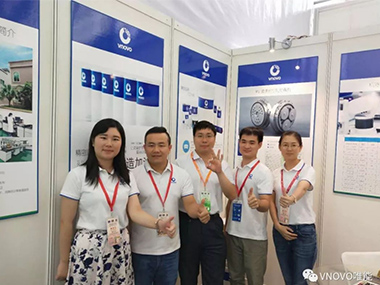
On May 6, the 12th Shanghai Humanoid Robot Exhibition opened at the National Exhibition and Convention Center. 30,000 square meters, over 500 companies, with IFR directly giving a forecast: global market scale will exceed 120 billion yuan in 2026.
The scene was indeed lively. Figure 03 ran, Unitree H2 went on sale, Tesla Optimus Gen 3 had over 1,000 units placed in the Fremont factory. The entire industry is shouting about mass production.
But after walking around the exhibition, I found what really keeps engineers awake at night is not some large model or visual algorithm — it is the dexterous hand.
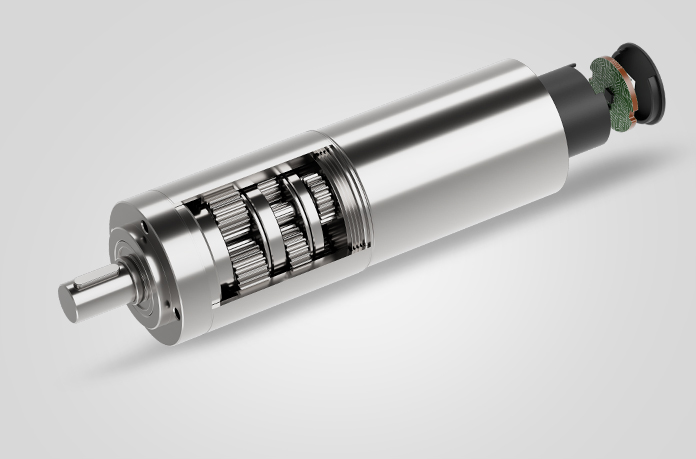
Precisely, the planetary reducer the size of a fingernail inside the dexterous hand.
The physical limit hidden in fingertips
A humanoid robot has over 40 joints, with dexterous hands accounting for nearly half. Tesla Optimus has 22 degrees of freedom per hand. Unitree’s full-palm bionic hand must pack dozens of sensing points into a palm-sized space. Fingertips must complete fine operations like pinching, opposition, and gripping — each one must be accurate.
Fine operations depend on what? On that set of micro planetary reducers in the fingertip joints.
Here is the problem: honestly, the working conditions of this reducer are somewhat anti-human.
The planetary reducer tooth surface bears Hertz contact stress as high as 1-3 GPa. What does this mean? On an area the size of a fingernail, it supports a fully loaded heavy truck. That is not all. The dexterous hand must start and stop frequently and bear impact loads from various directions. With impacts coming and going, the gear tooth root begins to fatigue.
Tooth breakage, once it occurs, is all or nothing
I looked through case studies in the KB24 parts knowledge base on wind turbine gearbox planetary gear tooth breakage: a certain gear broke after six years of service. The root cause was Al2O3 non-metallic inclusions mixed into the material. Under cyclic loading, stress concentrated around the inclusions, cracks gradually propagated, and finally the entire gear broke from the root. Once one broke, the load redistributed, and the remaining gears followed with overload.
This failure logic, applied to the micro planetary reducer in a dexterous hand, will only be more severe — compressed to the limit, material strength margin was never generous to begin with. Once tooth breakage occurs, the entire hand is directly ruined.
Moreover, the planetary reducer in the dexterous hand operates inside the finger joint. The centrifugal force field is its unique challenge: grease must firmly adhere to the metal surface. If it is slightly worse, it gets thrown off. Ordinary industrial grease simply cannot withstand this.
Why ordinary grease fails
Industrial robot reducers can use mineral oil grease, but the dexterous hand working conditions are completely different.
High contact stress, small space, strong centrifugal force field — three factors together. Mineral oil viscosity index is only 90-100, PAO can reach over 120. But this is not enough. The tooth surface contact stress of a dexterous hand planetary reducer is several times that of an industrial robot. Ordinary synthetic oil simply cannot establish a sufficient oil film under 1-3 GPa Hertz contact stress. Once the oil film thins, metal makes direct contact, and fatigue cracks begin to initiate.
Additionally, the impact loads generated by high-frequency start-stop in dexterous hands, the thickener system of ordinary grease simply cannot withstand this shear.
What three layers does VNOVO X500 solve
The X500 precision lubrication system was specifically developed for humanoid robot dexterous hand planetary reducers. The direction validated by the industry is fluorinated oil plus PTFE. X500 is the specific product of this technical route, constructed in three layers:
Layer 1: Perfluoropolyether (PFPE) base oil maintains oil film thickness. PFPE operating temperature range is -90 degC to +250 degC. Chemical stability is the ceiling among all lubrication greases. Acid-alkali-water-oil resistant. Even under high Hertz contact stress conditions in micro planetary reducers, it can maintain sufficient oil film thickness, reducing fatigue crack initiation probability from the source.
Layer 2: PTFE thickener system provides supplemental protection. PTFE is a solid lubricant. When grease briefly loses under high-frequency impact, PTFE microparticles can fill microscopic gaps in the gear meshing surface, forming an emergency lubrication film and preventing direct metal contact. PTFE can withstand temperatures above 250 degC. Combined with PFPE, it forms the most comprehensive base oil plus thickener combination currently available in the lubrication industry.
Layer 3: Strong adhesion design fights the centrifugal force field. The planetary reducer in the dexterous hand operates inside the finger joint. The centrifugal force field is its unique challenge. Grease must adhere to the metal surface and not be thrown off. X500’s adhesive formulation is specifically optimized for this scenario.
Bench data: On a dedicated test bench for dexterous hand planetary reducers, the X500 solution ran continuously for 100,000 cycles without visible pitting on tooth surfaces. Compared with ordinary grease, which began showing obvious pitting at approximately 30,000 cycles, converted to actual use time, the X500 grease replacement cycle is extended by three to four times.
For humanoid robot manufacturers currently climbing the mass production curve, this is not just about saving maintenance costs. It is about avoiding tooth breakage failures and quality incidents. After all, when a robot is sold and its hand breaks, reputation costs more than repair fees.
So here is what I want to ask you
Have you encountered dexterous hand joint lubrication problems in actual projects? Is it planetary reducer noise, grease being thrown off, or grease that still cannot hold up after changing?
Additionally, in your view, what is the most difficult breakthrough in the domestication of dexterous hand planetary reducers — materials, precision machining, or reliability testing?