
By VNOVO Technical Support Team
Lingdian (AGILINK) just announced the completion of hundreds of millions in financing, with valuation standing above $1 billion. What is more worth watching behind the numbers is that they have cumulatively delivered over 8,000 dexterous hands and over 10,000 grippers, with industrial, logistics, and service scenarios all running.
What does 8,000 units mean? It means the dexterous hand product has moved from can it be made to can it run continuously. Batch production feasibility has been verified, but the topic of long-cycle reliability is only now being seriously addressed.
Today I want to discuss one specific issue: high-frequency micro-fretting wear.
What is micro-fretting wear, and why is it different from ordinary wear
Ordinary wear is familiar to everyone — two contact surfaces slide relatively, material is gradually worn away. But micro-fretting wear is different. It occurs when two solid interfaces are nominally stationary but subject to small-amplitude relative vibration, typically in the micron to tens of microns range — completely invisible to the naked eye, yet sufficient to generate wear debris from metal surfaces.
This situation is extremely common in dexterous hand joints. Each time grasping and releasing occurs, the gear shaft and bearing race inside the reducer bear slight thermal expansion and contraction, combined with vibration from finger direction changes. These small displacements accumulate, forming the conditions for micro-fretting wear.
What is even more critical is that once micro-fretting wear begins, the generated metal particles are repeatedly rolled on the contact surface. When iron powder contacts oxygen in the air, iron oxide wear particles form — with considerable hardness, accelerating substrate wear like sandpaper. This process is also called fretting corrosion and is the most common springboard for fatigue cracks. There is a sentence in industry literature worth remembering: micro-fretting wear is the cause of fatigue cracks and typically leads to fatigue failure inside high-stress components.
How micro-fretting wear actually occurs in micro planetary reducers for dexterous hands
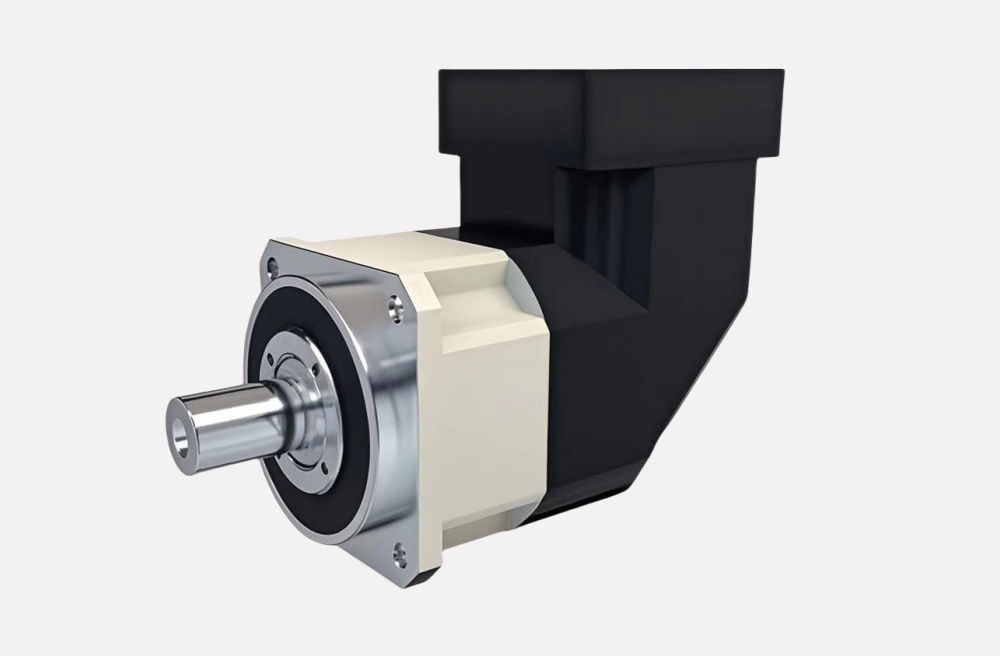
The planetary reducer module size in dexterous hands is typically 1mm or less, with tooth width only 1-2mm. Such small gears under high-frequency direction change and light load conditions mean the tooth surface is long-term in a boundary lubrication state — oil film thickness is insufficient to completely separate the two metal surfaces, and tooth surface microasperities are actually at the edge of direct contact.
Under this state, high-frequency direction changes generate vibration causing the tooth surface to repeatedly bear slight shear. At start-stop instants or during light load segments, the oil film is either not established or has already ruptured, and fretting directly acts on the tooth surface material.
The evolution path of micro-fretting wear is roughly: fretting generates debris — oxidation forms a hard oxide film — the oxide film is repeatedly rolled by vibration on the substrate — fatigue micro-cracks initiate on the tooth surface — micro-cracks propagate under alternating stress — tooth surface spalling or pitting appears — precision decreases, or even tooth breakage occurs.
This chain may take tens of thousands to hundreds of thousands of cycles in the lab, but under the high-frequency start-stop conditions of dexterous hands, this process is greatly accelerated.
Why ordinary greases cannot withstand this scenario
At this point, the grease itself has a problem. Micro-fretting wear has a characteristic: it occurs precisely when the oil film is most difficult to establish. When the base oil viscosity of ordinary mineral oil grease is insufficient to maintain a complete oil film under high contact stress, lubrication protection has actually already failed. And when micro-fretting wear occurs, both surfaces are nominally stationary, the thickener releases base oil at a rate far lower than in normal sliding friction. The grease supply mechanism greatly decreases in efficiency under these conditions, basically only relying on additives and protective film to hold.
What parameters are most critical for this scenario? Roughly four: boundary lubrication film-forming ability determines whether the tooth surface can be protected during the micro-fretting phase. Solid lubricant phase can directly provide low-friction surfaces to separate metal contact when the oil film fails. Shear stability determines whether the grease will be thrown dry or softened and lost under high-frequency vibration. Oil bleeding rate determines whether the grease will become increasingly dry and eventually cause dry friction.
Lubrication solution logic for micro-fretting wear conditions
From the formulation design perspective, micro-fretting wear conditions require simultaneously solving two core problems: film formation protection in the boundary lubrication zone and solid lubrication emergency backup.
Perfluoropolyether (PFPE) fluorinated oil as base oil — its extremely high chemical inertness and extremely wide operating temperature range (-90 degC to +250 degC) is its greatest advantage. It does not easily degrade in oxygen, ozone, acid-alkali media environments, crucial for lubrication stability during long-cycle operation. PFPE viscosity index typically exceeds that of mineral oil, with smaller oil film thickness variation during dramatic temperature fluctuations.
But the most critical is the role of PTFE (polytetrafluoroethylene) solid microparticles. PTFE has an extremely low friction coefficient. When oil film thickness is insufficient to separate two metal surfaces, PTFE particles can form a solid protective cushion between tooth surfaces, directly bearing the shear force generated by fretting — equivalent to setting a physical barrier in the boundary lubrication zone. Even before the grease main body releases base oil, the PTFE layer is already providing protection.
Additionally, oil bleeding rate is controlled at a low level (below 10%), ensuring the grease does not quickly separate base oil and dry out during operation, always maintaining effective lubrication structure.
For example, VNOVO X500 dexterous hand joint dedicated grease adopts a fluorinated oil plus PTFE system with low oil bleeding design, and has been used in multiple leading dexterous hand mass production projects to suppress micro-fretting wear.
Closing thoughts
8,000 dexterous hands operating routinely validates supply chain feasibility. But after batch operation, the real problems that mechanical engineers must face are only beginning to shift from can it move to how long can it run.
Micro-fretting wear is not an issue that exposes itself in the short term. It潜伏 in the intersection of direction-change vibration and boundary lubrication, waiting to gradually consume precision at some point in time. It is not the violent failure type like tooth breakage. It is more like the frog in warming water — initial parameter drift of dozens of microns, slowly accumulating. By the time it is discovered, the optimal intervention window may have already passed.
Grease selection is one of the highest cost-performance intervention methods in this link.