
By VNOVO Technical Support Team
On May 22, Dongfang Precision and Leju Robotics jointly announced that China’s first automated production line for 10,000 humanoid robots annually officially began operation in Foshan Nanhai, with a cycle time of 30 minutes per unit and annual capacity exceeding 10,000 units.
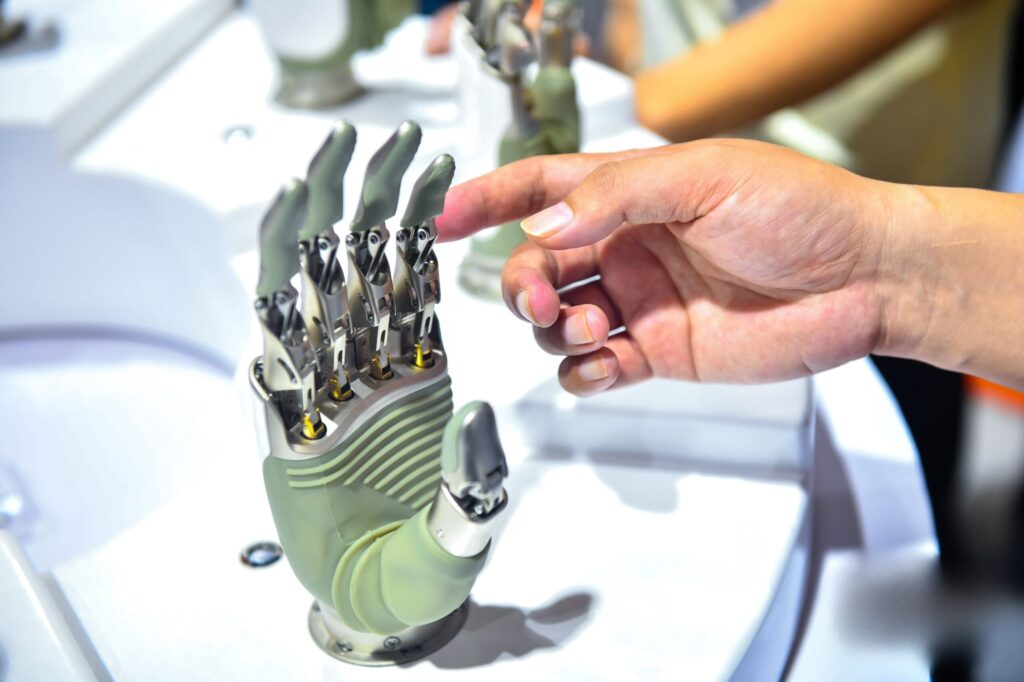
Behind the numbers is a detail worth attention: Leju’s full-size humanoid robot (such as KUAVO) uses a planetary reducer solution for the shoulder joint, with a sealed maintenance-free design. Once this 10,000-unit production line reaches normal operation, it means tens of thousands of shoulder joint modules will be operating simultaneously each year. Any lubrication detail issue in any joint will be amplified in batches.
This 10,000-unit production milestone officially opens the restructuring of grease selection logic.
Prototype stage: Grease selection is actually simple
Before discussing changes, let us return to the prototype stage.
At that time, the shoulder joint module was still undergoing engineering validation, and the engineer’s primary goal was to make it work — ensuring the planetary reducer did not break teeth, did not jam, and could run stably under various conditions.
How was grease selected?
Directly use imported high-end product lines — high unit price, low volume, almost negligible in the BOM. Being expensive is not a problem; there were only dozens of units, large tolerance margin, and ensuring performance was the first priority.
This is the grease selection logic at the prototype stage: pursuing extreme performance, cost-insensitive. Choosing the expensive one basically does not go wrong.
The mass production gate: Grease costs suddenly become significant
But once entering 10,000-unit mass production, the logic changes.
Annual output of 10,000 units, with each humanoid robot shoulder joint module requiring approximately 15-25g of grease — about 20g per unit annually, meaning approximately 200kg annual demand. Note this is a conservative estimate of per-unit consumption. Including spare parts, maintenance losses, and production line commissioning consumption, actual procurement could reach hundreds of kilograms to nearly one ton.
The cost weight of grease in the BOM begins to stand out.
At this point, the unit price of imported high-end grease may be 3-5 times that of comparable domestic products. Under 10,000-unit scale, the annual grease procurement cost gap could reach hundreds of thousands of yuan. The problem is not just unit price — more critically, the mindset of pursuing extreme performance at the prototype stage becomes a waste at the mass production stage.
When the shoulder joint planetary reducer enters the sealed maintenance-free batch supply stage, the performance requirements for grease can actually be clearly defined. As long as this definition is met, it is sufficient.
Mass production stage: Set thresholds first, then discuss cost
Therefore, the grease selection logic for 10,000-unit mass production should be: set thresholds first, then select the most cost-optimal solution within those thresholds.
For the sealed maintenance-free design of Leju Robotics shoulder joint planetary reducer, the core performance thresholds the grease needs to meet are approximately:
Oil bleeding rate 5% or less. The sealed structure means grease cannot be replenished on-site after filling. If oil bleeding rate is too high, base oil continuously separates and loses during operation, grease gradually thickens and hardens, eventually leading to dry friction, directly affecting planetary reducer life and precision stability.
Evaporation loss less than 1.0% (100 degC times 24 hours). The shoulder joint module generates heat accumulation during operation. If grease evaporates too quickly at high temperature, the same problem — grease dries out, oil film fails, wear accelerates.
Extreme pressure anti-wear performance met (wear scar diameter 0.5mm or less, four-ball test). The shoulder joint bears compound loads — both rotational and directional impact. Grease must provide effective protection for tooth surfaces under boundary lubrication state, preventing micro-fretting wear and pitting.
Operating temperature covering -30 degC to +180 degC. Humanoid robots may operate in indoor constant-temperature workshops or face seasonal temperature fluctuations. Grease temperature range must cover actual working conditions.
Why VNOVO SYN150 hits this threshold
Looking back at VNOVO SYN150 shoulder bearing dedicated grease parameters:
Oil bleeding rate 5% or less — exactly at the upper limit of this threshold. Evaporation loss less than 1.0%, meeting requirements. Four-ball wear scar diameter 0.46mm, within the 0.5mm threshold. Operating temperature -30 to 180 degC, covering most actual working conditions.
Looking at the parameters, it exactly hits the mass production performance threshold — not the most expensive, but precisely the most appropriate.
This is the logic of mass production engineering: not pursuing performance redundancy, but clearly accounting for every cent under the premise of meeting thresholds.
The value of customized domestic grease is not just lower cost
At this point, someone may ask: Is the cost-performance logic of domestic grease valid, but is performance stable? Is batch consistency guaranteed?
These are two legitimate questions, but the answers are often more optimistic than intuition suggests.
The batch consistency challenge for domestic grease is essentially not a domestic versus imported issue, but a supplier management system issue. A domestic grease supplier with a complete bench validation system, ISO quality system, and traceable batch records can fully meet engineering requirements at the 10,000-unit scale.
On this basis, domestic grease has several advantages that imported products cannot easily replace: shorter supply cycles, more flexible customization services, and lower procurement costs. The grease selection for humanoid robot mass production is shifting from brand faith to engineering rationality of performance thresholds plus cost optimization.
For shoulder joint planetary reducer mass production at the 10,000-unit scale, a grease like VNOVO SYN150 that meets parameters, offers high cost-performance, and has 10,000-unit-level batch stability is more aligned with mass production engineering economics than simply relying on imported brands.
A final note
The 10,000-unit production line commencement is a milestone, but the challenges ahead have just begun.
Grease selection is only one link in the mass production chain, but it is precisely the link most easily dragged by prototype thinking inertia. When the line scales from 10 units to 10,000 units, the grease BOM cost proportion per unit must be re-examined.
Setting thresholds, checking parameters, comparing unit prices, verifying batch records — grease selection for 10,000-unit mass production should be a rational and pragmatic matter.