
The car door window squeals as it goes up and down, moves more slowly and, in bad cases, catches for a moment. Check the regulator motor — fine. Check the guide rail — fine.
Take off the door panel and look at the weatherstrip: the lip coating is worn away and the rubber is pressing directly against the glass. The problem is found.
The Coating Is Not Decoration — It Is a Functional Layer
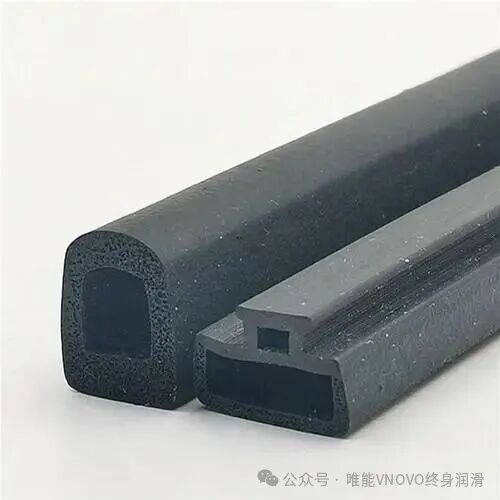
The lip of the door weatherstrip that contacts the glass has a coating on its surface. There are two types: flocked coating and low-friction coating. Flocking implants fibers into the adhesive layer, and the glass slides on the fibers. A low-friction coating is PTFE or a similar material that forms a low-friction film on the rubber surface.
Both types of coating work to press the friction coefficient between the rubber and the glass down to the lowest possible level. With a low-friction coating present, the friction coefficient is 0.1-0.2. With a flocked coating present, it is 0.2-0.3. Once the coating is worn away, the glass contacts the rubber directly, and the dry friction coefficient of EPDM against glass is between 0.6 and 1.0.
When the friction coefficient multiplies, so does the lift resistance. The motor load increases and the speed slows.
How the Coating Disappears: First Worn Thin by Dust, Then Carried Away by Reciprocating Sliding
The two coatings wear by different mechanisms. A flocked coating has its fibers worn and broken off one by one, and once the adhesive layer is exposed it wears away. A low-friction coating itself wears thinner until it is penetrated. But the wear process has one thing in common: it is first pre-damaged by dust particles, then stripped off by reciprocating sliding.
Dust and sand outside the glass are carried into the interface between the glass and the coating as the window moves. The particles scratch the coating surface, and the coating thins or the fibers are worn off. At this stage the coating is still there, but its function has already declined.
Then comes reciprocating sliding. Window movement is reciprocating, so the lip coating is sheared and stretched on every slide. Under the pre-damage from dust particles, the bond between the coating and the rubber substrate gradually weakens, and the coating is carried away by the glass.
Once the coating is worn away, the rubber is exposed. Rubber has a high friction coefficient, and under dry friction it wears faster than the coating. Rubber wear debris mixes into the dust and becomes a new grinding paste that accelerates wear of both the glass and the rubber.
The Squeal Is Not the Most Serious Symptom
When the coating is present, the glass slides continuously and smoothly over the lip. Once the coating is worn away, the high friction between the rubber and the glass triggers stick-slip, and the glass “sticks-slides-sticks-slides” over the lip. The abnormal noise at this stage is the squeal.
But the squeal is not the most serious symptom.
After stick-slip escalates, stick-slip judder appears. The rubber sticks to the glass, the glass keeps moving, the rubber is stretched, and elastic energy accumulates until it is suddenly released, the glass slides a distance at once, and then the rubber sticks again. This repeats, forming low-frequency judder.
When the coating is present, the friction coefficient is low, the rubber is not stretched that far, and judder does not occur. Once the coating is worn away, the probability of judder rises with the friction coefficient. Passengers can clearly feel the glass shaking — not hearing a sound, but feeling a vibration.
Sealing Performance Does Not Decline Evenly — It Is Local Over-Pressure and Local Leakage
Once the coating is worn away, the rubber presses directly on the glass and the contact pressure distribution changes.
In areas of high local pressure, the rubber deforms more and fits even more tightly — but this is at the cost of faster rubber aging. In areas of low local pressure, micro-gaps appear between the rubber and the glass, and wind noise and water leaks enter from there.
So after the coating is worn away, the change in sealing performance is not an even decline but local over-pressure and local leakage. This characteristic is very useful in after-sales judgment: if wind noise is especially obvious at one point on a weatherstrip, the coating at that location is very likely already worn away.
After-Sales Judgment: Look at the Coating, Not the Rubber
Take off the door panel and look at the weatherstrip lip.
Coating intact and even in color — the coating is still there and the friction coefficient is normal. The noise or lift resistance problem is not on the weatherstrip; check the regulator.
Coating locally shiny and thinned — the coating is wearing. Three points of judgment: the color deepens or becomes shiny, the coating surface feels smoother than the surrounding area to the touch, and a light scratch with a fingernail does not feel the coating’s grip. At this stage, changing the grease or applying a coating repair agent can still slow it down.
Coating completely worn away, rubber exposed, and a groove worn into the lip — the coating has failed and the weatherstrip needs to be replaced. Changing the grease will not help, because grease applied to the rubber surface is quickly carried away in reciprocating sliding.
The key to judgment is to look at the coating, not the rubber. Intact rubber does not mean the weatherstrip is still usable. The coating is the functional layer; the rubber is the structural layer. Once the functional layer fails, no matter how good the structural layer is, it cannot solve the friction problem.
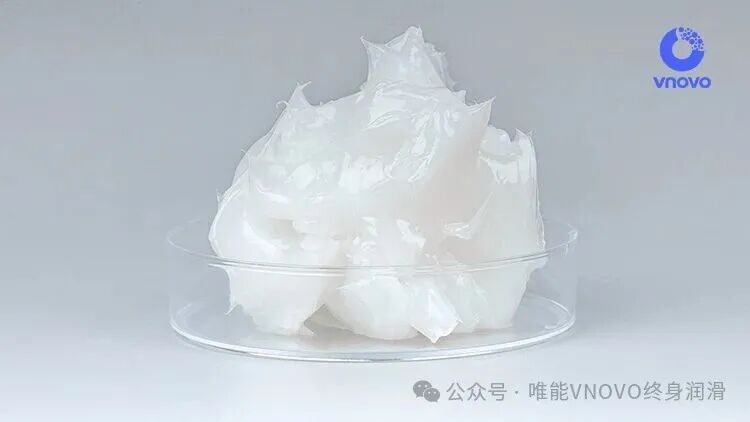
How Coating and Grease Divide the Work
There are two ways to lubricate a weatherstrip lip: coating and grease.
A coating is bonded to the rubber at manufacture and has good durability, but once worn away it cannot be repaired. Grease can be re-applied in the aftermarket, but under the open, high-frequency reciprocating sliding conditions of the lip, its durability is not as good as a coating.
The logic for selecting grease on a weatherstrip: strong adhesion, because the lip is vertical or inclined and the grease must not flow down. Resistance to dust contamination, because dust outside the glass enters the lip interface and the grease must not turn into grinding paste when contaminated. Compatibility with rubber, because it must not cause the rubber to swell or age faster. Low volatility, because the temperature inside the car door is high in summer and the grease must not evaporate quickly.
But grease re-applied to rubber whose coating has already worn away behaves completely differently from grease applied to rubber that still has its coating. When the coating is still there, adding grease provides auxiliary lubrication for the coating. After the coating is worn away, grease is applied directly to the rubber; if the chemical compatibility between the rubber and the grease’s base oil is poor, the base oil penetrates into the rubber surface layer and changes the rubber’s hardness and elasticity. At the same time, the elastic deformation of the rubber squeezes the grease out of the contact zone, so the grease cannot stay.
The window for re-greasing is during the coating-thinning stage, not after the coating is worn away.
Once the coating is worn away, the correct action is to replace the weatherstrip, not to add grease.
Conclusion
The coating on a weatherstrip lip is not decoration — it is a functional layer. Once the coating is worn away, the glass slides directly on the rubber, the friction coefficient multiplies, and lift resistance and abnormal noise appear at the same time.
Coating wear is gradual: first worn thin by dust, then carried away by reciprocating sliding. By the time the door panel is opened and bare rubber is visible, the coating has long since failed.