
By VNOVO Technical Support Team
Wind turbines are assembled once and serviced years later. Tower flange bolts connect tower sections under high preload; bearing attachment fasteners hold the rotor in precise alignment. Both face constant vibration, wide temperature cycles, and persistent moisture — particularly offshore — across service intervals that can exceed five years. Aluminum-based and graphite anti-seize compounds are purpose-built to protect these critical interfaces throughout that full service life.
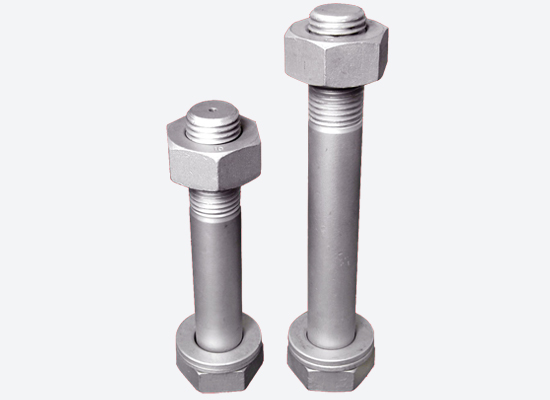
What Makes Wind Turbine Tower Flange Bolts and Bearing Fasteners Demanding for Anti-Seize Compounds?
- Constant vibration under high clamp load. Rotor forces and wind-induced tower sway generate low-frequency, high-amplitude loading. Without protection, this micromovement drives progressive clamp-force loss through fretting at threads and flange faces.
- Wide thermal cycling. Offshore turbines cycle from sub-zero nights to daytime operating temperatures, testing any lubrication film at the fastener interface with every cycle.
- Persistent moisture and salt spray. Tower interiors experience condensation; offshore sites add continuous salt aerosol. Moisture reaching the thread flanks — at points of highest preload — initiates corrosion and adhesion.
- Very long service intervals. Connections assembled at commissioning may not be accessed for years. The compound must remain fully effective without drying, oxidizing, or being displaced.
- Fretting at flange faces. Microscopic slip between adjoining flange faces under cyclic loading gradually damages surface coatings and promotes adhesive wear.
- Bearing fastener micromovement. Main-shaft and yaw bearing fasteners experience combined axial and radial loads. Fretting at these interfaces degrades clamp load and directly affects bearing alignment.
Why Do Wind Turbine Flange and Bearing Fastener Connections Still Fail Even When Anti-Seize Is Applied?
- Wrong compound type for the fastener material. Copper-based anti-seize on stainless steel bearing hardware can accelerate galvanic corrosion at elevated temperatures. Aluminum-based anti-seize suits carbon steel flange fasteners but requires formulation-level matching.
- Torque not adjusted for the friction change. Anti-seize reduces thread friction from approximately 0.14–0.20 (dry) to 0.06–0.10 (lubricated). Applying dry torque specs to lubricated fasteners can exceed proof load.
- Incomplete coverage on large fasteners. Tower flange bolts are M30–M42. Compound applied only to visible outer threads leaves the deeper engaged zone unprotected — exactly where corrosion initiates.
- Moisture ingress displacing the compound. In offshore environments, moisture can wick into thread clearances and displace compounds lacking water resistance, leaving bare metal exposed to salt water.
- Single-use compound specified for repeated assembly. Bearing maintenance requires repeated fastener engagement. Compounds rated only for single use may not perform across subsequent maintenance cycles.
What Properties Determine Whether an Aluminum-Based or Graphite Anti-Seize Compound Will Perform on Wind Turbine Bolting?
- Solid lubricant composition. Aluminum flake provides high-temperature film strength and oxidation resistance. Graphite delivers low-friction performance across a wide temperature range and chemical stability in moist conditions. Combined aluminum-graphite formulations offer complementary mechanisms: aluminum for high-temperature integrity, graphite for low-temperature lubricity and moisture stability.
- Temperature service range. Offshore turbines operate from approximately -40°C to +80°C. The compound must remain effective across this full range.
- Friction coefficient and torque adjustment. Manufacturer-published CoF data is required to recalculate target torque for the lubricated condition — a step that must not be omitted.
- Water and salt spray resistance. For offshore installations, inorganic thickeners and water-resistant carriers resist displacement by salt water.
- Extreme-pressure (EP) performance. Large flange bolts generate very high surface pressure at thread flanks. The compound must retain a protective film without being squeezed out.
How to Select the Right Anti-Seize Compound for Wind Turbine Tower Flange Bolts and Bearing Fasteners
Step 1 — Identify connection type, fastener material, and environment:
| Connection Type | Fastener Material | Environment | Priority Properties |
|---|---|---|---|
| Tower flange bolts | Carbon steel 10.9/12.9 | Onshore | EP, corrosion barrier, reusability |
| Tower flange bolts | Carbon steel 10.9/12.9 | Offshore | Water resistance, salt spray protection |
| Main shaft bearing bolts | High-alloy steel | Nacelle | Galling prevention, EP, torque stability |
| Yaw bearing bolts | Carbon steel | Tower top | Vibration resistance, corrosion barrier |
| Bearing maintenance bolts | Various | Maintenance interval | Repeated assembly compatibility |
Step 2 — Match compound type: Aluminum-graphite anti-seize suits carbon steel tower flange bolts in both onshore and offshore environments. For offshore, specify the water-resistant grade. For bearing attachment fasteners, confirm EP performance and bearing steel compatibility.
Step 3 — Apply correctly: Recalculate torque using the manufacturer’s friction coefficient for the lubricated condition. Apply compound to the full thread engagement zone before assembly.
How VNOVO Provides Technical Support
VNOVO does not supply a single “wind turbine anti-seize” compound with blanket application claims:
- Application-Oriented Selection Guidance — VNOVO maps fastener type, material grade, preload specification, and environmental conditions against compound formulation categories to recommend solid lubricant composition, carrier system, and water-resistance rating.
- Torque Specification Review — VNOVO provides friction coefficient data for its anti-seize compounds, supporting the torque recalculation required for lubricated-thread assembly.
- Scenario-Based Communication Support — VNOVO explains why a particular compound direction is recommended, what trade-offs exist across formulation options, and what verification steps to prioritize.
Conclusion
When to use aluminum-based or graphite anti-seize compounds on wind turbine flange bolts and bearing fasteners: When carbon steel fasteners are used in tower flange connections requiring EP performance and corrosion barriers, when offshore conditions demand water-resistant formulations, when large-diameter fasteners need reliable disassembly after multi-year service intervals, or when bearing attachment fasteners face vibration-induced clamp-load loss.
When an alternative anti-seize compound type is more appropriate: When stainless steel or high-alloy bearing hardware is involved — nickel-based compounds eliminate the galvanic risk associated with copper at elevated temperatures on stainless substrates. When the bearing OEM specifies a particular compound or prohibits anti-seize entirely.
What VNOVO can support: 1. Selection guidance — translating fastener type, material, preload, and environment into compound formulation type and water-resistance rating. 2. Torque alignment — providing friction coefficient data to ensure preload accuracy after anti-seize application. 3. Scenario communication — delivering the technical rationale and trade-off analysis to specify and validate the right anti-seize compound for your wind turbine flange bolts and bearing fasteners.