

Mineral Oil-based Greases
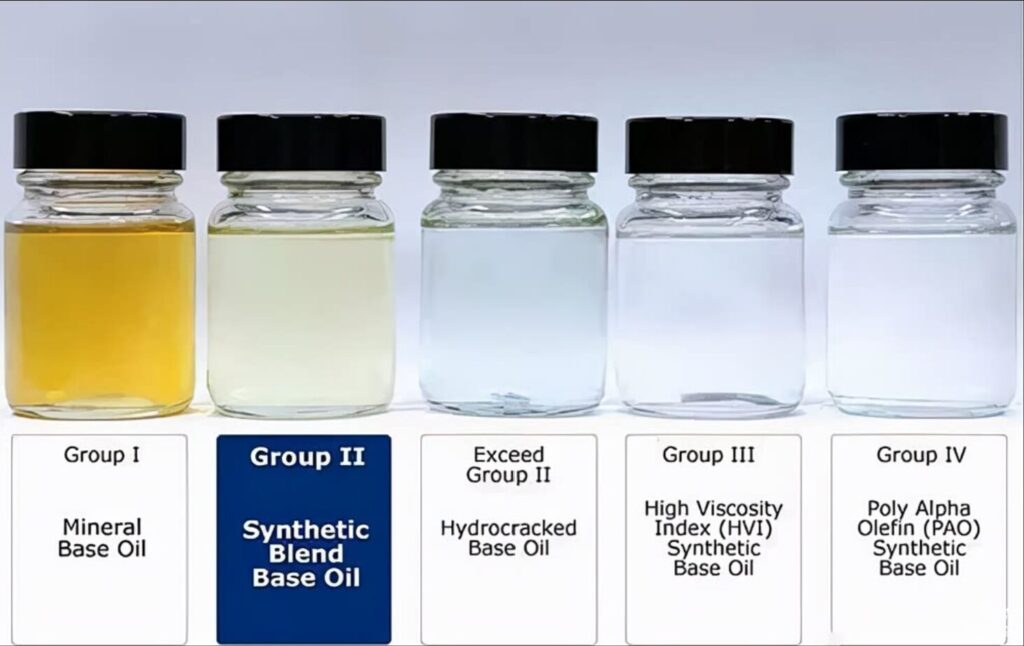
Currently, most greases are formulated using mineral oil-based lubricating oils as the base oil.
Synthetic Oil-based Greases
These greases are used under conditions that mineral oil-based greases cannot withstand, such as low-temperature performance, heat resistance, low torque, and long service life.
Synthetic Hydrocarbon Oils
Relatively low-cost among synthetic oils. Usable over a wide temperature range from low to high temperatures.
Since their molecular structure contains no polar groups, they offer excellent compatibility with rubber and resins, but are not used with natural rubber or EPDM.
Polyester Synthetic Oils
Excellent lubricating performance and usable over a wide temperature range from low to high temperatures. Generally cause volume swelling of rubber.
With superior heat resistance, oxidation stability, and radiation resistance, they are used with polyurea as a thickener for automotive electrical components and radiation-exposed equipment.
Polyethylene Glycol (PAG) Synthetic Oils
Harmless to rubber, making them suitable for applications using rubber materials such as natural rubber and EPDM.
Silicone Oils
Excellent heat resistance and oxidation stability, usable over a wide temperature range. However, poor lubricating performance on steel surfaces.
Perfluoropolyether (PFPE) Oils
Currently offer the best heat resistance and oxidation stability, along with excellent chemical resistance.
The main disadvantage is extremely high cost.
Suitable for chemical plants, high-temperature drying ovens, and thermal ink rollers in copiers.
.jpg)