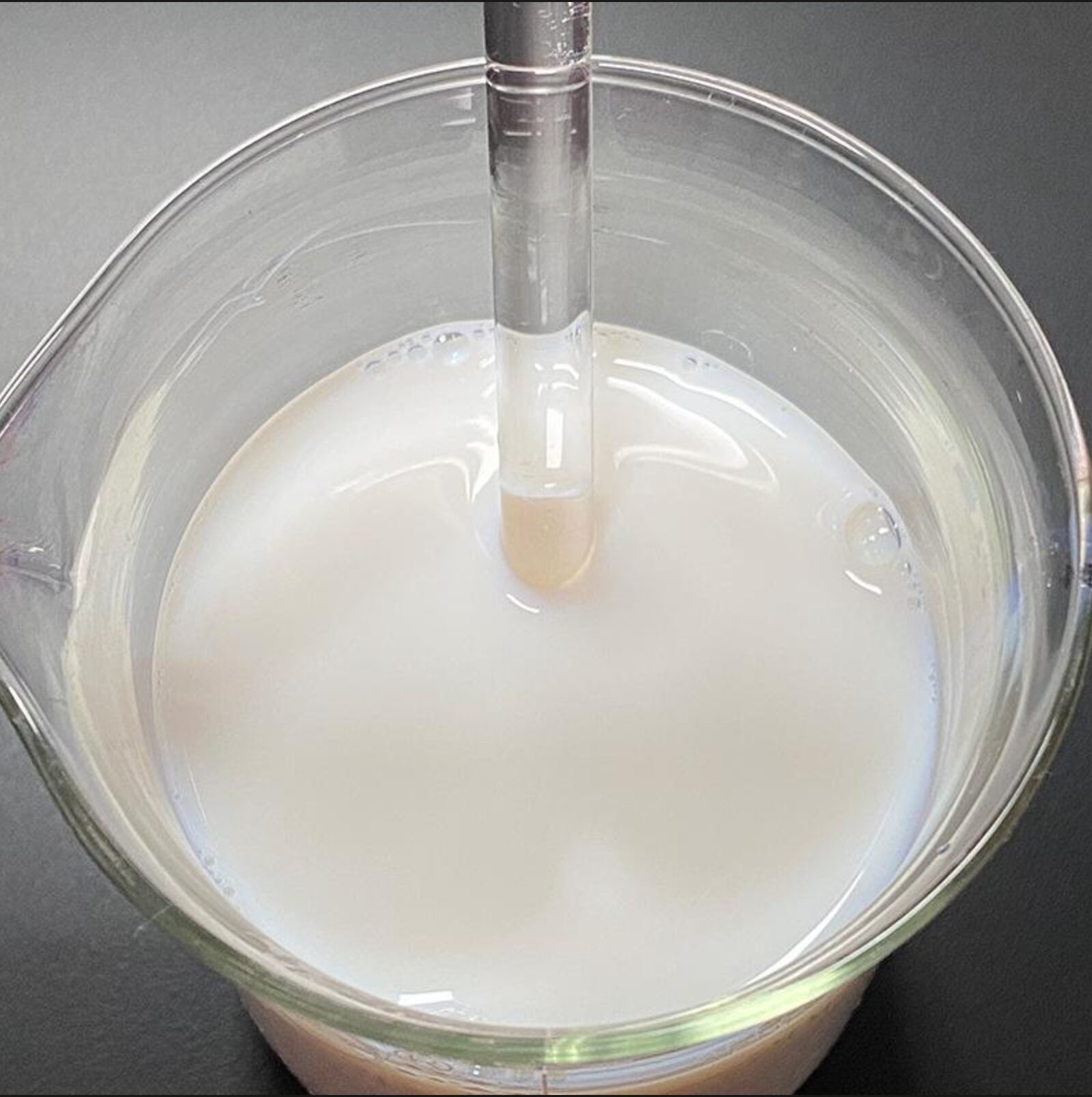

An additive refers to a substance added in a small amount as needed to improve the performance in a certain aspect. It is the third component following base oil and thickener. The table shows the additives used for lubricating grease, which are not exclusive to lubricating grease and can also be used for lubricating oil.

The following is an overview of representative additives:
| Types of Additives | Function |
| Load-resistant Additives – Oiliness Additive | Form a dense physical or chemical molecular film on the friction surface to inhibit direct contact between friction surfaces. |
| Load-resistant Additives – Anti-wear Agent (EP Agent) | Decompose the heat and frictional chemical reactions caused by lubrication on the friction surface, react with the metal surface to form a boundary lubricating film, and prevent wear and sintering. |
| Load-resistant Additives – Solid Additive | Decompose the heat and frictional chemical reactions caused by lubrication on the friction surface, react with the metal surface to form a boundary lubricating film, and prevent wear and sintering. |
| Friction Modifier | Adjust the friction characteristics of lubricating grease to an ideal state. |
| Antioxidant | Inhibit the oxidative degradation of lubricating grease and maintain its initial performance for the longest possible period. |
| Rust Inhibitor | Prevent rust on metal surfaces. |
| Metal Deactivator | Inhibit the generation of fresh metal surfaces and molten metal that accelerate the oxidation of lubricating grease. |
Load-resistant Additives
This type of additive is mainly used to prevent mechanical wear and ensure the normal operation of equipment under high-load conditions. Lubricating grease containing such additives is usually used in gears, constant velocity universal joints, bush parts of construction machinery and other components. According to different action structures, load-resistant additives can be divided into three types: oiliness additives, anti-wear agents (including EP agents) and solid additives.
| Classification of Load-resistant Additives | |
| Oiliness Additive | This additive adsorbs on the metal surface of the lubrication part and leaves a monomolecular film during boundary lubrication under low and medium load conditions. It has a long hydrocarbon chain in the molecule and a strong polar group at the end, which produces physical or chemical adsorption on the friction surface. Typical examples include long-chain fatty acids. |
| Anti-wear Agent | It is a compound that forms boundary lubrication after the oil film is damaged and an anti-wear film under high-load conditions to prevent fusion. The molecule contains sulfur, phosphorus, chlorine and other substances. The friction surface or oxygen reacts with these elements to form a film with high temperature resistance and anti-wear performance. Typical examples include phosphate esters, dithiometal salts, organic sulfur compounds, organic halogen compounds, etc. |
| Solid Additive | It exists in the lubrication part and can reduce friction or the frequency of direct contact between sliding surfaces. Typical examples include layered structure compounds such as molybdenum disulfide, graphite, boron nitride, and polytetrafluoroethylene (PTFE) which has friction-reducing properties itself. If solid additives are added to lubricating oil, sedimentation and separation will occur due to density differences, making it difficult to exert their functions. However, lubricating grease, as a semi-solid substance, has the advantages of no separation of solid additives and convenient use. |
Antioxidant
Lubricating grease is used in the air, so oxidative degradation is inevitable. The purpose of using antioxidants is to inhibit oxidative degradation. Almost all lubricating greases contain antioxidants, which are the main additives especially in the electrical equipment bearing grease used in high-temperature automobile engine compartments. According to different action mechanisms, antioxidants can be divided into preventive type and chain-terminating type.
| Classification of Antioxidants | |
| Preventive Antioxidant | This type of antioxidant can slow down the initial speed of oxidation. It decomposes hydrogen peroxide (ROOH), the primary oxidation product, into stable compounds to prevent its reaction. Representative compounds include organic sulfur compounds, zinc dialkyldithiophosphate, etc. |
| Chain-terminating Antioxidant | This type of additive achieves antioxidant effect by cutting off the chain reaction of free radical reactions. It donates hydrogen atoms to the peroxy free radicals generated during the oxidation process and itself becomes a stable free radical to prevent oxidation. This type can be divided into phenolic and aromatic types. |
Rust Inhibitor
Rust caused by the contact of metal surfaces with water or oxygen can lead to wear and spalling. Rust inhibitor is one of the main additives in the lubricating grease for bearings of continuous casting equipment in steel equipment. A rust inhibitor is a compound that forms a protective film on the metal surface to prevent reaction with water and oxygen, and it is also a polar compound with strong adsorption activity. The main types include sulfonic acid, phosphate esters, fatty acids, amines, etc.
.jpg)