
By VNOVO Technical Support Team
A bicycle’s metal components – bottom bracket bearings, hub bearings, headset bearings, pedal threads, crank bolts, chain, and derailleur pivots – operate under repetitive loads, exposure to the elements, and long service intervals. Each metal interface has distinct friction, load, and environmental demands. The right grease keeps bearings smooth, prevents threads from seizing, and protects against corrosion. The wrong choice leads to creaking, wear, rust, and costly repairs.
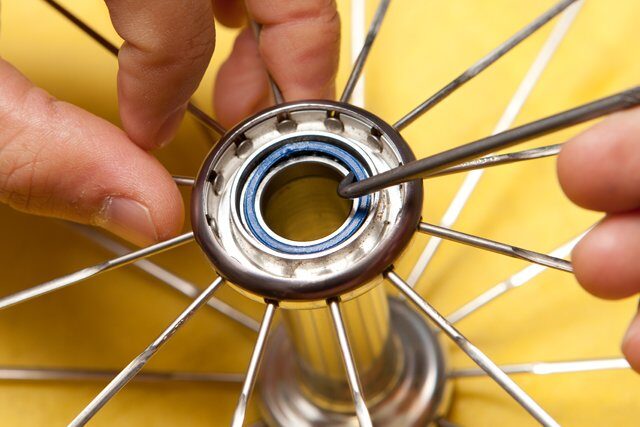
What Makes Bicycle Metal Components Demanding for Grease Selection?
– Diverse metal-on-metal interfaces. Rolling bearings (hub, bottom bracket, headset), threaded connections (pedal axles, crank bolts, BB cups), sliding pivots (derailleur, brake), and chain pin-bush-roller contacts each demand different properties.
– Water, mud, and road salt exposure. Road bikes encounter rain and grit; mountain bikes face stream crossings and mud. Water washout resistance is critical.
– Galvanic corrosion at dissimilar-metal contacts. Steel pedal axles thread into aluminum crank arms. Steel BB cups press into aluminum frames. These interfaces are prone to galvanic corrosion and seizure.
– Wide temperature range. Below-freezing winter commutes to hot summer rides. Grease must remain pumpable in cold and resist thinning in heat.
– Long maintenance intervals. Many riders service hubs and bottom brackets annually or less. The grease must protect without reapplication.
– Contamination from cleaning. Pressure washing and degreasing can strip grease and force water into bearings.
– Low starting torque requirements. Hub and headset bearings must spin freely. Stiff grease increases rolling resistance.
– Weight and space constraints. Bearing cavities are small; excess grease adds rotating mass without benefit.
Why Do Bicycle Metal Component Problems Persist Even When Grease Is Applied?
1. Threaded connections seizing from galvanic corrosion. Steel-aluminum thread interfaces corrode and seize without assembly paste that prevents contact corrosion and micropitting. Standard grease does not provide adequate galvanic separation.
2. Bearing grease washed out. Greases with poor water resistance are displaced during wet rides or cleaning, leaving bearings prone to rust.
3. Stiff grease in cold conditions. Conventional soap-thickened greases stiffen at low temperatures, increasing bearing drag.
4. Incompatibility with carbon surfaces. Some greases degrade carbon fiber seatposts or frames at metal-to-carbon interfaces.
5. Wrong grease for the interface type. Bearing grease on threads (needs anti-seize), anti-seize on rolling bearings (needs low torque), thick grease on chains (needs thin penetration) – each mismatch causes problems.
6. Over-greasing bearings. Excess grease in sealed cartridge bearings causes churning heat and drag.
What Properties Determine Whether a Grease Will Perform on Bicycle Metal Components?
Rolling bearings (hub, BB, headset): Low starting and running torque; water washout resistance (ASTM D1264); corrosion protection; NLGI 2 consistency; temperature range covering riding conditions (-20 to +120 °C).
Threaded connections (pedal axles, crank bolts, BB cups): Galvanic corrosion prevention; anti-seize for easy disassembly; water resistance for long-term protection; controlled friction coefficient. MOTOREX ANTI SEIZE, a white assembly paste (NLGI 1-2) formulated for bicycle press-fit and screw connections, prevents contact corrosion and micropitting while providing additional frictional strength.
Chain (pin-bush-roller): Penetration into clearances; tack to resist fling-off; corrosion protection; wet vs. dry conditions require different approaches.
Sliding pivots (derailleur, brake): Low friction for smooth actuation; water and contamination resistance.
Base oil and thickener: Lithium complex – general-purpose, good water resistance. PAO/silica – wide temperature, low torque, dielectric, hydrophobic. Clay (bentonite) – non-melting; Nye Instrument Grease 794A (clay-thickened ester-blend, -20 to 150 °C) was selected for e-bike motor gears where temperatures exceeded 140 °C.
How to Select the Right Grease for Bicycle Metal Components
Step 1 – Identify interface type and conditions:
| Bicycle Interface | Typical Conditions | Key Requirement |
| Hub / BB / headset bearings | Rolling, wet, long intervals | Low torque, water resistance, corrosion protection |
| Pedal / crank / BB threads | Static, dissimilar metals, moisture | Anti-seize, galvanic corrosion prevention |
| Chain (wet conditions) | Rain, mud, high speed | Tack, water resistance, penetration |
| Chain (dry / dusty) | Dust, grit | Dry or low-tack film, dirt shedding |
| Derailleur / brake pivots | Sliding, contamination | Low friction, water resistance |
| E-bike motor gears | High load, temperature | High-temp, EP, low noise |
Step 2 – Match formulation: Bearings → lithium complex or PAO/silica, NLGI 2. Threads → anti-seize assembly paste. Chain wet → tacky chain lube. Chain dry → dry film or wax. E-bike gears → clay-thickened ester or PAO with EP.
Step 3 – Verify: Confirm water resistance, temperature range, and material compatibility (especially metal-carbon interfaces). Apply correct quantity.
Quick Reference: Selection Guide
| Component / Condition | Key Properties | Direction |
| Hub / BB / headset bearings | Low torque, water resistant, NLGI 2 | Lithium complex or PAO/silica bearing grease |
| Threaded connections (steel-aluminum) | Anti-seize, galvanic separation | Assembly paste (MOTOREX ANTI SEIZE type) |
| Chain (wet / muddy) | Tack, water resistance, penetration | Wet-condition chain lubricant |
| Chain (dry / dusty) | Low tack, dirt shedding | Dry or wax-based chain lubricant |
| Derailleur / brake pivots | Low friction, contamination resistant | Light waterproof grease or oil |
| E-bike motor gears | High-temp, EP, low noise | Clay-thickened ester or PAO (Nye 794A type) |
How VNOVO Provides Technical Support
VNOVO does not supply off-the-shelf “bicycle grease” with universal claims:
Application-Oriented Selection Guidance – VNOVO reviews your component interface (bearing, thread, chain, pivot), operating conditions (wet/dry, load, speed), and material combinations (steel-aluminum, steel-carbon), recommending base oil type, thickener, consistency, and application method.
Material Compatibility Verification – VNOVO helps assess candidates against specific metal pairings (steel-aluminum galvanic risk), carbon fiber surfaces, seal materials, and bearing types – with emphasis on preventing galvanic corrosion, carbon degradation, and seal incompatibility.
Scenario-Based Communication Support – VNOVO provides rationales explaining *why* a direction is suggested, what trade-offs exist (bearing grease = low torque and long life vs. anti-seize = galvanic protection but not for rolling contacts; lithium complex = versatile vs. PAO/silica = wider temperature and lower torque; wet chain lube = durable in rain but attracts dirt vs. dry lube = clean but frequent reapplication; conventional bike vs. e-bike = higher motor temperatures require non-melting thickeners), and what validation steps to prioritize.
Conclusion
When to use specialized bicycle grease for metal components
When the interface involves dissimilar metals prone to galvanic corrosion, when rolling bearings need low torque with water resistance and long service life, when e-bike motor gears generate elevated temperatures, or when riding conditions demand specific chain lubrication strategies.
When a general-purpose approach may suffice
When the interface involves similar metals with no galvanic risk, the bicycle is used in mild dry conditions with regular maintenance, no e-bike motor temperatures are involved, and the rider accepts periodic re-lubrication.
What VNOVO can support
1. Selection guidance – translating component interface, material combination, and riding conditions into grease type, consistency, and application method
2. Material matching – assessing compatibility between candidates and specific metal pairings, carbon surfaces, and seal materials
3. Scenario communication – providing the technical rationale and decision framework to specify, validate, and apply the right grease for each bicycle metal component
*This article is provided for informational purposes based on industry references and bicycle mechanical engineering principles. Specific product selection should always be verified against component manufacturer specifications, OEM recommendations, lubricant supplier data, and application testing.*