

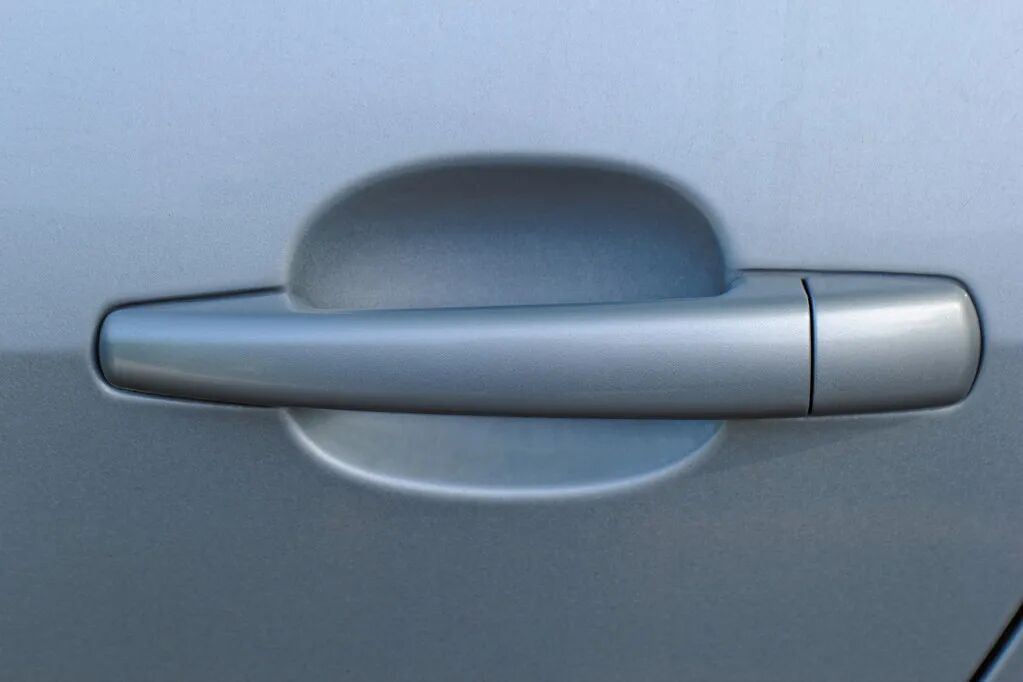
For car owners in the north, winter begins with a car door that cannot be pulled open. The door handle is a component users touch every day; in winter, failure to open, slow retraction, and a “sticky” feel are the top three aftermarket complaints in northern regions.
These complaints are no longer just simple aftermarket issues of “the handle is broken, replace it”; they have become performance indicators that must be locked in during the design phase. The demands placed on grease by the handle’s pivot shaft and return spring are the result of three superimposed constraints.
Vertical installation causes gravity-induced flow; the return spring undergoes repeated squeezing between coils; and the compatibility of metal-plastic friction pairs must be maintained — each condition imposes its own requirements on the grease, and all three take effect simultaneously within the same handle assembly.
-30°C Starting Torque Increment <50%: Not a Lab Indicator, But a Tactile Sensation on the User’s Fingers
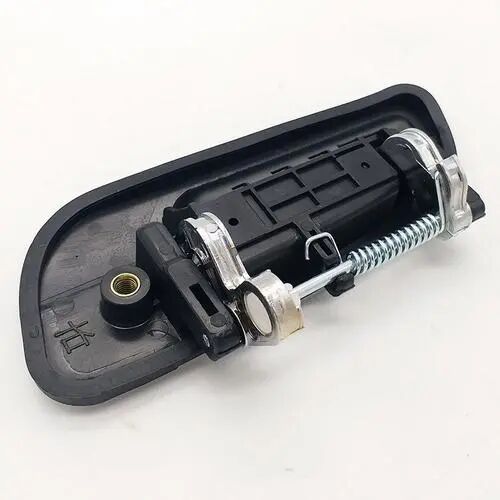
The handle pivot shaft is installed vertically or at an angle, causing the grease to continuously flow downward under gravity, gradually leaving the upper part of the shaft starved of oil. At room temperature, the starting torque is 1-2 N·m, and the handle opens with a light pull of the finger. At -30°C, the base oil viscosity of ordinary grease spikes, the thickener network shrinks and hardens, yield stress rises sharply, and the starting torque shoots up to 5-8 N·m.
When a 5-8 N·m torque is placed inside a handle assembly where the spring’s return torque is only 3-5 N·m, the grease has effectively locked the pivot shaft. The spring’s return torque cannot overcome the starting torque of the pivot shaft, and the handle does not retract when released. Controlling the starting torque increment at -40°C to within 50% is not just to make the grease look good in the lab; it is to ensure the grease does not freeze up on the user’s hand.
The low-temperature thickening effect of ordinary lithium grease leaves no margin for error against this threshold.
Sliding Between Return Spring Coils: Grease Is Repeatedly Squeezed and Migrates, Dry Friction Eats Up Return Torque
The return spring remains pre-tensioned long-term; every time the handle is released, relative sliding occurs between the spring coils. The grease applied between the coils is gradually pushed aside under repeated squeezing, migrating to the ends of the spring. Once the coils enter a state of dry friction, resistance increases sharply. This resistance directly counteracts the spring’s return torque. The spring itself will also undergo stress relaxation, causing the return torque to decay year by year.
As the return torque drops and the inter-coil dry friction resistance rises, the day those two curves cross is the day the return function fails. The grease between the coils must withstand repeated squeezing without migrating away. It’s not enough just to apply it; it must still be there after tens of thousands of cycles.
Metal-Plastic Friction Pair: POM Adhesive Wear After Oil Starvation, Wear Debris Forms Lapping Paste
Once the upper part of the pivot shaft is starved of oil, the metal shaft bites directly into the POM bushing. Adhesive wear occurs on the POM surface, and the wear debris mixes into the residual grease to form a black lapping paste. The clearance gets larger and larger as it grinds, and the handle gradually becomes loose. At the same time, the grease must be chemically compatible with POM/PA66, causing no swelling or stress cracking.
Once the bushing swells, the clearance is eaten up, and the pivot shaft jams outright.
Three constraints stack together: vertical installation requires the grease to resist gravity and not flow; the spring coils require the grease to resist repeated squeezing and not migrate; and the metal-plastic friction pair requires the grease to be compatible, non-swelling, and resistant to fretting wear. If any single condition is not met, the failure mode will erupt centrally in the aftermarket.
The Same -30°C Is Different in the Lab Than on a Real Car
When the handle assembly is tested for starting torque in the lab, it is kept at a constant -30°C in an environmental chamber, and the handle is dry and clean. On a real car, the exterior of the handle is invaded by rainwater, car wash water, and road salt. After mud, sand, and salt enter the pivot shaft, the low-temperature starting torque at the same temperature is 20%-30% higher than in the lab.
Just because the data holds up in the lab doesn’t mean it will hold up on a real car after three winters and two summers.
The deterioration of oil starvation at the upper part of the pivot shaft is cumulative. During the first winter, there is still residual grease, and the starting torque increment barely stays within 50%. By the second year, the residual grease has further depleted, the increment breaches 50%, and the handle begins to show sluggish retraction. By the third year, the pivot shaft enters dry friction, the starting torque directly exceeds the limit, and the return function fails.
The lab tests new grease on new parts; users use old parts with residual grease after three years.
From “Usable” to “Works Well for a Lifetime”: The Selection Logic Changes
From merely passing room-temperature rig tests to covering the full temperature range over the entire lifespan, the grease selection logic changes accordingly.
Low-Temperature Fluidity — The fluidity of synthetic hydrocarbon/ester base oils at -40°C is far superior to that of mineral oils. Their viscosity-temperature characteristics are flat, the extent of low-temperature thickening is controllable, and the window for keeping the starting torque increment within 50% is wider than that of mineral oils.
Mechanical Stability — The fiber structure of special lithium-based or polyurea thickeners is stable. It does not migrate or wash away under the repeated squeezing between spring coils; even after tens of thousands of cycles, the oil film remains. Ordinary lithium grease would be squeezed out after just a few thousand cycles under the same conditions.
Material Compatibility and Anti-Wear — The base oil does not swell or crack POM/PA66. Supplemented by anti-wear additives, it suppresses adhesive wear at the metal-plastic interface, keeps the generation of wear debris low, and prevents the clearance from expanding.
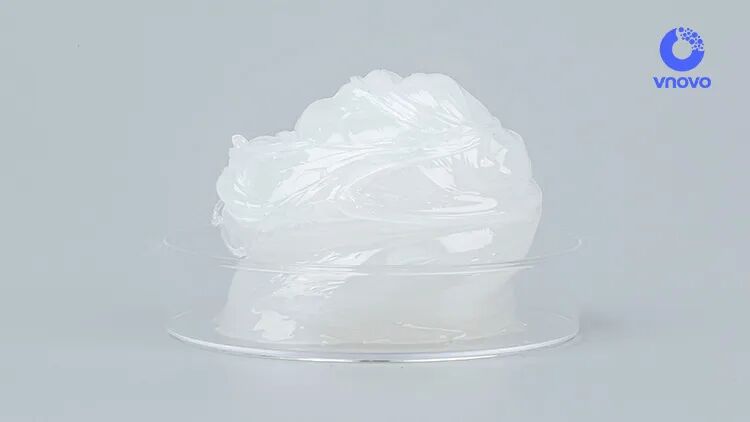
Products are already being designed according to this logic, such as the VNOVO series of low-temperature resistant damping greases.
Aftermarket complaints about car door handles, ranging from “can’t pull it open” to “won’t retract,” all root back to three performance aspects of the grease: low-temperature starting torque increment, vertical surface adhesion, and compatibility with plastics. Oil starvation at the pivot shaft and loss of oil between spring coils are two parallel failure paths that ultimately converge on the same result — the functional failure of the handle.
With three constraints stacked within the same handle assembly, the grease must cover both the pivot shaft and the spring simultaneously throughout its entire service life.
If the design life of the handle assembly is ten years, the life of the grease must also be ten years.