
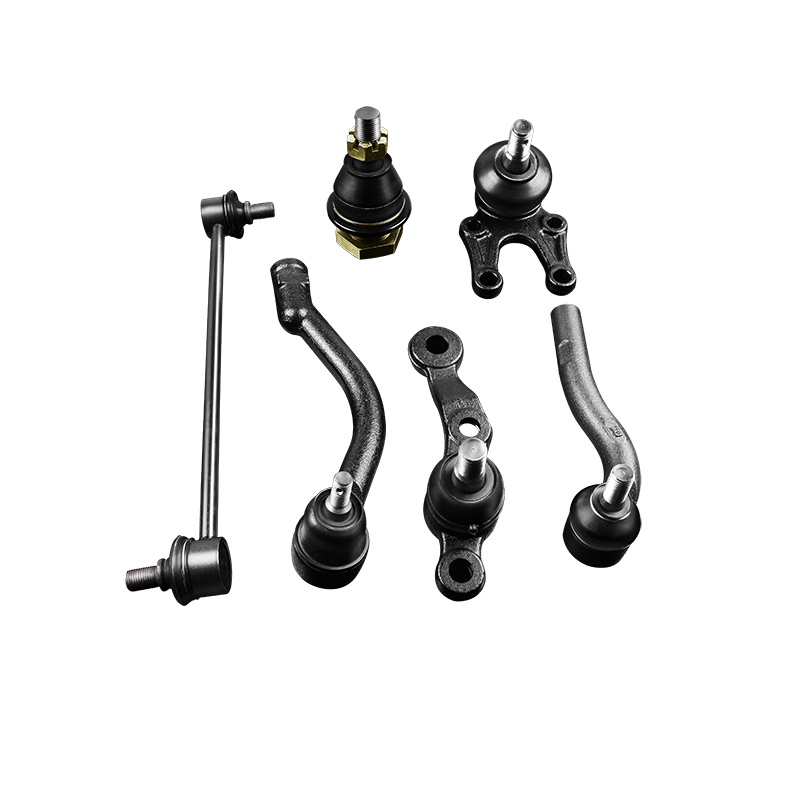
A new car drives off the lot with precise steering, strong return-to-center feel, and a solid chassis—this is the result of repeated tuning during the vehicle development phase. But warranty data consistently points to the same turning point: after 30,000–50,000 km, the steering system begins to develop play, rough road surfaces produce metallic knocking sounds from the front suspension, and upon lift inspection it is often found that the steering tie rod ball joint dust boot has long since cracked, grease is completely lost, and the ball stud and socket are in a loose state.
The 4S conclusion is typically “tie rod assembly damaged,” with single-side claims costing hundreds of yuan plus wheel alignment fees. The customer’s perception is “the steering feels vague” and “the chassis feels loose”—the damage to safety confidence and brand trust far exceeds the price of the component itself.
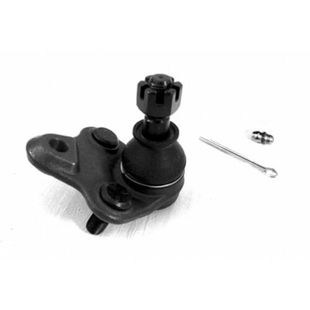
Where is the problem? The grease.
Once the Dust Boot Cracks, the Lubrication System Collapses Directly
Ball joint dust boots are typically made of EPDM rubber or TPE material, and their operating environment is quite harsh: stone impacts, ozone erosion, low-temperature embrittlement, and installation stress叠加—cracking is only a matter of time. Once the dust boot is damaged, external mud, water, and sand directly pour into the ball socket interior.
When grease encounters water contamination, its properties change fundamentally. Mud and sand particles mix with the grease, forming a high-hardness abrasive compound that suspends between the precisely mated ball stud and socket. The design clearance between ball stud and socket is typically only 0.03 to 0.08 mm—once abrasive compound enters, wear exceeds the clearance limit in a very short time. The ball stud surface hardness is not low, but no metal can withstand continuous grinding by sand particles.
At the same time, the grease itself continues to drain from the damaged area. The ball joint must withstand directional pulling forces from the tie rod, shear forces from road impacts, and continuous oscillation during operation—under high shear and repeated extrusion, ordinary grease gradually softens in consistency, and adhesion is insufficient to resist these mechanical forces, so it is squeezed out through gaps. Wear rate then increases sharply.
Why Ordinary Grease Cannot Handle the Chassis Environment
Chassis grease operating conditions are harsher than most powertrain lubrication points:
Water and road salt: Chloride ions accelerate metal surface micro-crack propagation; ordinary grease experiences sharp consistency decrease upon water contact, and some products even emulsify
Sustained vibration and shear: Road excitation causes the ball joint to oscillate continuously in small amplitudes; grease is repeatedly extruded, and viscosity gradually diminishes
Low-temperature hardening: When winter temperatures drop below –20°C, ordinary grease consistency multiplies, steering resistance increases noticeably, and the feel becomes heavy. Hardened grease is also more easily extruded by cold-embrittled dust boots
High-temperature softening: Brake disc thermal radiation or summer road heat causes some greases to decrease in consistency, showing flow tendencies and leaving the lubrication point empty
The chassis “lifetime maintenance-free” design commitment actually requires grease to maintain stable consistency across a wide temperature range, continuously adhere, and resist water washout—tasks that ordinary greases simply cannot fulfill.
How VNOVO Dedicated Grease Solves This
VNOVO ball joint dedicated grease uses PAO/ester synthetic base oil combined with complex lithium/polyurea thickener, with formulation targeting the chassis ball joint failure chain:
Water-wash resistance: Water washout loss below 3% (ASTM D1264); upon water contact it does not emulsify or dissolve. Even under road salt water washout, the lubricating film remains intact. This indicator far outperforms ordinary greases, which typically show 10%–20% loss under the same test conditions.
EP anti-wear protection: AW/EP additives in the formulation form a chemical protective film on ball stud and socket surfaces under high contact stress conditions. Even in boundary lubrication conditions caused by water contamination, metal surfaces retain a self-repairing lubricating layer, preventing entry into dry friction.
High-adhesion consistency design: NLGI Grade 2 consistency, not easily sheared or extruded during ball joint oscillation, long-term stably adhering to ball stud and socket working surfaces. This is critical for “lifetime maintenance-free” design.
Rubber material compatibility: Formulation passes accelerated aging tests with EPDM, NBR, and TPE dust boot materials—producing no swelling, cracking, or accelerated ozone aging. Dust boot integrity is protected, naturally maintaining the grease’s sealed environment.
Wide temperature stability: Operating temperature range from –40°C to 180°C—does not harden at low temperatures, does not flow at high temperatures. Covers all major global market climate conditions.
Factory-sealed filling: Ball joint assemblies are filled once at the assembly stage, eliminating contamination risk from post-sale re-filling, meeting the “lifetime maintenance-free” design objective.
Has Your Ball Joint Durability Test Actually Passed?
During OEM design validation, bench durability tests are typically conducted: simulating 200,000 ball joint oscillation cycles, combined with salt spray environment for accelerated aging. However, a gap still exists between test conditions and actual road conditions—the frequency composition of real road excitation is far more complex than bench conditions, and the randomness of stone impact on dust boots cannot be fully simulated.
Working backward from field failure data, a significant proportion of ball joint looseness issues are not caused by ball stud/socket fatigue failure, but rather by the lubrication system collapsing first.
To reduce post-sale claim rates from the design side, it is recommended to re-examine grease selection and filling process:
Does the grease’s water resistance meet the design requirements?
Is there complete validation of dust boot and grease material compatibility?
Can the filling process ensure grease uniformly coats the inner socket wall without generating bubbles?
Contact us via direct message to obtain filling process parameter documentation or lubrication solution technical documents.