
By VNOVO Technical Support Team
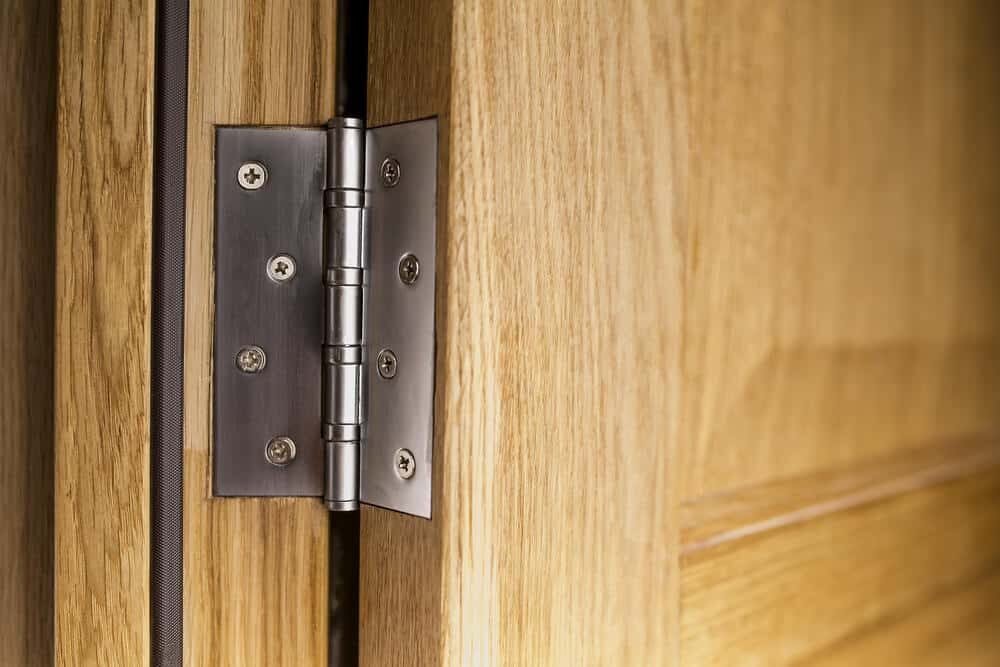
Door hinges are among the most frequently used mechanical components in buildings, vehicles, and equipment enclosures. Without adequate lubrication, the result is squeaking, uncontrolled free-swing, wear at the pin-barrel interface, and corrosion. Damping grease – also called motion control grease – controls not just friction but the speed and feel of movement, transforming a harsh closing action into smooth, controlled motion.
What Makes Door Hinge Applications Suitable for Damping Grease?
Door hinges present conditions that align well with damping grease capabilities:
– Slow rotary motion at the pin-barrel interface. The primary challenge is not maintaining a hydrodynamic film but providing consistent friction control and surface protection.
– Need for controlled closing speed. Uncontrolled free-swing doors slam, causing noise, frame damage, and potential injury. Damping grease introduces viscous resistance that slows the closing arc, creating a soft-close effect without mechanical damper hardware.
– Noise reduction as a quality attribute. In residential, healthcare, hospitality, and office environments, a quiet door is expected. Damping grease eliminates metal-to-metal contact noise.
– Mixed material contact. Hinges are manufactured in steel, stainless steel, brass, zinc alloy, and aluminum – sometimes with polymer bushings. The grease must be compatible with all present materials.
– Environmental exposure. Exterior and vehicle doors face temperature extremes, humidity, rain, and occasionally salt exposure.
– Long service intervals. Most door hinges are lubricated once during installation and then forgotten. The grease must perform for years without reapplication.
Why Do Door Hinge Problems Persist Even When Damping Grease Is Applied?
Six failure modes continue to cause issues:
1. Grease migration. On vertical hinges, gravity pulls grease downward along the pin. If the grease has insufficient tack, it migrates out of the critical interface.
2. Temperature-related stiffness or softening. A grease providing ideal feel at 20 °C may stiffen excessively at –10 °C or lose damping effect at 50 °C.
3. Material incompatibility. Some damping formulations stain brass or zinc-alloy hinges, or affect polymer bushings. Yellow-metal staining is a concern with certain EP additives.
4. Over-application attracting contaminants. Excess grease on exterior hinges collects dust and grit, forming an abrasive compound that accelerates wear.
5. Insufficient shear stability for high-cycle doors. Damping greases with high-viscosity base oils can break down under repeated shearing. In high-traffic doors, the grease may soften and lose damping capacity over months.
6. Water washout. Hinges exposed to rain or road splash lose grease that lacks adequate water resistance (ASTM D1264), leading to corrosion and seizure.
What Properties Determine Whether a Damping Grease Will Perform on Door Hinges?
Key properties:
– Dynamic viscosity (Pa·s). Higher viscosity provides more damping – the door closes more slowly. Selection balances desired closing speed against opening effort.
– Viscosity index (ASTM D2270). A high VI indicates less viscosity change across the operating range – important for doors experiencing both cold and warm conditions.
– Tack / adhesion. Higher tack keeps grease in place on vertical pin surfaces and resists gravity-driven migration.
– Water resistance / washout (ASTM D1264). Critical for exterior and vehicle doors.
– NLGI consistency (ASTM D217). NLGI 2 is common – soft enough to distribute into the pin-barrel clearance but stiff enough to stay in place.
– Material compatibility. Must be verified against all hinge metals and any polymer components.
How to Select the Right Damping Grease for Your Door Hinge
Step 1 – Define the door type and environment: Interior doors cycle 10-30 times daily in stable conditions; exterior doors face rain and temperature swings; commercial doors cycle 50-200+ times; industrial doors face dust, chemicals, and washdown; vehicle doors face temperature extremes and road splash.
Step 2 – Match damping level to desired closing behavior:
– Light damping – interior doors where free-swing is acceptable but squeak prevention is needed. Lower viscosity (15-30 Pa·s).
– Medium damping – doors where controlled closing prevents slamming. Medium viscosity (30-60 Pa·s).
– Heavy damping – heavy doors, fire doors, or safety-critical slam prevention. High viscosity (60-120+ Pa·s).
Step 3 – Verify environmental and material requirements: Exterior/vehicle doors need high water resistance and verified temperature range. Brass or zinc-alloy hinges need yellow-metal compatibility. Polymer bushings need plastic compatibility verification. Food-processing or cleanroom doors need applicable regulatory registration.
Quick Reference: Damping Grease Selection Guide for Door Hinges
| Door Type | Damping Level | Key Properties | Direction |
| Residential interior | Light | Noise reduction, long-term stability | Light-grade synthetic hydrocarbon; NLGI 2; moderate tack |
| Residential exterior | Medium | Water resistance, temperature stability, high tack | Medium-grade synthetic hydrocarbon; NLGI 2; verified washout |
| Commercial / high-traffic | Medium-Light | Shear stability, consistent feel | Medium-grade with high shear stability; NLGI 2 |
| Industrial enclosure | Medium-Heavy | Chemical resistance, wide temp range, washdown | PFPE-based for harsh environments; NLGI 2-3 |
| Automotive vehicle | Medium | Temperature extremes, water/salt splash | Medium-grade with high VI, salt-spray resistance; NLGI 2 |
| Fire / safety door | Heavy | Controlled closing, high-temp tolerance | Heavy-grade; verify upper temp limit; NLGI 2-3 |
| Refrigerator / cold-room | Medium | Low-temp flexibility, food-contact compliance | Synthetic or PFPE with verified LTTL; food-grade if required |
How VNOVO Provides Technical Support
VNOVO does not supply off-the-shelf “door hinge damping grease” with universal claims:
Application-Oriented Selection Guidance – VNOVO reviews your door type, hinge material, traffic level, environment, and regulatory needs, mapping them against formulation categories to recommend base oil family, viscosity range, property priorities, and validation approach.
Material Compatibility Verification – VNOVO helps assess candidates against all materials – steel pins, brass/aluminum barrels, polymer bushings, coated surfaces – with attention to yellow-metal safety, polymer compatibility, and corrosion protection.
Scenario-Based Communication Support – VNOVO provides rationales explaining *why* a direction is suggested, what trade-offs exist (heavier damping = slower closing but more opening effort vs. lighter damping = easier opening but less slam prevention), and what validation steps to prioritize.
Conclusion
When to use damping grease on door hinges
When controlled closing prevents slamming, quiet operation is required, long service intervals are needed without re-lubrication, mixed hinge materials need a compatible lubricant, or environmental exposure demands stable performance.
When damping grease may not be the right choice
When the hinge already incorporates a mechanical soft-close mechanism, uses self-lubricating polymer bushings designed to operate dry, experiences extreme loads exceeding damping grease capacity, or requires maximum opening ease (e.g., emergency exit doors where added resistance is unacceptable).
What VNOVO can support
1. Selection guidance – translating door type, hinge materials, environment, and desired closing behavior into formulation direction, viscosity/consistency grade, and key property priorities
2. Material matching – assessing compatibility between candidates and all metals, polymers, and coatings in your hinge assembly
3. Scenario communication – providing the technical rationale and decision framework to specify, validate, and apply the right damping grease for your door hinge application
*This article is provided for informational purposes based on publicly available industry references and established lubrication engineering principles. Specific product selection should always be verified against the hinge manufacturer’s guidelines, lubricant supplier technical data sheets, and material compatibility data.*