
By VNOVO Technical Support Team
In optical equipment – camera lenses, binoculars, microscopes, telescopes, and precision instruments – the focusing and zoom mechanisms are where mechanical engineering meets optical precision. A lens barrel must move smoothly without stick-slip, hold position without drift, and feel consistent across years of use. Damping grease at the helicoid or cam interface is what makes this possible.
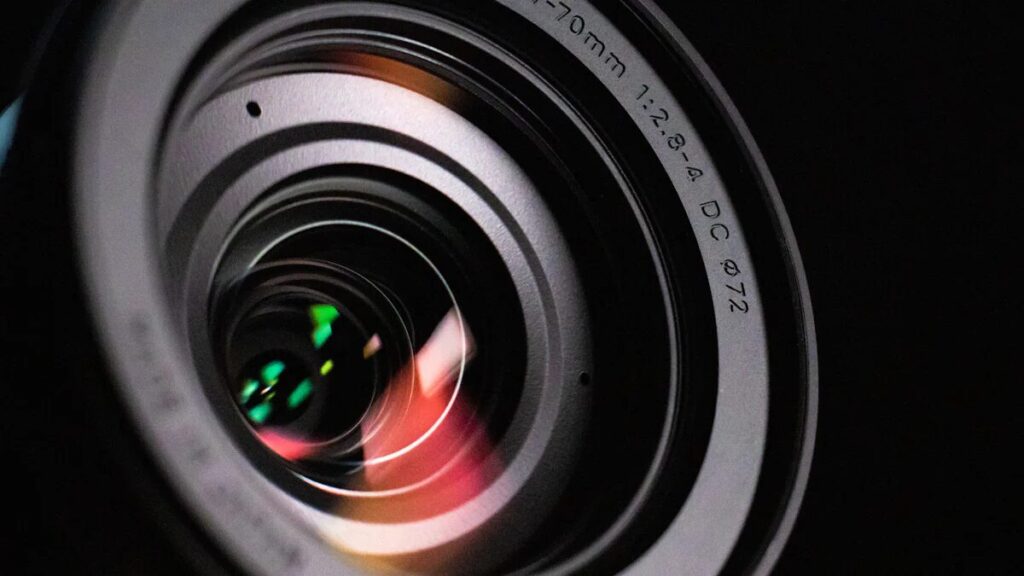
What Makes Optical Lens Applications Demanding for Damping Grease?
Optical lens mechanisms combine unique challenges:
– Motion quality directly affects optical performance. In a focusing helicoid, uneven rotational resistance makes precise focus difficult. Stick-slip causes overshoot; backlash causes image shift when force is released.
– Extremely small lubricant quantities. Grease may be applied as a thin film on helicoid threads – often just milligrams. Over-application contaminates lens elements irreversibly.
– Wide temperature range with consistent feel. Outdoor lenses may face -40 °C or 50 °C+. Damping must remain usable – not too stiff in cold, not too soft in heat.
– Long service life without re-lubrication. Lens assemblies are sealed for life. The grease must maintain properties for years without hardening, separating, or migrating.
– Material compatibility with optical-grade polymers. Lens barrels use POM, PTFE-composite, polycarbonate, and elastomeric seals. Silicone-based greases are often preferred because they do not swell most plastics or elastomers.
– Zero tolerance for contamination. Any evaporated or migrated oil reaching optical surfaces degrades image quality. Low volatility and zero oil separation are critical.
– Low starting torque without backlash. The operator should start focus with minimal force (low breakaway torque) and have the barrel stay where released (no spring-back).
Why Do Optical Lens Problems Persist Even When Damping Grease Is Applied?
Six failure modes continue to cause issues:
1. Oil separation contaminating lens surfaces. Greases with poor structural stability release base oil that migrates onto lens elements, causing haze and reduced contrast.
2. Damping feel changing with temperature. Conventional greases can stiffen in cold (jerky focus) or soften in heat (barrel drifts under gravity).
3. Grease migration into the optical path. Over-application or low-tack grease can be pushed into the optical path during zoom travel.
4. Material incompatibility. Some formulations cause swelling or stress cracking in polycarbonate or other barrel plastics.
5. Grease hardening over years. Oxidative degradation or evaporation causes hardening, increasing focus resistance.
6. Inconsistent damping across rotation. Non-uniform distribution or migration during use creates smooth and notchy zones.
What Properties Determine Whether a Damping Grease Will Perform?
Key properties:
– Rheological stability. Consistent viscous resistance over time and temperature. Advanced silicone formulations maintain similar viscosity from -40 °C to 70 °C+.
– Oil separation resistance. Near-zero separation (ASTM D6184) prevents optical contamination and maintains structural integrity.
– Low breakaway torque without backlash. Soft enough for easy start, structured enough to hold position. Requires specific yield stress characteristics.
– Temperature range consistency. Low-evaporation silicone maintains damping across wide range.
– Plastic and elastomer compatibility. Silicone greases do not swell most plastics; verify specific barrel materials.
– Low volatility / outgassing. Ultraclean formulation with minimal outgassing prevents condensation on lens surfaces.
– Long-term structural stability. No hardening, separation, or consistency change over years in sealed assembly.
How to Select the Right Damping Grease for Your Optical Lens Application
Step 1 – Define the mechanism type:
| Mechanism | Components | Key Requirement |
| Manual focus helicoid | Threaded barrel, cam follower | Smooth rotation, consistent resistance, zero backlash |
| Zoom barrel | Sliding barrels, cam grooves | Smooth travel, position hold, contamination prevention |
| Binocular / telescope focuser | Knob-driven helicoid | Fine-focus control, no drift |
| Microscope focusing stage | Precision helicoid or lead screw | Ultra-fine positioning, zero stick-slip |
| Camera fluid head / tripod | Pan/tilt mechanism | Controlled speed, smooth start/stop |
Step 2 – Match damping level: Light mechanisms (small focus rings) need lighter damping (15-30 Pa·s). Heavy mechanisms (large zooms, fluid heads) need heavier damping (60-140+ Pa·s).
Step 3 – Verify requirements: Outdoor use needs wide temperature range with stable damping. Sealed assemblies need zero oil separation and low outgassing. Barrel polymers need verified compatibility.
Quick Reference: Selection Guide
| Application | Key Properties | Direction |
| Camera lens focus helicoid | Smooth feel, zero backlash, low oil separation, wide temp | Advanced silicone damping gel; zero oil separation; plastic-compatible |
| Zoom lens barrel | Consistent travel, contamination prevention, hold | Medium silicone damping; high tack; zero oil separation |
| Binocular / telescope focuser | Fine positioning, no drift, smooth start | Light-to-medium silicone; low breakaway torque |
| Microscope focusing stage | Ultra-fine positioning, zero stick-slip, long life | Precision silicone or PAO; minimal viscosity drift |
| Camera fluid head | Controlled speed, smooth start/stop, wide temp | Heavy silicone damping; high VI; stable -40 to 70 °C+ |
| Industrial inspection lens | Low outgassing, cleanroom, repeatable feel | Low-volatility silicone; ultraclean; verified outgassing limits |
How VNOVO Provides Technical Support
VNOVO does not supply off-the-shelf “optical lens damping grease” with universal claims:
Application-Oriented Selection Guidance – VNOVO reviews your mechanism type, desired damping feel, temperature range, material list, and contamination limits, mapping them against formulation categories to recommend base oil family (silicone vs. synthetic hydrocarbon), viscosity grade, oil separation rating, and validation approach.
Material Compatibility Verification – VNOVO helps assess candidates against all materials: barrel plastics (POM, PC, PTFE-composite), elastomeric seals, metal components, and coatings – with emphasis on polymer compatibility and long-term stability in sealed assemblies.
Scenario-Based Communication Support – VNOVO provides rationales explaining *why* a direction is suggested, what trade-offs exist (heavier silicone = more control but higher breakaway vs. lighter = easier start but less hold; silicone = broad compatibility and wide temp range vs. synthetic hydrocarbon = different damping profile), and what validation steps to prioritize.
Conclusion
When to use specialized damping grease in optical lens applications
When the mechanism requires controlled smooth motion without stick-slip or backlash, operates across wide temperature range while maintaining consistent feel, is sealed for life with zero tolerance for oil migration onto optics, or uses plastic components requiring verified compatibility.
When a general-purpose approach may suffice
When the mechanism operates in narrow temperature range, is not sealed for life (re-lubrication possible), uses all-metal construction, or is a low-cost assembly where occasional feel inconsistency is acceptable.
What VNOVO can support
1. Selection guidance – translating mechanism type, damping feel, temperature range, and contamination limits into formulation direction, viscosity grade, and validation approach
2. Material matching – assessing compatibility between candidates and all barrel polymers, elastomers, metals, and coatings
3. Scenario communication – providing the technical rationale and decision framework to specify, validate, and apply the right damping grease for your optical lens application
*This article is provided for informational purposes based on publicly available industry references and established lubrication engineering principles. Specific product selection should always be verified against the lens manufacturer’s guidelines, OEM recommendations, lubricant supplier technical data sheets, and material compatibility data.*