

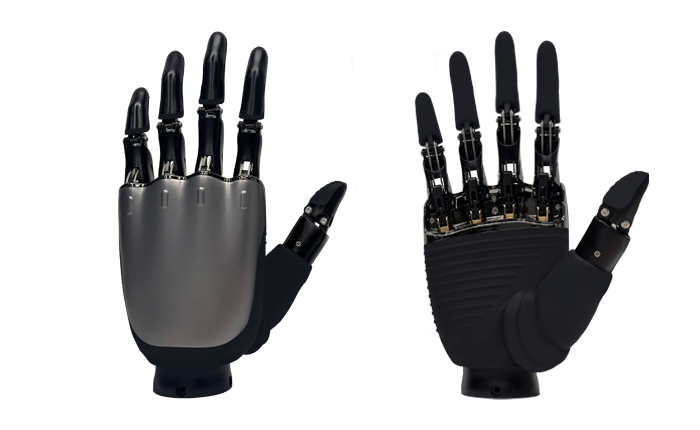
At 120 rpm, a certain brand’s dexterous hand reducer developed severe tooth surface wear within 480 hours — grease blackened and teeth broke. The root cause: the grease used had a dropping point of only 188°C, and under sustained 80–100°C operation, the thickener structure softened and collapsed, leaving the gear operating in a near-dry state.
This is a real case, not an extreme example.
What “Grease Blackening” Actually Means
Grease darkening is not cosmetic — it indicates a fundamental chemical and structural failure:
Oxidation by-products: High temperature accelerates base oil oxidation, generating organic acids and peroxy compounds that attack metal surfaces and thicken the grease.
Fuel contamination from seal leakage: If gearbox seals are compromised, external contaminants (cleaning solvents, perspiration from handling, food oils) can enter and react with the grease, generating dark-colored products.
Thickener breakdown: Under sustained high shear and temperature, thickener fibers fracture and lose their network structure — the grease loses consistency and can no longer stay on tooth surfaces.
Soot from EP additive decomposition: Some extreme pressure additives decompose at high temperatures, leaving carbonaceous residues that darken the grease.
When you see black grease on a disassembled reducer, one or more of these processes has been occurring — sometimes for quite some time before external symptoms (noise, wear, failure) became apparent.
The 120 rpm Factor: Why This Speed Is Critical
120 rpm represents a common operating speed for dexterous hand joint motors. At this speed, several things converge:
Shear rate is high enough to challenge thickener stability but not high enough to maintain full hydrodynamic lubrication — the reducer operates in mixed lubrication regime where boundary lubrication features are critical.
Heat generation is significant but not easily dissipated — 120 rpm under load generates meaningful friction heat, but compact dexterous hand structures have limited heat dissipation capacity.
Particle generation rate is accelerated — in mixed lubrication, asperity contacts generate wear particles at a rate proportional to load and speed. These particles accelerate three-body abrasion.
The combination means grease at 120 rpm faces simultaneous challenges from thermal degradation, mechanical shear, and abrasive particle contamination — a triple threat that many greases are not designed to withstand.
Temperature Gradient Inside the Reducer
One important nuance: the temperature at the gear mesh (where heat is generated) is significantly higher than the temperature at the housing surface (where it is measured or felt).
In compact dexterous hand reducers, the internal gear mesh temperature can be 20–40°C higher than housing surface temperature. So “running at 80°C housing temperature” may actually mean gear mesh temperatures of 100–120°C — a range where many greases begin to fail.
This is why the dropping point specification matters: it indicates the temperature at which the thickener begins to lose structural integrity. For dexterous hand applications, dropping point should exceed 250°C to provide adequate margin.
Selection Recommendations
When specifying grease for high-speed dexterous hand joints:
- 1. **Dropping point ≥250°C** — ensures thickener structural margin at elevated temperatures
- 2. **High-temperature anti-oxidation package** — extends service life under sustained high-temperature operation
- 3. **Robust EP system** — maintains film integrity in mixed lubrication regime
- 4. **Synthetic base oil** — PAO or PFPE for superior oxidation resistance vs. mineral oil
Have you encountered premature grease darkening or reducer failure at similar speeds? What grease was being used? Share in the comments.