

The glove box takes two seconds to open, and most people never think twice about it. But once it starts squeaking, or refuses to close smoothly, every time you get in the car you are reminded — something is wrong.
At the dealership, the technician will likely tell you it is a sheet metal problem, or that your car is simply like that. The reality is far less mysterious. Glove box noise has very specific causes, and fixing it is not difficult — as long as you know where to look.
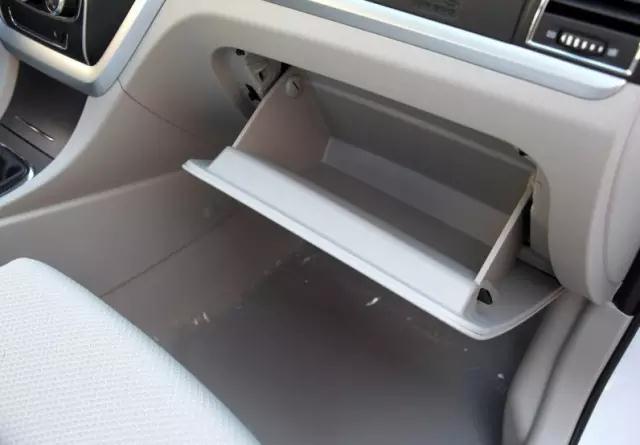
How a Glove Box Works
A glove box operates through three components working together: hinges, a damper, and the latch.
Hinges open and close the lid. Two common types dominate: bolted metal stamped hinges — durable but heavy — and plastic snap-fit hinges molded from PA66+GF30, which are lighter and cheaper but less wear-resistant. Each has its own character.
The damper controls the closing feel. Inside is silicone oil or mineral oil, with flow restricted through an orifice to govern the lid’s closing speed. Without damping, the lid slams shut. With damping, the last 30 degrees of travel automatically slows to a gentle close — that is what creates the premium feel.
The latch holds the closed glove box in place. An elastic pawl snaps into a fixed catch — the mechanism that prevents the lid from bouncing open on rough roads.
The glove box operates in a particularly demanding environment. Seated deep in the instrument panel near the air vent, it faces humid summers and dry winters. During the rainy season, interior humidity can spike briefly above 85%; in northern winters, cabin temperatures can plummet to -20°C. This repeated temperature and humidity cycling is a natural accelerant of lubricant degradation.
────────────────────────────────────────
How the Noise Originates
Glove box noise is fundamentally lubricant failure. Once lubrication breaks down, friction pairs make direct metal-to-metal contact, and noise follows. Three specific paths are at work.
Hinge wear is the most common cause. The hinge pin and bushing摩擦 every time the box opens or closes. With proper lubrication the oil film separates the metals. But 3–4 daily cycles add up to over a thousand per year. Micro-fretting accumulates. Lubricant loss allows metal particles and residual grease to form an abrasive paste — the more it grinds, the worse it gets. Eventually the hinge gap widens, the lid develops play, and a squeak appears at a certain angle.
Damper friction noise is the fastest-growing complaint type. With the mass adoption of plastic damper hinges, friction between plastic gears and metal shafts inside the damper has surfaced as a distinct issue. After prolonged sitting still, plastic gears may stick to the metal shaft — a phenomenon called stiction. Opening the lid requires extra force, and that force release produces a distinct “click.” Ordinary greases also adhere poorly to PA66 plastic, and below -10°C viscosity increases enough to double the operating torque — a noticeable hesitation.
Latch impact noise and plastic aging are also common. When the pawl impacts the catch without sufficient lubrication, it is metal-on-metal — a mid-frequency noise between 200 Hz and 1 kHz, sounding like a small hammer on a table. Summer instrument panel temperatures can exceed 80°C, causing POM plastic latches to soften and stick. If the lid requires a shake to close, simple greasing will not solve it at this stage.
────────────────────────────────────────
How to Select the Right Grease
With the causes identified, the selection criteria become clear. Five parameters demand close attention.
Low-Temperature Operability. The glove box directly faces the most extreme temperature and humidity conditions inside the vehicle. On a winter morning at -20°C, a congealed grease produces double the operating torque — like dragging a stone. Requirement: -30°C start torque ≤200 mN·m, roughly equivalent to an operating force under 20 N — light enough for a finger to lift. Fluorinated silicone oil or ester base stocks deliver significantly better low-temperature fluidity than mineral oil. Ask about the base stock type when selecting.
Extreme-Pressure and Anti-Wear Performance. Although glove box hinge loads are far below those on seat rails, the accumulated friction over years is substantial. PB value should be at least 245 N; premium products should target ≥294 N. Four-ball wear scar diameter dw(60 min) ≤0.60 mm — suppliers without this data should be eliminated from consideration directly.
Rust and Corrosion Protection. The enclosed glove box space traps moisture, and air conditioning condensation is common. Once metal hinges rust, hesitation and noise compound each other. Grease should pass ASTM B117 salt spray test — 48 hours with no rust on steel is the qualifying threshold.
Material Compatibility. Modern glove boxes use PA66, POM, and ABS engineering plastics extensively. Grease that is incompatible causes swelling, deformation, or worse — stress cracking that disables the latch entirely. POM swelling in mineral oil has caused recall events in the industry. Request full material compatibility test reports during selection; volume change ΔV should be controlled within ±3%.
Fretting Wear Resistance. Once closed, hinges and latches undergo continuous micro-motion from road vibration. Greases with insufficient adhesion allow contact surfaces to slowly wear, eventually generating noise. Formulations thickened with PTFE additives demonstrate significantly better adhesion on vertical surfaces and under vibration than conventional lithium-based greases — better suited to glove box conditions.
────────────────────────────────────────
Practical Maintenance
Glove box lubrication does not require frequent maintenance, but a few points matter.
When replacing a glove box assembly, pre-lubrication is mandatory. Apply grease uniformly to three locations: hinge pin, damper gear pin, and latch pawl contact surfaces. The quantity is important — a thin coat on the hinge pin, no flow on the latch engagement face. Over-application attracts dust — a self-inflicted problem.
During routine care, clean the hinge pin and latch engagement surfaces with a cotton swab dipped in industrial alcohol before re-greasing. Results are significantly better than simply adding fresh grease on top of old residue.
Glove box noise is not a major issue — but the wrong approach makes it a persistent one. First identify whether the problem is in the hinge, damper, or latch, then select the appropriate grease accordingly. It costs far less than replacing the entire assembly.
────────────────────────────────────────
*If you are dealing with this issue or have specific questions during selection, describe your conditions in the comments and I will help you configure the right solution.*