

In-car screens are getting larger, with 15-inch or even 40-inch integrated displays becoming the mainstream. Complaints about fretting friction noise between the screen assembly and the dashboard frame have shifted from occasional to high-frequency. Under the trend of large screens, attention to this problem continues to rise.
The screen and the frame are not in a “fixed connection” but a “floating fit” — a tiny space for relative movement is left between contact surfaces, designed to absorb thermal expansion and body torsional deformation. However, this space also sets the stage for fretting friction noise. The screen assembly’s demands on the lubricant are the result of three superimposed constraints.
Inconsistent expansion among multiple materials under an 80°C temperature differential, a tight clearance of only 0.3-0.5mm, and volatile compounds directly threatening the screen’s optical surface — each condition imposes its own requirements on the lubricant, and all three take effect simultaneously within the same screen seam.
80°C Temp Differential, Dimensional Variation of 0.2-0.5mm: The Lubricating Interface is “Squeezed Out” or “Pulled Apart”
In-car screens generate heat from backlights when operating, and after summer sun exposure, the surface temperature can exceed 80°C. The screen assembly involves a coupling of multiple materials: the touchscreen is glass, the frame is PC/ABS, and the bracket is magnesium alloy. The thermal expansion coefficients of these materials differ significantly, resulting in dimensional variation differences of up to 0.2-0.5mm under an 80°C temperature differential.
The design clearance between the screen and the frame is typically only 0.3-0.5mm. After high-temperature expansion, the clearance is “eaten up,” changing the contact surface from a sliding fit to hard contact; friction stress spikes, and a squeaking noise erupts. After low-temperature contraction, the clearance is “pulled apart,” causing the screen to wobble and hit the frame while driving. Ordinary grease flows and washes away at high temperatures, and thickens to lose its gap-filling and damping abilities at low temperatures.
The lubricant in this interface must neither flow at high temperatures nor harden at low temperatures.
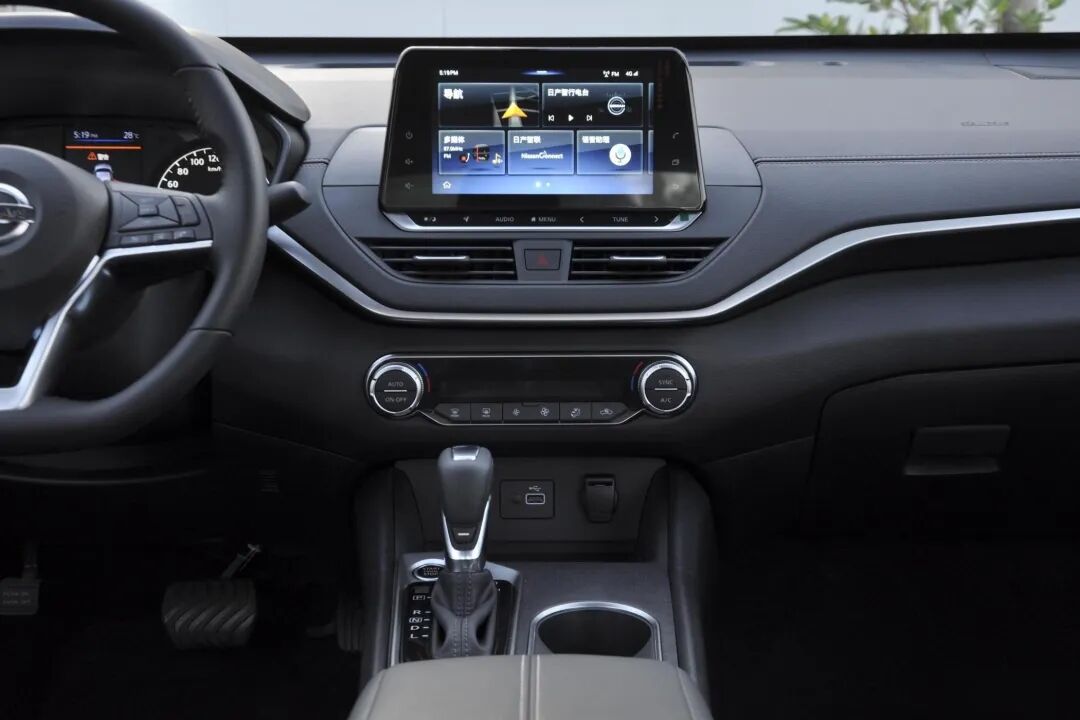
Clearance of Only 0.3-0.5mm: The Stick-Slip Effect of Fretting Friction is Amplified
The relative displacement between the screen and the frame constitutes fretting friction, with displacement amplitudes typically ranging from dozens to hundreds of microns. At this scale, the “stick-slip effect” at the friction interface is the main source of noise: the static friction coefficient is higher than the kinetic friction coefficient, causing the contact surfaces to cyclically “stick-slip-stick-slip.” Energy is released at the moment of each slip, triggering high-frequency squeaks.
The smaller the clearance, the more obvious the acoustic manifestation of the stick-slip effect. A 0.3mm clearance means there is almost no buffer space for the relative movement of the contact surfaces, and every sudden change in friction force translates directly into structural sound radiation. The lubricant needs to compress the difference between static and kinetic friction coefficients to a minimum, eliminating stick-slip at the source. The static-kinetic friction difference for ordinary grease is usually above 0.05, which is inadequate for this application.
100°C/24h Evaporation Loss < 2%: Volatiles Directly Threaten the Screen’s Optical Surface
The screen is an optical component. If the lubricant on the back and edges of the screen is highly volatile, the volatiles will condense and fog on the inner surface of the screen, creating optical contamination that cannot be wiped away. The evaporation loss rate of ordinary grease at high temperatures is usually 5%-10%, which is a disaster in this scenario. Volatile contamination is not an issue of lubricating performance; it is an absolute prohibition on contaminating the screen.
Three constraints pile up: the 80°C temperature differential requires a lubricant that doesn’t flow at high temps and doesn’t harden at low temps; the micron-level clearance requires the static-kinetic friction difference to be minimized to eliminate stick-slip; and the volatility restriction demands zero contamination near optical surfaces. Traditional “wet lubrication” (grease application) is caught in a dilemma here: if it adheres, it lacks temperature resistance; if it resists temperature, it is highly volatile; if it fills the gap, it catches dust, turning into sludge and worsening friction.
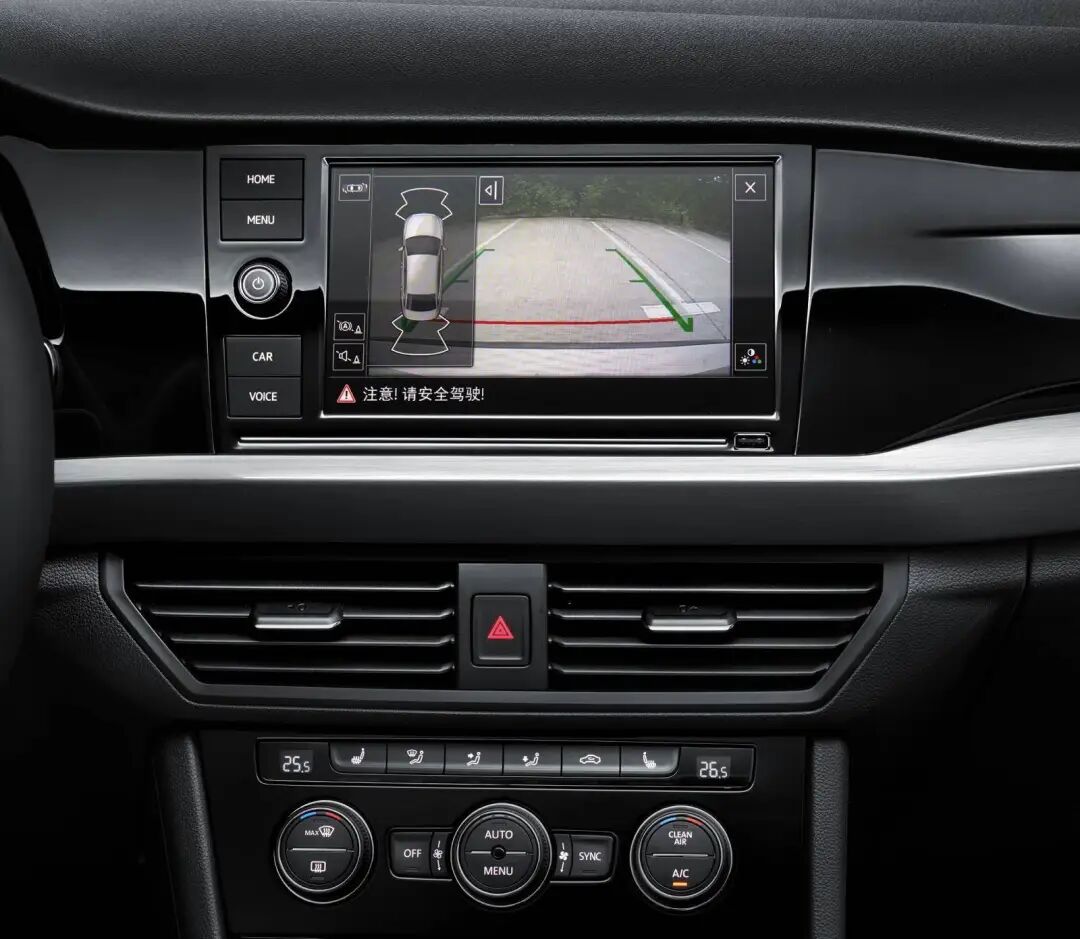
The Same Noise Differs by a Summer Between the Test Rig and the Real Car
When NVH test rigs measure screen-to-frame noise at room temperature, the interface clearance is stable, and the lubricant state is controllable. In a real car, after summer sun exposure, the screen assembly enters an 80°C+ state; ordinary grease flows, volatilizes, and catches dust at high temperatures, shifting the interface from “lubricated” to “dry grinding” within a few months.
What is measured on the test rig is the state of freshly applied grease, so the noise score passes. After one summer, the grease is lost, dried out, and dusty, and the noise returns. This failure isn’t because the test rig can’t detect it, but because the test rig didn’t superimpose temperature cycling and dust durability.
Only by stringing together 80°C high temps, -30°C low temps, vibration durability, and dust intrusion into a complete aging cycle can the true performance of the lubricant over its entire lifespan be tested.
From “Wet Lubrication” to “Dry Film Formation”: The Selection Logic Changes
Stacking the three constraints together, the conclusion is clear: traditional grease solutions do not work here; a shift to dry film formation is mandatory.
Dry Film Formation — Solid lubricants carried by solvents volatilize after application, leaving a clean, dry, self-lubricating coating. It doesn’t flow, doesn’t catch dust, and doesn’t volatilize, all while pushing the static-kinetic friction coefficient difference down to below 0.02, eliminating stick-slip noise at its root. PTFE, molybdenum disulfide, and special polymers are commonly used solid lubrication components.
Broad Temperature Stability — It does not harden or turn brittle at -30°C and does not get sticky at +85°C, consistently providing a stable, low-friction interface.
Material Compatibility — It is compatible with glass, PC/ABS, magnesium alloy, and surrounding rubber seals, without causing stress cracking or corrosion.
Low Volatility — The evaporation loss at 100°C for 24 hours is less than 2%, completely preventing fogging on the screen’s optical surfaces.
Covering all three conditions simultaneously narrows the choice of solutions from “which grease to use” to “which dry film formulation to use.”
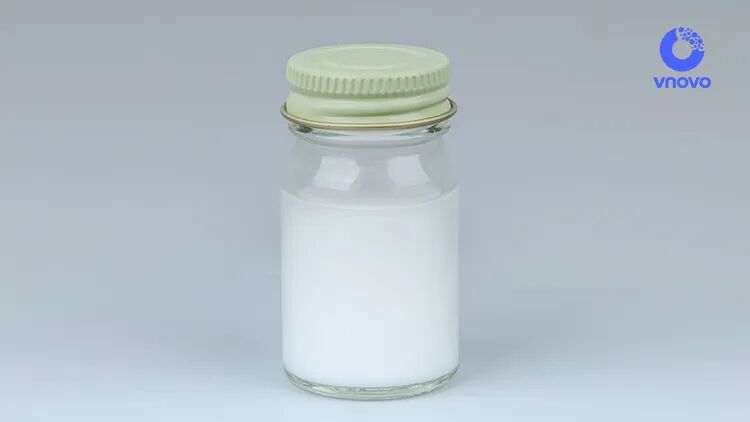
Products are already being designed according to this logic, such as the VNOVO series of dry film lubricants.
The squeaking noise of large in-car screens may look like an assembly issue on the surface, but its root lies in the fretting friction at material interfaces. An 80°C temperature differential pushes the interface clearance to the limit, a 0.3mm clearance amplifies the stick-slip effect into noise, and volatiles restrict the solution to the dry film path. With three constraints stacked within the same screen seam, ordinary grease solutions fail to cover a single one.