
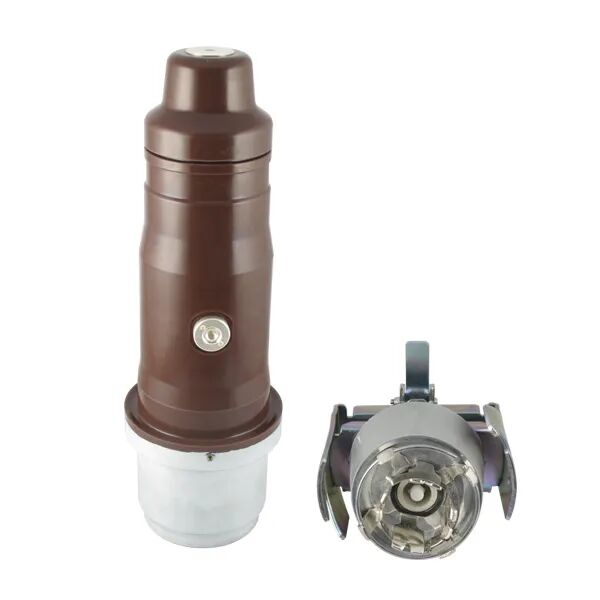
Last winter, Master Wang, a maintenance operator at a 10kV power distribution station, encountered a strange incident: during an outage for maintenance, the fuse tubes of a ring main unit (RMU) that had been in operation for only half a year simply could not be pulled out. There was no mechanical jamming on site, and the threads were not rusted.
The workers pried at it for 40 minutes, and ultimately had to send the entire set of fuses back to the factory.
Upon dismantling, the truth was revealed: the nitrile rubber O-rings at the end of the fuse tubes had absorbed oil and swollen by nearly 30%, biting dead tight against the metal housing.
Master Wang sighed: “The more grease you apply, the harder it is to pull out.”
This phenomenon of “the more you apply, the harder it gets” also frequently occurs with mold ejector pin engineers — the battlefield has merely shifted from the power distribution cabinet to the injection molding workshop.
Technical Causes: The “Hidden Reaction” Between Grease and Rubber
The materials used for ejector pin seals are primarily NBR (Nitrile Butadiene Rubber) and EPDM (Ethylene Propylene Diene Monomer). They are supposed to be “supporting actors,” but if the wrong grease is chosen, they will “usurp the host.”
The first root cause lies in the base oil. Ordinary mineral oils contain large amounts of aromatic hydrocarbons and polar impurities, which cause swelling upon long-term contact with NBR and EPDM. Mild cases see a 5%–10% expansion, while severe cases can exceed 30% — the culprit behind the fuse tube that couldn’t be pulled out in the case above was exactly this kind of “soft jamming.”
The second root cause lies in the additives. Even if switched to PAO synthetic oil, an excessive amount of extreme pressure agents (like ZDDP or active sulfur) or a high acid value will still accelerate rubber aging, manifesting as “swelling first, then embrittlement.” O-rings designed with a 2-year lifespan end up scrapped in just a few months.
For ejector pins, the consequences of rubber swelling are more severe than oil leakage:
The ejector pin’s retraction is “bitten,” causing mold flash and stress marks (galling/whitening).
The O-ring is sheared and broken, allowing plastic melt to backflow into the ejector pin hole.
Mold maintenance cycles are forced to shorten by 30%–50%, and downtime losses skyrocket.
For ejector pin seals, the “rubber compatibility” of the grease deserves far more priority than dropping point or extreme pressure properties.
The Solution: The “Three Checks” for Grease Selection + VNOVO Practice
For rubber compatibility issues, the industry follows the “Three Checks” principle:
Check 1: Base oil. Prioritize synthetic oils (PAO, esters) and avoid high-aromatic mineral oils.
Check 2: Additive system. Low acid value, no active sulfur, and zero ZDDP are baseline requirements.
Check 3: Measured data. A legitimate supplier should be able to provide rubber compatibility test reports like ASTM D4289, rather than glossing over it with “good compatibility.”
Following this logic, VNOVO’s dedicated ejector pin grease is worth referencing: using synthetic base oil, optimized for compatibility with NBR/EPDM, applicable temperature range of -40°C to 200°C, low starting torque, and long-term stability.
— This is all we will say about parameters. What engineers truly care about is whether the O-ring remains stable 6 months after the product goes online, not the pretty numbers on a datasheet.
Closing
The fuse tube at the beginning was not an isolated incident; it is a microcosm of grease selection errors on industrial sites. For mold ejector pin engineers, upgrading grease from a “general-purpose item” to a “customized item based on seal material” is the most cost-effective investment for reducing downtime and extending mold life.