
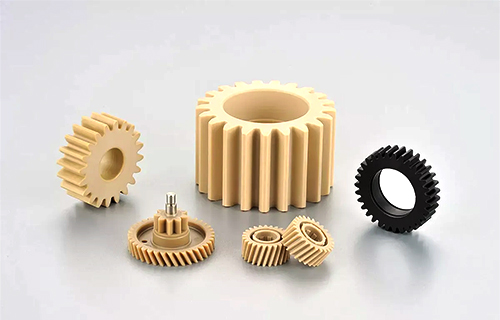
Electric toys rely on small gear trains to turn motor output into motion, sound, or interactive functions. In many designs, these gears are made from engineering plastics such as POM, PA, PC/ABS, or reinforced composites. These materials help reduce weight, noise, and cost, but they also create lubrication challenges that metal gears do not. In this type of assembly, grease must do more than reduce friction. It must remain stable over long periods, protect the gear mesh, and stay compatible with the surrounding plastics.
Why electric toy gear trains are different
Plastic gear trains in electric toys work under a special combination of conditions.
They often use very small gears with fine tooth geometry. They run under intermittent duty, with repeated starts, stops, reversals, and occasional stall events caused by user interaction. They also combine different materials in one small assembly, including plastic gears, metal shafts, brass bushings, and plastic housings. At the same time, end users are sensitive to squeaking, whining, or rough motion, so noise control becomes part of product quality. Because most electric toys are sealed or semi-sealed, the grease applied during assembly is expected to last for the product’s intended service life without re-lubrication.
Why plastic gears still fail even when grease is used
Applying grease does not automatically guarantee good performance.
A common problem is plastic swelling or absorption. Some base oils, especially ester-based oils and certain mineral oils, can be absorbed into plastics such as POM or nylon. This may cause swelling, surface softening, dimensional change, or even embrittlement over time. Another issue is additive incompatibility. Aggressive EP chemistries designed for metal contacts may not be suitable for polymer gear systems.
Grease can also migrate away from the mesh zone. If adhesion is too low, it may separate, bleed, or move into the housing cavity, leaving the gear teeth starved of lubrication. In other cases, the grease may initially reduce noise but later soften, dry out, or lose damping performance, causing the gear train to become louder as the toy ages.
Stall conditions are another important risk. When a motor is blocked, local temperature can rise quickly at the mesh. If the grease cannot tolerate that short thermal spike, oxidation accelerates and sticky residues may form, increasing friction instead of reducing it.
What properties matter most
For plastic gears, the first priority is base oil compatibility.
PAO is usually the safest starting point because it is broadly compatible with common engineering plastics. Synthetic hydrocarbons and mineral oils can sometimes work, but they require verification. Ester oils should be treated with caution, while PFPE is highly inert but more expensive. Silicone grease is dimensionally compatible with many plastics, but its load-carrying capacity is limited and it may stress-crack polycarbonate under load.
The second priority is consistency and distribution. For small toy gear trains, softer greases in the NLGI 0–2 range are often preferred because they distribute more easily between fine-pitch teeth and keep start-up torque lower.
The third priority is additive strategy. Anti-wear additives are generally useful, while aggressive EP systems should be used carefully. Solid lubricants such as PTFE can help reduce friction and improve noise damping in intermittent-duty applications.
How to choose the right grease
A practical selection process starts with the full bill of materials. Identify the gear polymer, housing plastic, shafts, pins, bushings, seals, and any coatings that may contact the grease.
Then define the operating profile:
- normal and peak temperature
- speed and load pattern
- stall frequency
- noise requirements
- service-life target
- any toy safety or regulatory constraints
From there, match the grease to the most sensitive plastic in the assembly. In many cases, PAO-based grease is the best default when full compatibility data is not yet available. For most small gear trains, NLGI 1–2 is suitable, while NLGI 0–1 may be better for miniature gears that need easier flow. Whenever possible, confirm compatibility with elevated-temperature exposure testing before production release.
How VNOVO can help
VNOVO supports plastic gear grease selection in three areas: selection guidance, material matching, and scenario communication. This includes reviewing the assembly materials, operating conditions, acoustic requirements, and service-life targets, then recommending a suitable base oil direction, viscosity range, consistency grade, and additive strategy. The goal is to help engineers reduce compatibility risk, improve long-term gear performance, and support stable product quality in mass production.
When grease is the right answer
Plastic gear grease is the right choice when the toy uses engineering plastic gears in an open or semi-closed housing, when long-life lubrication is required without maintenance, and when noise reduction and stable motion feel are part of the design target.
Alternatives may be worth considering when the plastic material is incompatible with available grease chemistries, when gear pitch is so fine that grease interferes with proper meshing, or when regulatory constraints limit the presence of oils or greases in the product.