

The adjustment feel of electric car seats is something few people notice when a car is brand new. Press the button, and the seat glides forward smoothly, then backward, quietly and at a constant speed. But after a year or two of use, the adjustment speed slows down, a shuddering “creep-and-pause” sensation begins to appear, and there is a distinct “clack” impact sound when changing directions.
This is not because the slide rail lacks grease. If you open up the transmission mechanism, you will find that the backlash (side clearance) between the gear and rack or the lead screw and nut has expanded from its initial 0.03-0.08mm to 0.1-0.2mm. During a direction change, the gear idles for a short distance before slamming into the tooth surface — and that is where the “clack” sound comes from.
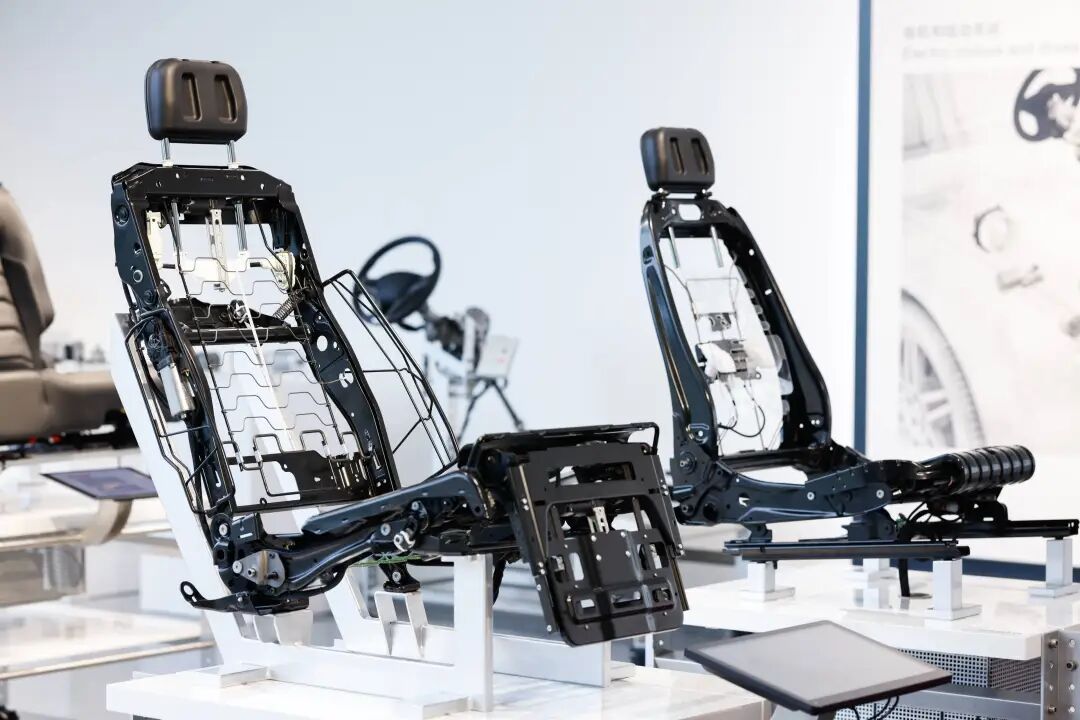
During long-term reciprocating motion, the gear and rack of the seat slide rail endure continuous alternating contact stress. With every adjustment, the tooth surface undergoes a load-unload cycle.
How Three-Body Abrasive Wear Expands the Backlash
Under high pressure, ordinary grease is squeezed out of the meshing zone, forcing the tooth surfaces into boundary lubrication or even dry friction. The micro-asperities on the surface of plastic gears (POM or PA66) or metal lead screws make direct contact, causing adhesive wear and generating fine wear debris. This debris mixes into the residual grease, turning into abrasive particles that cut into the tooth surfaces during subsequent meshing.
This is called three-body abrasive wear — the grease here acts not as a lubricant, but as a carrier for lapping paste.
The expansion of backlash follows its own rhythm. Initially, it is very slow; the micro-asperities undergo slight plastic deformation under boundary lubrication, and the backlash increases gradually. By the mid-stage, wear debris accumulates in the meshing zone, three-body wear kicks in, and the rate of backlash expansion accelerates. In the late stage, when the backlash exceeds 0.1mm, the gear idles and strikes the tooth surface upon reversing, producing the “clack” sound.
Once it exceeds 0.15mm, manually shaking the seat reveals noticeable play, and the dead-stroke sensation during adjustment becomes obvious.
Grease Anti-Wear Performance and Material Compatibility
The anti-wear capability of the grease determines exactly where this curve drops off a cliff. With ordinary lithium grease, the backlash may breach 0.1mm after just 10,000 to 20,000 cycles. A highly wear-resistant grease, controlling the four-ball wear scar diameter to under 0.5mm and achieving a weld load of over 200kgf, can push this drop-off point well past the designed service life.
There is another easily overlooked characteristic of seat slide rails: heavy load. The passenger’s weight of 50-100kg plus the seat’s own weight results in a tooth surface contact stress far higher than that of ordinary actuators. Under high loads, the oil film is more easily squeezed out of the meshing zone, resulting in a higher proportion of boundary lubrication.
The grease’s ability to stay on the tooth surface becomes critical — it’s not just about having oil when first applied, but ensuring the oil film remains in the meshing zone after thousands of cycles.
Durability Targets: Pushing the Clack Past 30,000 Cycles
The vicious cycle of wear begins with wear debris. PTFE solid lubricants fill the microscopic rough surfaces, lowering the boundary friction coefficient and reducing the generation of wear debris. This cuts off the “ammunition” for three-body wear at its source. Furthermore, the grease must be compatible with POM/PA66 and cannot cause plastic gears to swell; otherwise, creep and wear will accelerate simultaneously.

Anti-wear properties can only delay the expansion of backlash, not eliminate it entirely. Gear wear is an intrinsic behavior of mechanical systems. The purpose of grease is to push the emergence of that “clack” sound from 10,000 cycles to 30,000, 50,000 cycles, or even prevent it entirely within the designed lifespan.
What the car owner hears is a “clack” when changing direction. Opening it up reveals an expanding backlash. Digging deeper, it is the oil film on the tooth surface being squeezed thin over repeated load-unload cycles, wear debris piling up in the grease, and lapping paste circulating in the meshing zone. The anti-wear capability of the grease determines exactly when that “clack” arrives.